Six elements, one document
| Element | What it should show | Why the site cares |
|---|---|---|
| Crate and stillage schedule | Sequence number, contents, dimensions, weight | The unloading crew plans the crane and stacking without opening anything |
| Container assignment | Which items travel in which 40 ft high-cube | Container two cannot be stuck in customs while container one is needed |
| Packing method per item | A-frame, boxed, bundled, interleaved | Damage on arrival traces to method, and claims trace to the plan |
| Protection detail | Corner boards, film on finished faces, edge channels | PVDF and anodised finishes arrive unmarked |
| Weight distribution | Heavy items positioned over axle lines | Legal road transport at destination, no re-stuffing |
| Moisture strategy | Liner, desiccant, breathable wrap | No condensation on glass or gaskets after a four-week voyage |
Crate order is installation sequence
A container loading plan follows one rule that sounds simple and is frequently broken: the first crate off the truck is the first material the site needs.
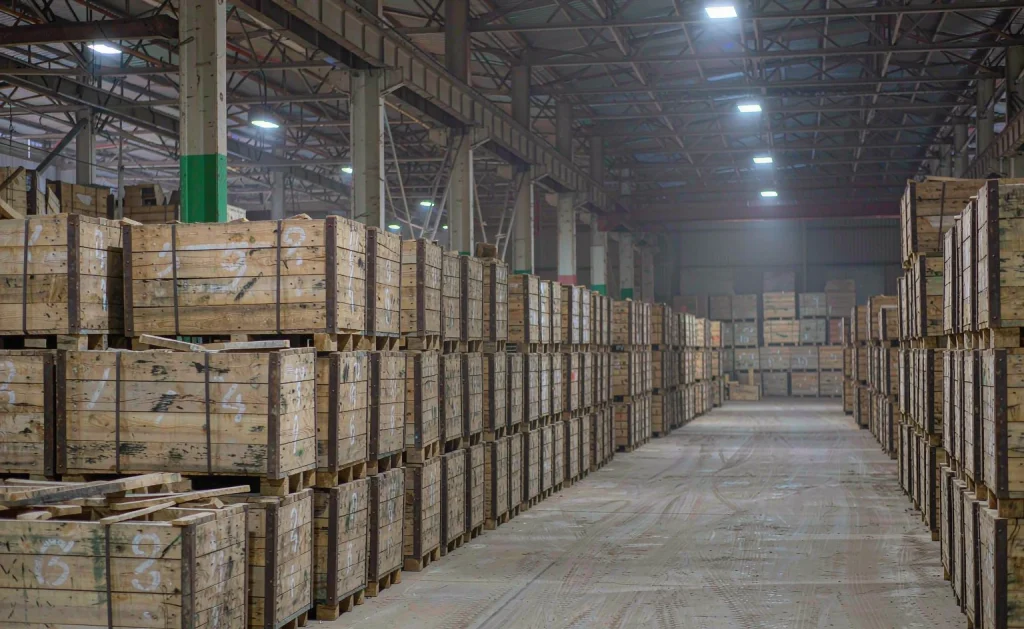
Grid one, ground floor, north elevation travels in the container that arrives first, at the door end, packed so it comes off last in reverse-loading order. When a supplier packs by size or weight instead of by sequence, the site inherits the sorting job: containers opened, crates broken down, material re-stacked and re-found, days lost. On the 860 m² Baghdad Riverside Residence, recorded in the Starveil Facade project library as a study on record, the design-supply package carried two weeks of on-site supervision. The consignment was packed in installation sequence so the client’s crew could work bay by bay without sorting material. That crew had never glazed a curtain wall before. After the supervised start-up it installed the balance of the panels independently under remote support, on a one-working-day answer commitment that held through the entire erection season.
How glass and finished panels travel
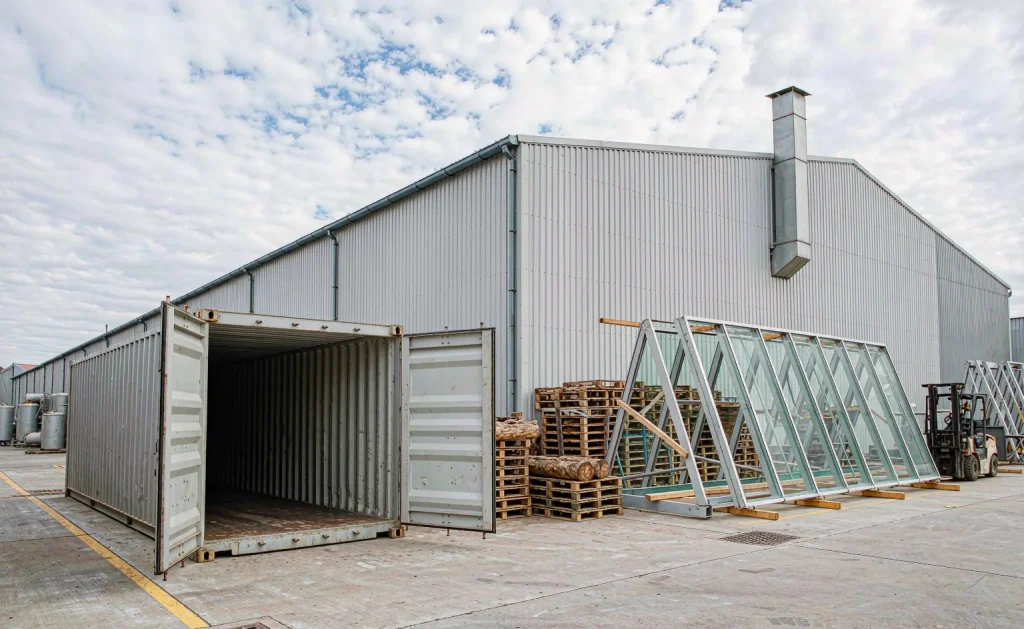
Curtain wall packing for shipping is unglamorous work, and it decides more of the arrival condition than the voyage does. Insulated units and finished cassettes travel upright in stillages, on edge, with resilient contact points at six positions and interleaving pads between units. Corner boards protect exposed edges; finished faces carry a low-tack film.
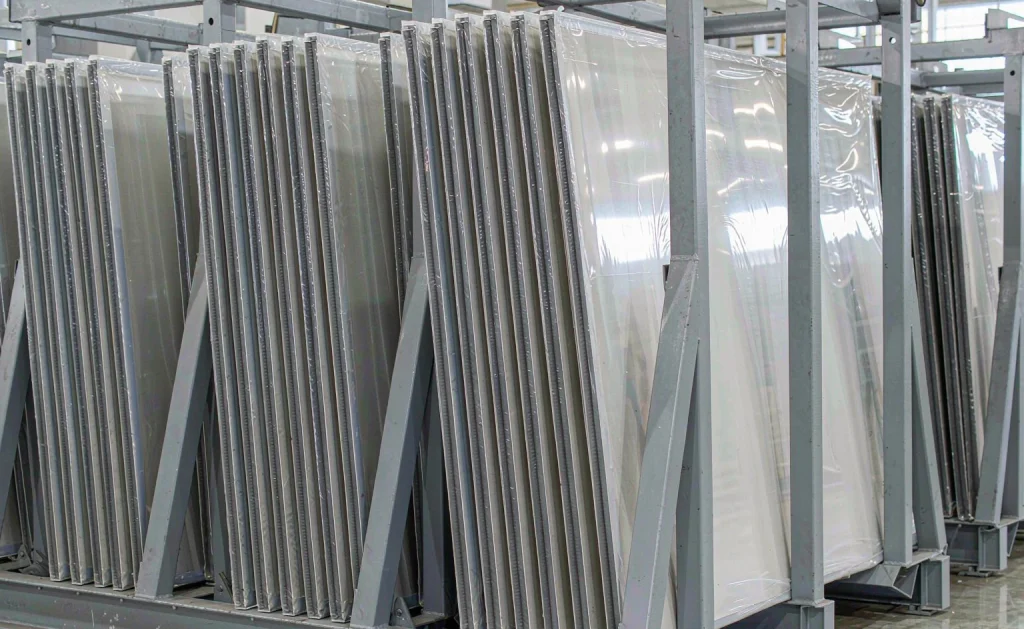
For sea freight, a container liner with desiccant manages the condensation cycle between a humid voyage and a dry dock. The CTU Code, the joint IMO and UNECE packing standard, sets the securing principles the plan should follow. None of this is exotic. It only has to be written down, and then actually done, which is why the container loading plan is issued before the booking rather than after the vessel sails.
The plan as a site document
Send the container loading plan to your site team before the vessel sails, not when the containers arrive. The site needs it to plan three things: unloading order and laydown areas, crane or forklift requirements per crate weight, and the storage sequence that keeps grid-one material accessible. A site that receives the plan early can also challenge it, which is the point. If erection is now starting from the south elevation because the concrete programme slipped, the packing sequence can still change at the factory. A Starveil Facade packing list is a living document until the first stillage is loaded. After loading, it cannot.
Before the doors close
Under a container loading plan, every container gets a photo record as it is stuffed: empty and lined, first layer, mid-load, secured, sealed. Seal numbers are photographed against the container number, and the packing list travels in the door pouch plus a scanned copy by email. If your supplier runs live video factory tours, ask for the loading to be streamed or recorded in the same way. It is the cheapest inspection you will ever buy, and it fixes the condition of the goods at the factory gate. If you appoint SGS, BV or TÜV to witness the loading instead, that is equally normal here: we host such inspections as a standard part of export orders. In a damage dispute months later, that record decides who pays. The on-site version, auditing the factory itself before award, is covered in our factory audit checklist.
What goes wrong when no plan exists
Three failure modes account for most loading problems, and all three trace to a container loading plan that was never written. Mixed sequence, where the site erects out of order and the programme pays. Point loads, where heavy crates sit on lighter ones and arrive deformed. And moisture, where a voyage through two climate zones puts condensation inside the crate because nobody specified a liner or desiccant. Each one costs more to fix on site than to prevent on paper.
What to send for a loading plan
Send Starveil Facade your erection sequence, or simply your site constraints: which elevation starts, where containers can be set down, and what lifting equipment exists. We calculate the container count, propose the packing sequence against the programme, and issue the container loading plan for your site team to challenge before anything is booked. The wider document flow from enquiry to installation is mapped in our cross-border facade workflow guide.
ما يجب تذكّره
- Crate order follows erection order. Challenge the sequence before loading, never after.
- Glass travels upright in stillages. Flat glass in a container is a claim waiting to happen.
- Photo record per container, seal numbers included. Stream the loading if the supplier offers it.
- Send the container loading plan to the site team before the vessel sails, and let them challenge it.
- Liner and desiccant on every sea voyage. Condensation is a packing decision, not weather.
RELATED READING
Explore Our Approach for an overview of Starveil’s manufacturing, packing and delivery process. Read From Drawings to Container for guidance on shipment timing, packing sequence and site handover. Our Facade Design & Supply Guide explains export documentation, packing responsibilities and product traceability. You can also compare Stick vs. Unitized Curtain Wall to understand how system choice affects transport, storage and installation logistics.
الأسئلة الشائعة
How many containers does a facade project need?
A rule of thumb for curtain wall work is 300 to 450 m² of envelope per 40 ft high-cube, depending on panelisation and stillage design. The precise figure comes from the crate schedule, which is why it belongs in the container loading plan rather than in an estimate.
Can I inspect the loading myself?
You can attend in person, appoint a third-party inspector, or ask for the loading to be streamed or recorded on video. All three are normal requests. What is not normal is a supplier who declines all three.
Can the packing sequence in a container loading plan change after booking?
Yes, until the first stillage is loaded. After that, re-sequencing means unpacking a container, so changes need to land while the container loading plan is still on paper. Tell the supplier about programme changes the week you learn about them, not the week of loading.
What if my site has no crane?
Say so in writing before packing. Stillage weights can be limited to what a site forklift can handle, and the plan will split what would otherwise be one heavy lift into several manageable ones.
Who is liable if panels arrive damaged?
Liability turns on evidence: the condition record at loading, the sea carriage terms, and the condition record at discharge. The sea carriage terms allocate the risk before the evidence does, and our Incoterms comparison for facade imports maps who carries which leg. The photo record made before the doors close is the piece that fixes where responsibility starts and ends.
When should we receive the container loading plan?
Before the booking is confirmed, and in enough time for your site team to challenge the sequence. A plan that arrives after the containers are stuffed is a record of what happened, not a decision document.
عن الكاتب