Match the ironmongery to the traffic, not the render
| Component | Light duty | Medium duty | Heavy duty |
|---|---|---|---|
| Traffic profile | Boutique, office suite, under 200 cycles a day | Retail, café, 200 to 600 cycles a day | Mall, transport hub, lobby, 600 plus cycles a day |
| Door leaf and stiles | Narrow stile, single door | Medium stile, pair with removable mullion | Wide stile or balanced door, oversized leaves |
| Closing and opening | Surface closer, Grade 2 | Grade 1 surface closer | Concealed overhead or floor spring, or low-energy operator to ANSI/BHMA A156.19 |
| Hinging | Butt hinges | Continuous geared hinge | Offset pivots top and bottom, intermediates on tall leaves |
| Expected service | 3 to 5 years | 7 to 12 years | 12 to 20 years |

The traffic column is the one buyers estimate lowest and regret first. A door doing 400 entries a day clocks about 146,000 cycles a year; a light-duty 500,000-cycle hinge set is therefore a three-year part, while Grade 1 storefront door hardware heavy duty packages rated at two million cycles turn the same entrance into a twelve-year asset. The window side of the same frontage sits in our commercial windows guide.
Storefront or curtain wall: choose by span, not by look
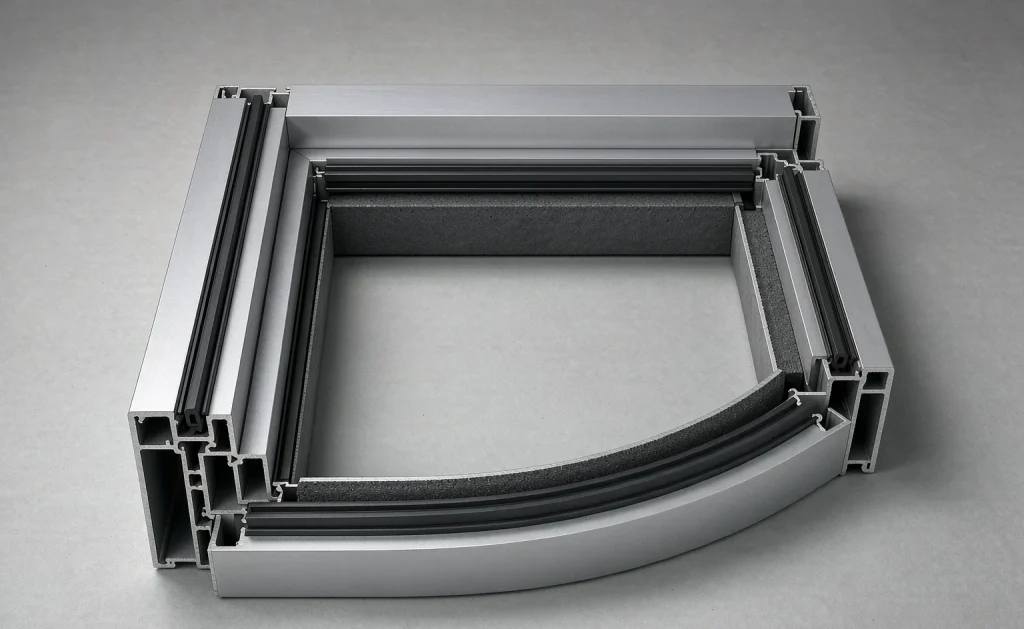
Storefront framing spans one opening height, anchors to substrate at head and sill, and is glazed from inside the line; curtain wall hangs off the structure and spans slab to slab. An aluminum storefront door belongs to the first family, and confusing the two is the most expensive small-building mistake in facade procurement: a curtain wall entrance detail priced into a single-storey parade doubles the frame cost for capability nobody uses, while a storefront pushed past its span deflects until the doors bind. Check the span, the substrate and the anchor logic before the aesthetic conversation starts.
The hardware ledger: cycles are the currency
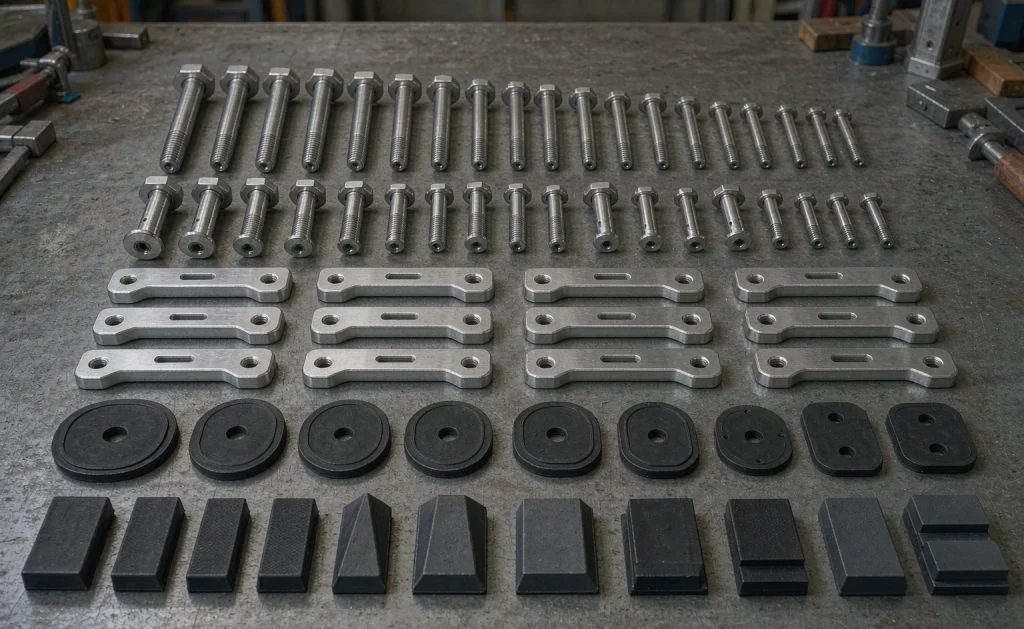
Every component on commercial storefront entry doors carries a cycle rating, and the buyer’s job is to hold the ratings up against the traffic. Grade 1 closers under ANSI/BHMA A156.4 certify at two million cycles; continuous geared hinges under A156.26 survive the racking that kills butt hinges on push-bar doors; floor springs disappear into the threshold and take abuse that exposed arms attract. Panic and exit devices add their own A156.3 grades. Specify the grade, not the brand name alone, and ask for the certificate numbers: an aluminum storefront door quoted without hardware grades is quoted without a service life.
Thresholds and drainage: the detail that decides slip claims
The threshold is where weather, accessibility and liability meet. Accessibility rules cap thresholds at about 13 mm with bevelled edges; rain exposure demands a drained or rebated sill that moves water out before wind drives it over; and the closer or floor-spring zone needs a pan detail that survives mopping. On retrofit work, a rebated threshold cut into the existing slab usually beats a surface ramp for both drainage and trip risk.

An aluminum storefront door detail drawing should show the sill section, the drainage path and the accessibility compliance in one view, or it is not finished.
Trading through the works: the Bloom study
A study on record from Melbourne describes the Bloom & Co. shopfront, a 120 m² 1970s street frontage rebuilt while the store kept trading three days a week. The facade was phased bay by bay: survey one week, fabrication while the shop traded, then overnight bay swaps that never closed the till for more than a day. The design reused the original steel portal rather than replacing it, saving budget and two programme weeks, and the new front runs oversized pivot entries with a bulkhead that hides the roller shutter when open. The client ordered two matching bays for their next fit-out within six months, on the same dies and finish. That is the aluminum storefront door economy: phasing, reuse and repeatability are worth more than any single component. The same trading-through logic runs through our tired shopfront renovation guide and the small commercial facade renovation playbook.
Gulf duty: heat, dust and the Doha study
A study on record in Doha shows the climate side of hardware selection. The 430 m² three-storey boutique commercial building kept trading through a back-ventilated rainscreen retrofit, with PVDF-coated, salt-spray-resistant finishes on every exposed trim and fixing. At 45 °C exterior peaks, door closers need seals and fluids rated for the heat, gaskets need UV-stable compounds, and anodised or PVDF finishes outlast standard powder coat on sun-facing leaves. The same discipline scales across Gulf retail upgrades, mapped in our boutique facades in Gulf cities guide. Specify the climate on the purchase order, because an aluminum storefront door built for Melbourne fails differently in Doha.
What the specification must name
A complete aluminum storefront door specification runs to about ten lines: frame series and depth, door leaf construction and stile width, hinging system with its grade, closer or operator with its grade, exit hardware where the occupancy demands it, threshold and drainage detail, glass build-up with safety compliance, finish system, the cycle-traffic assumption, and warranty. Ten lines, and every one of them is a place a cheap bid quietly deletes. Ask each bidder to confirm the hardware grades by certificate number and to state the traffic the price is built on; the answers sort the field faster than any interview.
Send the traffic count, not just the frontage
Send the frontage elevation and plan, the expected entries per day, the accessibility obligations, the exposure and climate, and photographs of any existing structure worth reusing. Ask for a specification that names frame series, hardware grades with certificate numbers, threshold detail and finish system. Starveil Facade returns aluminum storefront door proposals in that format from the Foshan engineering desk, with the cycle math shown so the service life is priced in, not hoped for.
What to carry forward
- An aluminum storefront door is a cycle-rated machine; buy the grade, not the picture.
- Traffic estimates run low; add a margin and price over ten years of cycles.
- Thresholds carry weather, accessibility and liability in 13 mm of aluminium.
- Reusing sound structure beats replacing it: the Bloom study saved two weeks on one portal.
- Climate is a specification line: heat and salt change the hardware and finish answer.
RELATED READING
A reliable aluminum storefront door depends on more than the appearance of its frame and glass. Explore our aluminum facade and entrance systems hub for a broader overview of commercial facade solutions. For more practical guidance, read our تجديد واجهات المتاجر: 4 خطوات مجرّبة وتكلفتها guide to understand entrance upgrades, phased replacement and storefront renovation strategies, our العزل المائي للجدران الستائرية: لماذا تُعدّ استراتيجية تصريف المياه حاسمة guide to learn how drainage paths, thresholds and perimeter interfaces protect glazed entrances, and our أولويات مواصفات الواجهات للمباني في دول مجلس التعاون الخليجي guide to explore how climate exposure, material selection and performance requirements influence commercial facade specifications.
الأسئلة الشائعة
How long should an aluminum storefront door last?
The frame should outlive two or three hardware generations. With Grade 1 components at two million cycles, a 400-entry-per-day door gets roughly twelve years before major hardware replacement; light-duty grades cut that to three or four. Frame finish is the other clock: PVDF or anodised systems hold colour and gloss far longer than standard powder coat in sun.
What is the difference between an aluminum storefront door and a curtain wall entrance?
Span and structure. A storefront door sits in framing that spans one opening between substrates, glazed at ground level; a curtain wall entrance hangs within a system that spans slab to slab. The Bloom & Co. study in Melbourne shows the storefront logic at work: a 120 m² frontage rebuilt bay by bay overnight, the original steel portal reused, oversized pivot entries installed while the shop kept trading, and a repeat order within six months.
Do storefront doors need automatic operators?
Not always. Accessibility codes in many markets accept a compliant low-energy operator or a well-adjusted closer with the right opening forces; high-traffic retail and transport entrances justify full operators. Where operators go in, specify the low-energy type to ANSI/BHMA A156.19 with the safety sensors the occupancy demands.
Can an existing shopfront be upgraded without closing the business?
Yes, with phasing. Survey first, fabricate while trading continues, then swap bays overnight or out of hours. The Melbourne study kept the store open throughout, never closing more than one consecutive day, and reused the existing portal to cut both cost and programme.
What glass belongs in a storefront door?
Safety glazing is the baseline: toughened or laminated to the local code, with laminated preferred where security or overhead retention matters. Large leaves near the floor need the manifestation the jurisdiction names, and Gulf or high-UV sites should pair the glass choice with a finish system rated for the exposure.
How do buyers compare storefront door quotes?
Line the bids up on the ten-line specification and look for deletions: missing hardware grades, unnamed frame series, no cycle assumption, no threshold detail. Then ask each bidder to state service life in cycles at your declared traffic. The cheapest bid usually turns out to be the one that priced fewer years.
عن الكاتب