Three chains, three packing answers
| (Route)نظام التنفيذ | Typical chain | Handling count | Packing answer |
|---|---|---|---|
| Direct service | Chinese port to the project’s coastal port | Fewest lifts | Standard steel crates, desiccant to voyage length |
| Transshipment | Hub port such as Singapore or Colombo, then African port | +1 to +2 crane cycles | Internal bracing sized to repeated yard stacking |
| Landlocked | African port, then road or rail across borders to site | Longest chain | Sequence-packed, audit-photographed, border-documentation set |
Route economics and handling counts decide the cost of importing facades into Africa, and they are treated in our sea freight routes guide, with the wider paperwork chain in the existing cross-border workflow guide.
Choose the route with the building, not after it
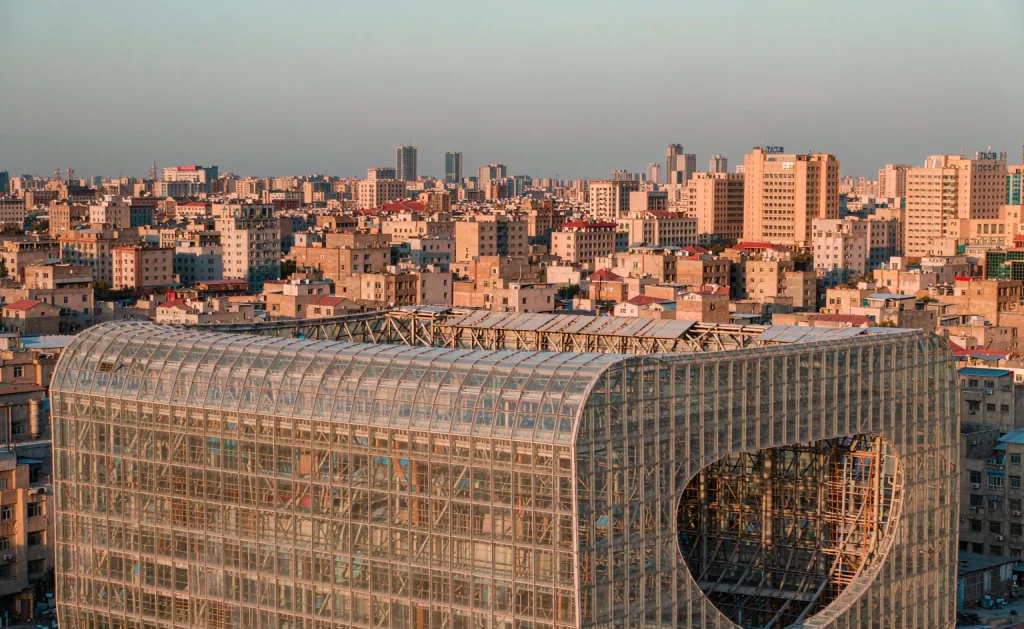
The route decision belongs in the same meeting as the facade schedule, because importing facades into Africa changes the programme and the budget with it. A landlocked destination rewards flat-packing over volume-packing, sequencing over convenience, and documentation over optimism. On the ملعب بوتسوانا الرياضي, the 5,200 m² envelope of an 8,000-seat regional venue in Gaborone, the consignment was flat-packed in container sequence matched to the construction programme. Starveil Facade designed, fabricated and export-supplied that envelope in 28 weeks ex-works, a delivered example of importing facades into Africa over a long inland chain, and the arena opened on programme and on budget with its technical documentation handed to the appointed local reviewer. The inland leg therefore delivered a site that could erect in order, rather than a yard that had to be searched for the next panel. Route and building programme are one decision.
Pack for the handling, not the distance
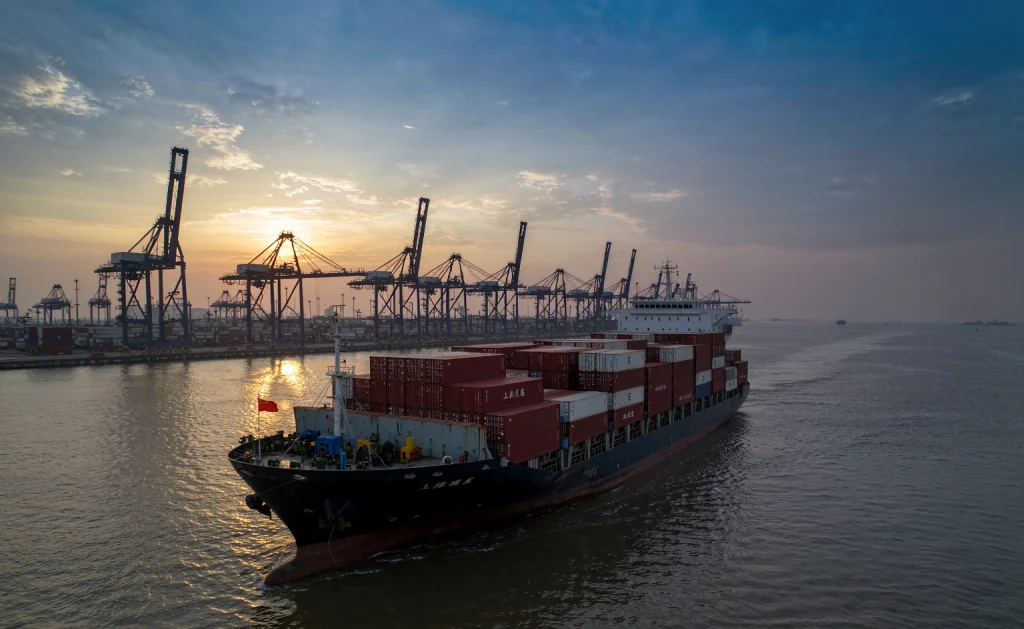
Distance is gentle with glass. Handling is not. Each transshipment is another crane cycle on the same crate, another stacking period in another yard, another week of humidity for flat-packed panels. The packing method that survives African routes assumes the worst chain plausible: steel crates, internal bracing, desiccant sized to the longest realistic timeline, and crate numbering that survives rain and border stamps. Shipping curtain wall to africa rewards that pessimism: the crate engineered for the longest plausible chain is the cheapest crate on the route. What a container plan must contain when importing facades into Africa is set out in our container loading guide.
The local crew is the installation plan
On most African packages the envelope is installed by the local main contractor’s crew, sometimes supervised at critical stages, sometimes fully remote. Both models work when the documentation is complete. The Gaborone arena ran with our supervising engineer on site for setting-out, first-panel approval and final sealant audits, and the local crew did the rest. A study on record for a Harare exhibition hall ran the pure remote route. The local crew worked from the full shop-drawing set and assembly manuals, with engineers on call and marked-up drawing responses within the working day. A technical evidence package was lodged for local third-party review.
Local approval runs on evidence
Importing facades into Africa always ends at a local reviewer. Jurisdictions differ in who signs what, but the pattern is consistent: the local authority or the client’s accredited engineer reviews a technical evidence package, and the supplier supplies the evidence. Material certificates, test reports, structural calculations and the QA photography travel with the project, not with the sales process. Where buyers appoint SGS, BV or TÜV to inspect the consignment before dispatch, we host such inspections as a standard part of export orders. Starveil Facade prepares the evidence package for the appointed local reviewer as a standard deliverable, because an envelope that cannot be approved is an envelope that has not been delivered.
Programme artefacts survive the distance
Long chains destroy programmes when tracking relies on narration. The artefact discipline that works anywhere works twice as well across an ocean and a border. The set runs from batch records at material release, staged QA photographs at fabrication, a packing list per container, and gate confirmations at dispatch and arrival. Together they form the facade import africa customs clearance dossier as well, because the same artefacts answer the border officer and the client’s reviewer. The delivery milestones guide lists the artefacts, and when importing facades into Africa each one is also a customs and handover document.
Send the city, ask for the chain
Send the project city or nearest port, the site distance from that port, the local contractor if one is appointed, and the enclosure date. When importing facades into Africa, ask back for the route with its handling count, the packing specification sized to that chain, the support model proposed for the installing crew, and the evidence package format for local approval. Starveil Facade scopes all four from the Foshan engineering desk in the first response.
ما يجب تذكّره
- The chain, not the distance, decides the packing specification when importing facades into Africa.
- Sequence-packing beats volume-packing on every landlocked route.
- Local crews install successfully when documentation is complete.
- Local approval runs on a technical evidence package, supplied as standard.
- Every programme artefact doubles as a customs or handover document.

RELATED READING
For a complete view of STARVEIL’s international facade delivery process, explore our project delivery approach. You can also read our guides to cross-border facade delivery, container-to-site delivery timelines و local facade installation options for practical guidance on shipping, documentation and installation support.
الأسئلة الشائعة
Can curtain walls be shipped to landlocked African countries?
Yes, through a coastal port such as Durban, Walvis Bay or Beira and an inland road or rail leg. The engineering answer is packing and sequencing that assume the handling count: steel crates, internal bracing and container order matched to the erection programme. On the delivered ملعب بوتسوانا الرياضي, the 5,200 m² envelope of an 8,000-seat venue in landlocked Gaborone was flat-packed in container sequence and export-supplied in 28 weeks ex-works, and the local crew erected it without sorting stock on the slab.
Who installs the facade on African projects?
Usually the local main contractor’s crew, with support ranging from a supervising engineer at critical stages to fully remote engineering with marked-up drawing responses. Both models succeed when the shop-drawing set, assembly manuals and QA photography are complete before dispatch.
How is local building approval handled?
The supplier prepares a technical evidence package covering certificates, test reports and calculations, and the local authority or the client’s accredited engineer reviews it. The supplier supplies the evidence; the local jurisdiction approves. Confirming the named reviewer early prevents approval becoming the last bottleneck.
How long does importing facades into Africa take?
Ex-works fabrication follows the envelope scope, and the shipping chain adds the ocean leg plus transshipment and inland time for the specific route. Programmes are best expressed as gates with artefacts at each one, so progress is tracked by documents and dated photographs rather than status calls.
Can we appoint a third-party inspector before shipment?
Yes. Where buyers appoint SGS, BV or TÜV to inspect the consignment before dispatch, we host such inspections as a standard part of export orders. The inspection normally runs against the packing list, batch records and QA photography already produced for local approval, so one documentation set serves both gates.
How do we judge a supplier’s record of importing facades into Africa?
By the evidence trail rather than the sales narrative. A supplier whose facade packages have reached buyers in more than 40 countries will answer route questions with packing plans, handling counts and documentation sets, as this guide describes. One that answers with reassurance has not run the chain.
عن الكاتب