A facade is only as good as the day it was installed
A facade is manufactured twice: once in the factory and once on the scaffold. Curtain wall installation standards are the published methods and project tolerances that govern the second manufacture, covering setting-out, anchorage, glazing, sealant and field testing, and the buyer’s job is to name them in the contract and verify each acceptance point as the work proceeds. The chain below runs from the delivery truck to the final water test, with the evidence that belongs at every stage, and two delivered projects show what the chain looks like when it holds.
Curtain wall installation standards are the documented rules an envelope is erected and accepted against: sealant practice such as ASTM C1401 at astm.org, project-specific CWCT guidance at cwct.co.uk, and applicable field-test documents published by FGIA. AAMA 501.2 is a local hose-nozzle diagnostic check, while AAMA 503 addresses field testing of newly installed storefronts, curtain walls and sloped glazing. EN 13049 is an impact test and is not a water-test method.
Six gates between the truck and handover
| Gate | What is checked | Reference point | Evidence kept |
|---|---|---|---|
| Delivery | Batch certificates, profile dimensions, glass data sheets | Material certificates, AQL sampling | Receiving report with photographs |
| Setting-out | Grid lines, datum, slab-edge survey | Structural survey of the as-built frame | Marked-up survey drawing |
| Anchors and brackets | Position, embedment, torque | Design loads per zone | Torque and pull-test records |
| Frame erection | Plumb, line, level within tolerance | Project tolerance table | Survey per elevation |
| Glazing and sealant | Bite, depth, backing rod, cure | ASTM C1401 practice | Sealant logs and audit sheets |
| Water test and handover | Project acceptance criteria met | AAMA 501.2 diagnostic or AAMA 503 field-test route, as specified | Test report, rectification record and dated photo file |
Curtain wall installation standards only protect the buyer when each gate produces a document. A crew that cannot show its setting-out survey will not produce a torque record either.
The standards stack: who governs what
ASTM C1401 covers structural sealant glazing practice, while CWCT publications address curtain walling, drainage, tolerances and testing in their relevant contexts. For installed work, name the exact FGIA document rather than the vague phrase “AAMA 501 family”: AAMA 501.2-25 is a hose-nozzle diagnostic method and AAMA 503-24 is the field-testing specification for newly installed assemblies. Local codes and the project specification decide which route applies. EN 13049 concerns soft-body and hard-body impact and should appear only where impact resistance is being assessed.
Setting-out: the survey comes first
Every installation error is cheaper at the setting-out stage than at any later one.
Curtain wall installation tolerance starts with the structure: a slab-edge survey fixes the real grid before brackets are placed, and line, level and plumb are then checked bay by bay against the project tolerance table, typically a few millimetres per bay with controlled accumulation across the elevation. On the delivered Baghdad Commercial Facade, 1,400 m² over three storeys in 22 weeks ex-works, the crew set the grid off the structural survey and erected bay by bay around the tenant fit-out programme. A facade set out on drawings alone inherits every mistake the concrete crew made, and curtain wall installation standards exist to catch those mistakes on paper before a single bracket is drilled.
Sequence: from stillage to sealed bay
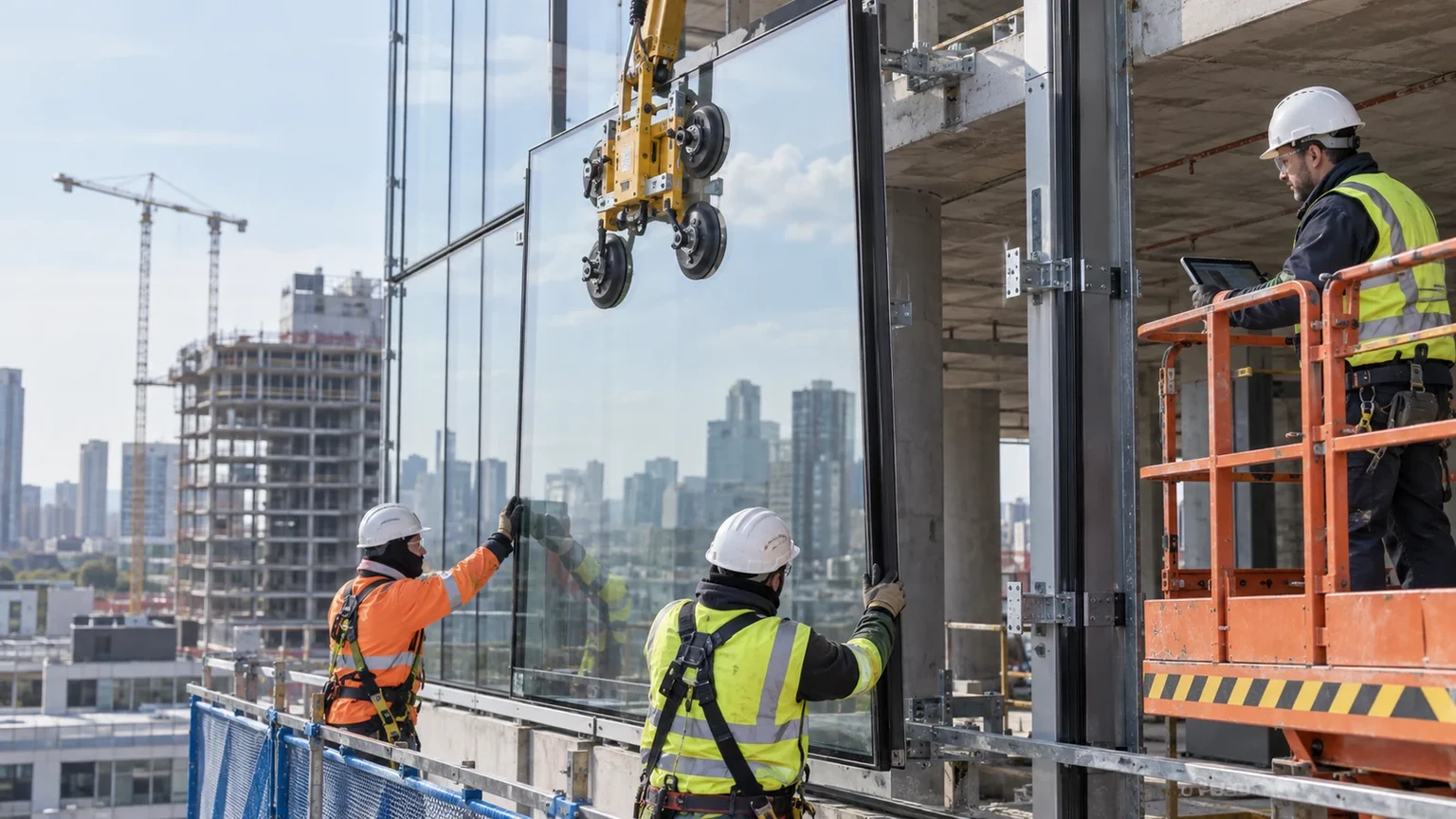
The curtain wall installation sequence should read as a flow: containers packed in erection order, panels or members lifted in numbered sequence, each bay closed and sealed before the next one opens. On the delivered Botswana Sports Arena, a 5,200 m² envelope for around 8,000 seats in 28 weeks ex-works, the consignment was flat-packed in container sequence matched to the construction programme, and the local crew erected the envelope without sorting material on the slab. Sequence discipline is what keeps a 28-week programme a 28-week programme, and it is decided in the factory packing list, not on site.
Sealant and glazing: where leaks are born
Most water paths are manufactured on site, inside the sealant joint. ASTM C1401 practice demands cleaned and primed substrates, backing rod at the correct depth, the designed bite and a logged cure time. Site audits catch what supervision misses: at the Botswana arena, Starveil Facade’s supervising engineer ran the critical setting-out, the first-panel approval and the final sealant audits before handover. Frame accuracy upstream decides how forgiving the glazing lands, and our curtain wall mullion guide covers the tolerances the glass sits on. Within curtain wall installation standards, the sealant log is the cheapest document to keep and the most valuable one at claim time.
Water testing and staged photo acceptance
Run the specified field checks early on the first completed bays, not at the end when access has gone.
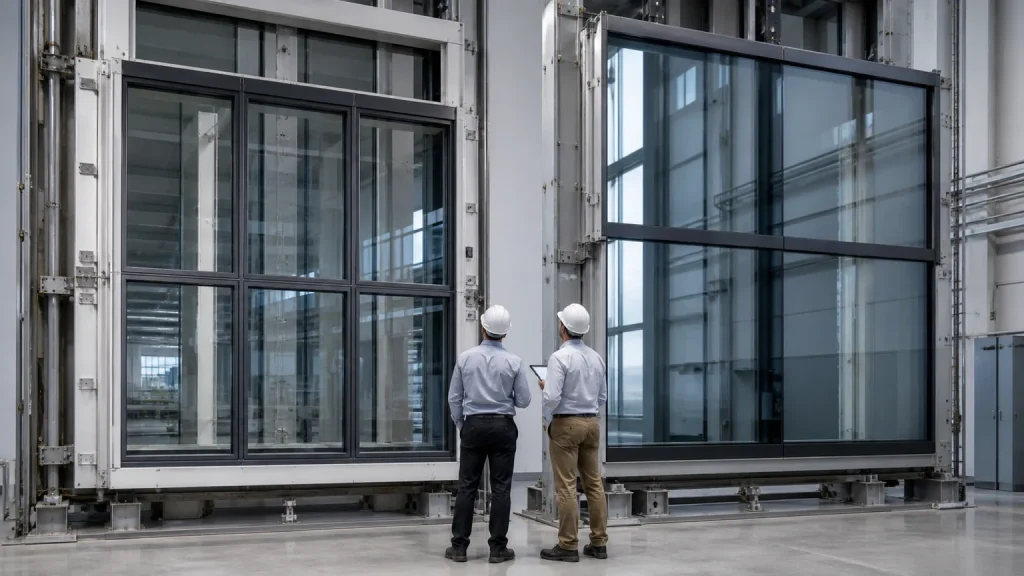
AAMA 501.2 uses a calibrated hose nozzle to diagnose local joints and does not apply chamber pressure. Where project acceptance requires field air and water testing of newly installed work, AAMA 503 may be the specified route. State specimen selection, pressure, duration, witnesses, failure criteria and rectification in advance. Photograph each concealed gate and tie certificates to released material as work proceeds.
The handover file and the checklist
A curtain wall site installation checklist ends the programme the way the survey began it: joint by joint, with signatures. The Baghdad project closed with a client acceptance walk-through, joints, sight-lines and operation inspected against the specification, and with supply and installation warranties issued as separate instruments so responsibility was never ambiguous. Installation route decisions, your crew or a supervised local crew, belong earlier in the conversation, and our installation options guide frames that choice. The file that remains, surveys, torque records, sealant logs, water test reports and photographs, is what the building’s next twenty years of maintenance will trust.
Send the programme, ask for the gates
Send the Starveil Facade team the elevation drawings, the structural grid or survey if one exists, the target programme dates and the installation route you intend. Ask back for the acceptance gate schedule written against curtain wall installation standards: what is checked, at which stage, by whom, and which document each gate produces. On delivered projects from Baghdad to Gaborone, that schedule is what kept the file, and the warranty, clean.
What to carry forward
- Name the standards stack in the contract: ASTM, CWCT, AAMA or EN, plus the local layer.
- Six gates: delivery, setting-out, anchors, frame, glazing and sealant, water test.
- Every gate produces a document; photographs before concealment outrank memory after.
- Supply and installation warranties read best as separate instruments.
- Curtain wall installation standards protect only the buyer who verifies them gate by gate.
Frequently asked questions
What are the main curtain wall installation standards to name in a contract?
Use the project-selected documents: ASTM C1401 for structural sealant glazing, relevant CWCT guidance, AAMA 501.2-25 for local hose diagnostics and AAMA 503-24 where field testing of newly installed work is required, plus local code provisions. EN 13049 is an impact test, not a water-test method.
What curtain wall installation tolerance should we accept?
Project-specific, but typically a few millimetres per bay on line, level and plumb, with a capped accumulation across the elevation. The tolerance table belongs in the specification before work starts, not in an argument after.
Who should inspect the installation?
Independent of who installs, the setting-out, first-panel approval and final sealant audits need a named inspector. On the delivered Botswana Sports Arena, a 5,200 m² envelope for around 8,000 seats completed in 28 weeks ex-works, our supervising engineer ran those gates on site with the local crew, and the documentation went to the appointed reviewer.
Can a local crew install to curtain wall installation standards?
Yes, with supervision and documents. Curtain wall installation standards apply whoever holds the tools: the Botswana arena and the Baghdad commercial facade were both erected with local or partner crews against marked-up setting-out plans, sealed acceptance gates and staged photographs.
When should field water testing happen?
As soon as the first representative bays are complete, while access is still in place, then periodically through the programme. Testing only at the end discovers problems when fixing them costs the most.
What belongs in the installation handover file?
Setting-out surveys, anchor torque and pull-test records, sealant logs, water test reports, staged photographs before concealment, batch certificates and the signed acceptance checklist. This file is the maintenance team’s starting point.
RELATED READING
For a broader understanding of facade engineering and project delivery, explore our facade insights hub, which brings together technical guidance on system selection, installation and performance verification. Before appointing an installation team, our guide to choosing a curtain wall contractor explains contractor prequalification, scope responsibilities, erection sequencing and field-test coordination. If you are deciding who should carry out the work, our guide to facade installation options compares self-installation, supervised local installation and supplier-supported site work. For the water-management details that determine whether an installed facade stays dry, see our guide to curtain wall waterproofing, covering drainage paths, joint interfaces, field testing and leak diagnosis.
About the author