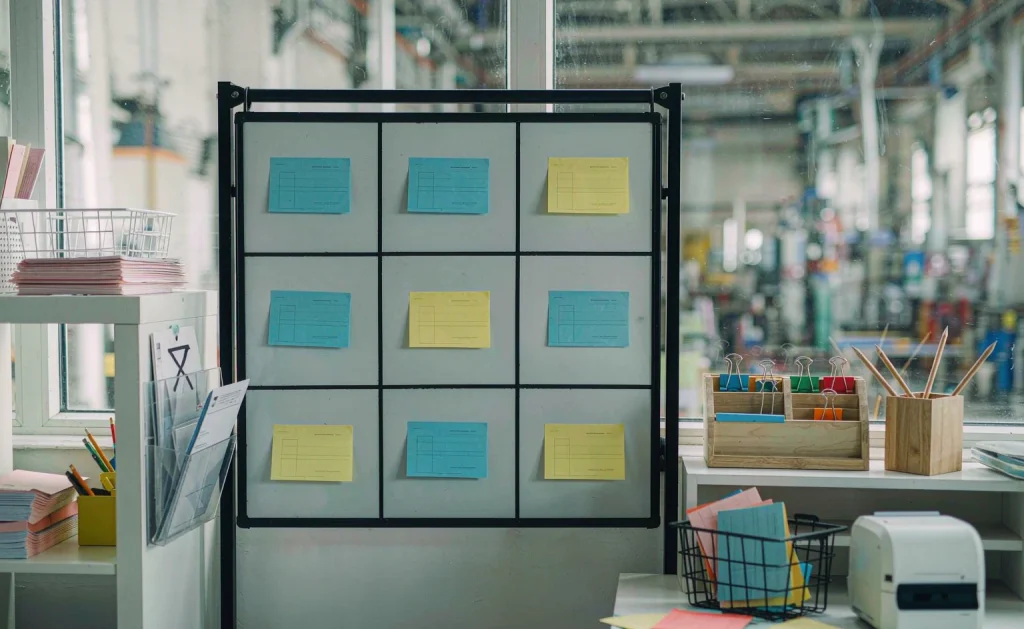
What should be in your inbox at each gate
| Gate | Artefact in your inbox | Confirmed by |
|---|---|---|
| Contract and scope | Signed schedule of scopes, with the supply and installation boundary drawn | Both parties |
| Shop drawing approval | Stamped drawing set, revision number, comment log closed | Your named approver |
| Material release | Mill certificates and batch numbers for aluminium and glass | Factory QA |
| Fabrication start | First-article photos against the approved drawing, dated | Project engineer |
| Performance test | Witnessed test report for water, air and structural performance | Test laboratory |
| Pre-shipment inspection | Recorded inspection walk, punch list raised and closed | You or your inspector |
| Container load | Load photo record, seal numbers, packing list in the door pouch | Factory dispatch |
| Site handover | Punch list signed, warranty instruments issued as separate documents | Site team and supplier |
The artefact rule
“Eighty percent fabricated” means nothing on a Monday and less on a Friday. A photograph of bay fourteen glazed, taken against that week’s production board, means everything: it is dated, it is located, and it can be compared with next week’s photograph of bay twenty. This is the same principle ISO 9001 process evidence rests on, that a claim is only as good as its record.

When a supplier reports in artefacts, you can reconstruct the facade delivery milestones from your inbox. When a supplier reports in percentages, the programme lives in his voice, and voices are optimistic in every language. How to track facade production is therefore a records question, not a reporting question: the record exists in the inbox, or it does not exist at all.
The two gates that slip most
“Curtain wall project timeline weeks” is the wrong unit to track: weeks pass either way, and only the artefact says what the week produced. In facade delivery milestones, gate two and gate three, drawing approval and material release, cause more programme loss than fabrication ever does. Approval slips when the comment log has no owner: comments circulate for weeks because nobody on the buyer’s side has the authority to close them. The fix is one named approver with a defined response window, written into the contract. Material release slips when glass is treated as a commodity ordered late; long-lead coatings and special glass build-ups need releasing early and deliberately. A supplier who flags those two gates in week one is doing you a favour, not making excuses. The Botswana Sports Arena in Gaborone project record shows the discipline holding across a multi-month export programme to an inland African capital. The venue, a regional landmark of around 8,000 seats, carries a 5,200 m² envelope: a curved 6 mm monolithic glass concourse band under a sculpted upper volume of folded and rolled aluminium panels. Starveil Facade designed, fabricated and export-supplied it from the Foshan plant in 28 weeks ex-works. Drawings were approved early, materials released on batch records, fabrication photographed in stages, containers sequenced to the erection plan, and the facade delivery milestones held gate by gate while the local contractor’s own crew erected the envelope under our supervising engineer. Every panel is replaceable from outside.

A weekly rhythm that replaces nagging
The weekly report Starveil Facade issues on the facade delivery milestones costs one page per week: the gate list with each line marked green, amber or red, the dated photographs produced that week, and one line on what is needed from your side to keep the next gate moving. On the Baghdad riverside residence, staged QA photography and a one-working-day answer commitment held through the entire erection season. That is how a client’s crew that had never glazed a curtain wall finished the envelope under remote support. The same rhythm makes a video factory tour easy to schedule: the walk belongs at gate six, where the recorded inspection doubles as the pre-shipment record. Station-specific factory photographs give the buyer fixed reference points to request during that video walk. The loading plan you receive at gate seven is the document your site team needs before the vessel sails.
When a gate slips
Gate slips are normal in facade delivery milestones; programmes survive them if the slip is handled as data rather than as embarrassment. The sequence is fixed. State the new date at the moment it is known, not at the original deadline. Name the artefact that will evidence the new date. Re-baseline the downstream gates, including the ones that had float, so the site programme is re-planned rather than surprised. And write the cause into the log, because a pattern of causes at the same gate is a supplier-quality finding, not a run of bad luck. Suppliers who handle slips this way are worth keeping. Suppliers who hide them until the container is late are not, and the gate list will have told you which is which by week six.
What to send before the first gate
Send Starveil Facade the name of your single drawing approver, the response window you can commit to, and your site programme dates. We will return the facade delivery milestones with dates against your programme, artefact by artefact, before contract signature, so that the first weekly page has something to measure against from week one. The document flow these gates sit inside is mapped in our cross-border facade workflow guide.
What to hold on to
- Every gate in the facade delivery milestones owes you an artefact. A status without one is a promise, not a milestone.
- Gates two and three slip most: name one approver, release long-lead glass early.
- One page a week: gates marked, photos dated, one line on what you owe the next gate.
- When a gate slips: new date, new artefact, re-baselined downstream gates, cause in the log.
- A pattern of slips at the same gate is a supplier-quality finding. Act on it as one.
RELATED READING
For a broader understanding of facade systems and how different solutions fit project requirements, visit our Facade Systems Hub. To see how project stages translate into a practical delivery schedule, read our facade delivery timeline guide. For a closer look at the documentation and coordination required throughout international projects, explore our cross-border facade workflow guide. You can also use our trading company vs manufacturer guide to understand how to assess a supplier’s production capability, quality control and responsibility for project delivery.
الأسئلة الشائعة
How often should facade delivery milestones be reported?
Weekly is the working standard for facade programmes, one page plus dated photographs. More frequent reporting usually signals that a gate has already slipped and someone is softening the landing.
What if my supplier reports percentages instead of artefacts?
Ask once, in writing, for the artefact behind the number: the photo of the fabricated bays, the batch numbers of the released material. A factory produces these in the normal course of work. The response to that request tells you what the next six months will be like. The Botswana Sports Arena record ran on that evidence: a 5,200 m² envelope for an 8,000-seat venue, export-supplied in 28 weeks ex-works, with drawings approved early, materials released on batch records and fabrication photographed in stages.
Who confirms each gate, the supplier or me?
It depends on the gate, and the table above names the confirmer. Supplier-confirmed gates are backed by factory records; buyer-confirmed gates, drawing approval and site handover, are yours. Contract-signature gates are both.
Does this work for supply-only projects without installation?
Yes. The gate list shortens, and the sequence ends at gate seven with the container load, but the artefact rule behind the facade delivery milestones is unchanged. Supply-only projects still have drawings, materials, first articles and inspections, and each still owes you a document.
What should the pre-shipment inspection at gate six cover?
Crated quantities against the packing list, sample panels opened and checked against the approved drawings, seal numbers recorded, and a punch list raised and closed before loading. Whether you attend in person, send an inspector or take the video route, those four checks are the content of the gate.
Do facade delivery milestones change for phased or repeat shipments?
The gates repeat per shipment. Each container still owes its own loading record, seal numbers and packing list, while first-article approval applies once per production run rather than once per container. The weekly page simply gains a column for the shipment number.
عن الكاتب