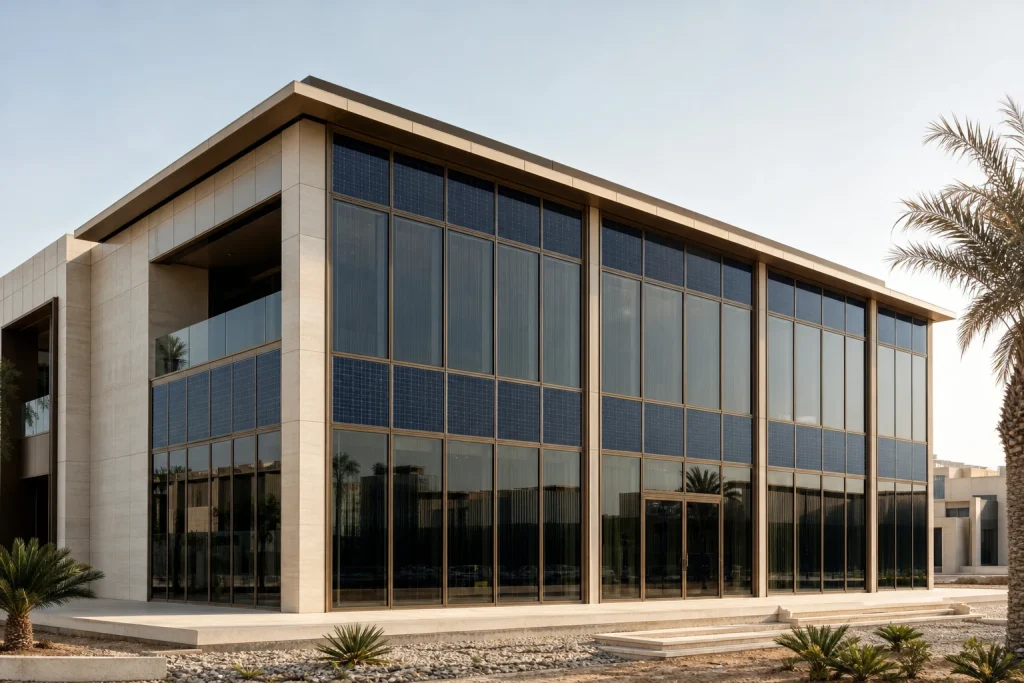
BIPV procurement vs a conventional curtain wall package
| Line item | Conventional package | BIPV package | Who owns it |
|---|---|---|---|
| Performance guarantee | U value, water, air, structural | All of the above plus a stated kWh/kWp yield band with measurement conditions | Facade contractor with PV supplier back-to-back |
| Design documents | Shop drawings, calculations, mock-up report | All of the above plus string layout, inverter MPPT matching, wiring diagrams, commissioning plan | Shared: facade engineer issues, electrical consultant approves |
| Warranty split | Single envelope warranty | Envelope warranty plus a separate PV product and power output warranty, with a defined interface for water leaks traced near live laminates | Two warranties, one interface protocol |
| Payment milestones | Fabrication, delivery, installation | Same, plus energization and yield verification milestones | Contract wording, agreed before award |
| O&M scope | Inspection and resealing | Inspection, resealing, string monitoring, and periodic IV curve checks | Owner, with a defined contractor support window |

The pattern that separates a workable bipv curtain wall package from an expensive one is not the panel price. It is whether these five lines were written into the tender before award, or negotiated after the first string went live.
Estimating output before you commit
A bipv curtain wall yield estimate fails when it borrows rooftop numbers, and the same logic behind Gulf mashrabiya and BIPV envelope studies on vertical, partially shaded elevations applies here. A vertical facade collects diffuse and reflected light at a different profile than a tilted array, and each elevation behaves differently. Work through four inputs:
- Irradiance by orientation. Pull site data from a recognized solar database, then split it by elevation. North faces in the northern hemisphere may generate a third of what south faces do.
- Shading geometry. Fins, mashrabiya screens, and adjacent towers cut yield in ways annual averages hide. An hourly simulation, not a monthly factor, is the defensible input.
- Temperature derating. Laminates bonded close to an insulated wall run hotter than a ventilated rack. For a Gulf summer, apply a realistic cell temperature model; output at 50 °C and above drops well below the nameplate figure.
- System losses. Inverter efficiency, soiling, and mismatch together typically take 12 to 20 percent off the gross figure.
Running the numbers on a bipv curtain wall elevation
As a worked example at the order-of-magnitude level: 200 m² of active laminate at 100 W/m² gives 20 kWp. In a high-irradiance Gulf city, a vertical, partially shaded facade might yield in the region of 900 to 1,100 kWh per kWp per year after losses, so roughly 18,000 to 22,000 kWh per year. That number is a planning band, not a promise; the contract yield band is what matters.
The payback period, input by input
Payback is where enthusiasm meets arithmetic. The bipv payback period is the premium divided by annual value, which is why it belongs in the same conversation as the 2026 facade cost guide rather than buried in a PV vendor proposal:
- Premium. The incremental cost over the conventional unit it replaces. If a standard spandrel zone costs X per square meter and the BIPV zone costs X plus 100 to 200 USD per square meter, the premium is the difference, plus the electrical scope. That increment, not the gross bipv curtain wall cost, is the correct numerator.
- Annual value. Generation times the avoided tariff. At a delivered electricity price of 0.05 to 0.10 USD per kWh, 20,000 kWh is worth 1,000 to 2,000 USD per year.
- Divide. A premium of 20,000 to 40,000 USD over 1,000 to 2,000 USD per year lands at 10 to 40 years before incentives, and the wide band is the point: shading discipline and tariff structure move the answer more than panel efficiency does.
Two levers shorten it. First, offset value: if generation trims peak cooling load, the electrical infrastructure saving belongs in the credit column. Second, any local renewable incentive or carbon reporting requirement can pull the effective payback under 10 years. State both cases in the report and let the client choose which to believe.
The DC-side document set
Most disputes on a building integrated photovoltaics facade trace back to thin DC documentation, a coordination gap familiar from any insulated curtain wall package where thermal and electrical reports live in different revision indexes. The minimum set:
- String layout drawing. Which laminates are in series, by elevation and shade zone, with a stated maximum system voltage and the series count verified at cold-start and at 50 °C cell temperature, where voltage drops and current rises.
- Inverter matching schedule. MPPT voltage windows against the string Voc range across temperature, with the electrical consultant signing the match, not the panel salesman.
- Wiring diagrams. Conduit routes, junction box locations, and how cabling crosses the movement joints of a unitized grid without chafing.
- Commissioning and IV curve baseline. A recorded IV curve per string at handover, so a future drop in output is measurable against day one.
- Monitoring plan. String-level reporting with a defined response time, owned by a named party.
Without this set, the facade contractor is installing live electrical equipment inside a wet bipv curtain wall with no agreed reference point. With it, a fault can be located to a string and an elevation within minutes.
Case reference: a 590 m² villa study in Riyadh
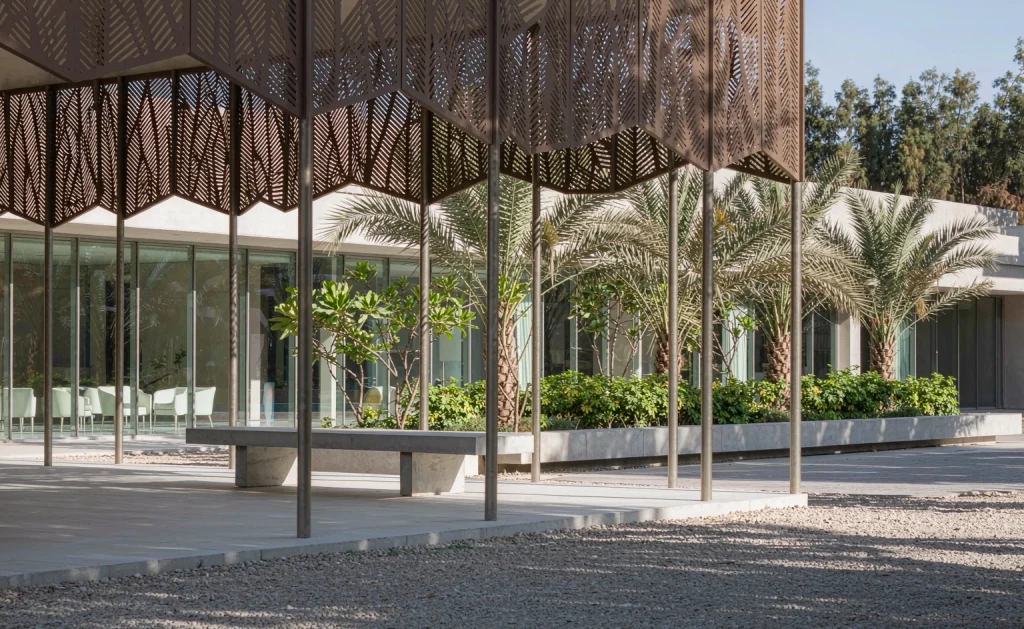
A reference study on record for a 590 m² two-storey private villa in Riyadh, planned over 15 weeks with a BIPV envelope behind traditional mashrabiya screens and hourly daylight simulation driving the active-zone layout shows how the numbers assemble. The mashrabiya screens do double duty: they cut glare and heat gain for the rooms behind, and they reduce the cell operating temperature of the laminates they shade, which lifts actual output per panel even as they trim the active area. Hour-by-hour lux simulation decided which bays carried PV laminates and which stayed with clear low-iron glazing, trading daylight quality against generation rather than blanketing the facade and hoping. Warm-edge spacers kept the envelope thermally credible, and the study scope placed the full DC-side document set, string layout, inverter matching, wiring diagrams, with the facade package, while grid connection approval and the AC side stayed with the local electrical contractor. That split is exactly the interface the decision table above is designed to catch before award.
For the wider pattern behind this approach, our cluster pieces on climate-responsive facades in the Gulf combining mashrabiya shading with BIPV zones و modern mashrabiya facade engineering for screened envelopes cover the shading side, while high performance curtain wall targets و GCC facade specification practice set the envelope baseline. Product details live on the BIPV glass facade system page.
What to send us for a BIPV curtain wall quote
To price a bipv curtain wall properly, send:
- Facade elevations with orientation marked, and any adjacent structures that shade the envelope.
- The intended grid: module dimensions, vision-to-spandrel split, and which zones you want electrically active.
- Local electricity tariff, any renewable incentive scheme, and whether the building will report carbon.
- The name of the electrical consultant of record, so the DC interface can be agreed in the tender, not after.
What to carry forward
Hold on to three habits from any bipv curtain wall project. Keep the yield band, the premium, and the payback arithmetic in one signed report, so the number survives staff changes. Keep the DC document set on the same revision control as the shop drawings. And keep the shading model, because every future facade modification near the envelope quietly reprices your generation.
Explore Related Facade Engineering Guides
For a broader understanding of how photovoltaic glazing fits into climate-responsive building envelopes, explore our guide to climate-responsive facades in the Gulf. For more specific design and procurement considerations, our guides to modern mashrabiya facade engineering, facade specification priorities for GCC buildings, and 2026 facade cost planning provide further insights into solar shading, envelope performance, technical compliance, and project budgeting.
الأسئلة الشائعة
How much does a bipv curtain wall cost compared with a standard unitized facade?
Count the increment, not the gross price. Over the conventional zone it replaces, the active laminate, inverter, DC cabling, and monitoring typically add on the order of 100 to 200 USD per square meter plus the electrical design scope, and that premium is the correct numerator for payback.
What is a realistic bipv payback period on a vertical facade?
Before incentives, somewhere between 10 and 20 years where shading is disciplined and tariffs are meaningful, and longer where either input is weak. The Riyadh villa study above shows how mashrabiya shading and hourly simulation narrow the band.
Can the same laminate act as safety glazing in a bipv curtain wall grid?
Yes, when it is a certified laminated unit meeting the same drop-test and post-breakage rules as the vision glass it replaces in a bipv curtain wall grid, with the certification chain documented alongside IEC 61215 and IEC 61730.
Does shading really reduce output as much as people say?
It reduces it more than annual averages suggest, because a shaded series string drags down its whole group. That is why the string layout must follow shade zones, not elevation boundaries.
Is a building integrated photovoltaics facade suitable for low-rise projects, or only towers?
Both, but low-rise envelopes often win on maintenance access and string segmentation. The 590 m² Riyadh study sized its active zones bay by bay rather than covering the full facade, which kept daylight quality and made each string serviceable from a lift. That zoning discipline is what makes a bipv curtain wall serviceable in practice, not just impressive in a rendering.
Do I need an electrical consultant before tendering the facade package?
You need at least a named one. The inverter matching schedule and the DC interface protocol are tender documents, and retrofitting them after award is where cost and blame both escalate.
عن الكاتب