A warranty is a contract about the future; read it like one.
Facade warranties arrive as a stack of documents with different clocks, underwriters and exclusions. There is no universal 10-5-2 industry warranty. Each term depends on the named product, supplier, approved application, contract and trigger date. Buyers should compare the documents before signing, then tie every promise to a component, accountable party and evidence trail. Starveil Facade prepares project-specific warranty schedules and traceability records for the scope it supplies; the signed contract and named manufacturer instruments govern the actual cover.
A curtain wall warranty is a set of written undertakings that named components will perform as specified for named periods, backed by a named party with the means to pay. Structural silicone performance is specified under ASTM C1184 at astm.org, and system practice follows the CWCT technical notes at cwct.co.uk. The curtain wall warranty period is not one number: each component runs its own clock, often from a different start date, and the gaps between those clocks are where disputes live. Reading a warranty means listing every component, its term, its trigger date, its underwriter and its exclusions, in one table, before the contract is signed.
Different components, different clocks, different underwriters
| Component | Term to verify in the contract | What it may cover | Common exclusions |
|---|---|---|---|
| سيليكون إنشائي | Manufacturer- and project-specific | Adhesion and cohesion failure of the structural bond | Unapproved substrates or applicators, missing quality logs, movement beyond design |
| Insulating glass units | Glass processor or manufacturer schedule | Hermetic seal failure and visual obstruction between panes | Breakage, edge damage, unapproved films or thermal stress conditions |
| Glass coatings | Coater’s project and exposure schedule | Coating adhesion, colour or visible defects within stated limits | Abrasion, chemical attack and cleaning outside the approved manual |
| Frame finish, PVDF or powder | Finish supplier’s class, region and project schedule | Chalking, colour fade and film integrity within stated limits | Exposure outside the nominated class, cut-edge damage and incompatible cleaners |
| Hardware and seals | Supplier-specific; wear items may have shorter cover | Function and manufacturing defects | Wear, adjustment and missing maintenance |
| Installation workmanship | Contract defects-liability or workmanship period | Anchorage, sealing and site execution | Interfaces assigned to others and damage after handover |
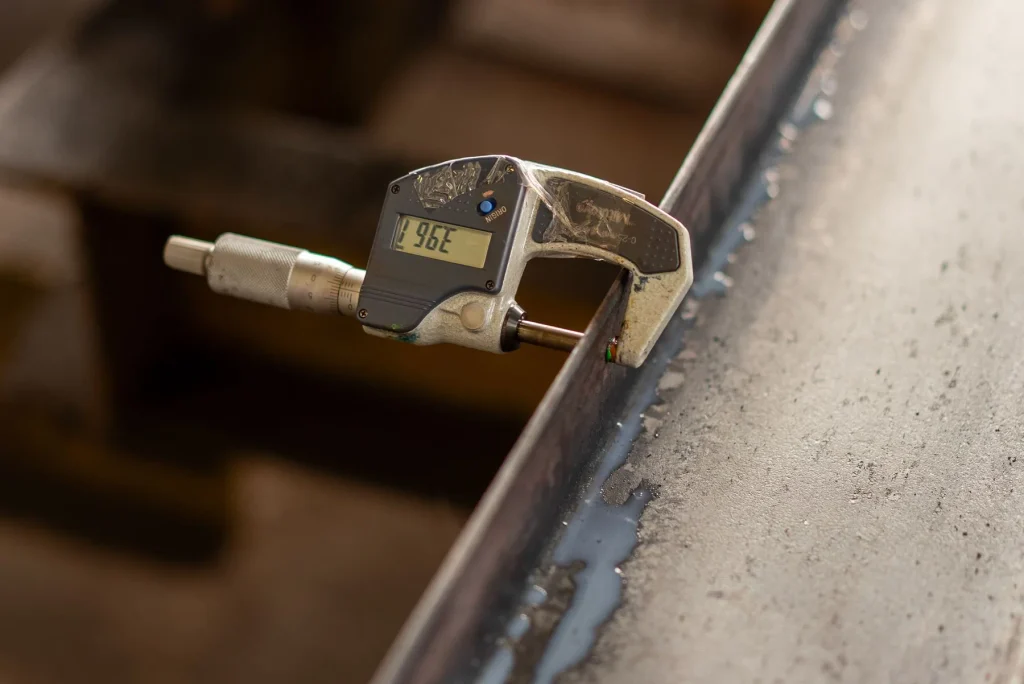
Note who stands behind each row. A structural silicone instrument may depend on approved substrates, an approved applicator and retained quality-control records. A supply warranty from an intermediary can also differ from the original manufacturer’s instrument. The table is therefore a review framework, not a promise of standard durations; the signed terms and the accountable underwriter control the outcome.
Different clocks and the trigger-date trap
Silicone, insulating glass, finishes, hardware and workmanship can all run on different clocks. The trap is the start date. One document may begin at manufacture or dispatch, another at installation, and the owner’s expectation may begin at practical completion. On a slow project, months of cover can disappear before handover. The fix is contractual: every term should state its trigger event, end date, extension mechanism and claims route. Ask for the schedule as a completed contract exhibit, not as a brochure promised for later.
Structural silicone: the warranty that carries the glass
On a structurally glazed elevation, silicone is the fixing, and its warranty is only as strong as its evidence chain. Manufacturers warrant adhesion when the applicator is approved, the substrates were tested, and peel-adhesion logs exist per batch and per shift under a specification such as ASTM C1184.

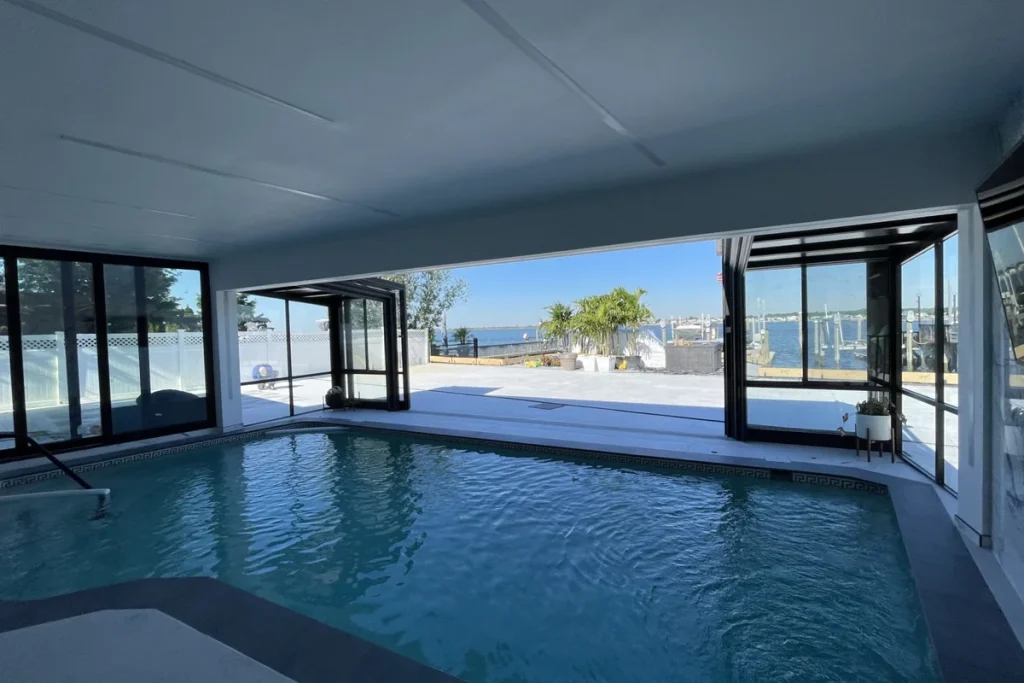
A study on record at the water’s edge in Singapore makes the stakes concrete: Straits Wellness Pavilion, a 560 m² frameless envelope on a marine site, holds its glass with structural silicone and concealed splice plates, with 316-grade stainless fixings and maintenance intervals documented in the handover manual because a spa cannot close for remedial work. On that kind of elevation, a curtain wall warranty covering the silicone is not paperwork; it is the difference between a maintenance line and a re-glazing programme.The performance context sits in our high-performance curtain wall guide.
The exclusions that hollow out cover
Warranty value leaks out through the exclusions page. Recurring examples: condensation caused by interior humidity, which covers almost every winter misting complaint; thermal breakage attributed to blinds, films or shading added after handover; damage from cleaning chemicals not on the approved list; wind events beyond the design pressure; and any seal or gasket failure where the maintenance manual’s inspection intervals were not followed and logged. Facade warranty what to check comes down to five lines: component, term, trigger date, underwriter, exclusions. A curtain wall warranty read through those five lines across bidders shows you the real product, not the brochure.
Traceability is what makes a warranty callable: the Tianyue record
A warranty you cannot tie to a specific panel is difficult to claim. The delivered Foshan Tianyue Mixed-Use Tower, an 18,000 m² 40-storey unitized envelope, shows the enabling discipline: every cassette numbered and traceable to its material certificates, whole-building U-values of 2.0 W/(m²·K) for the curtain wall and 1.6 for the hotel premium zones verified against calculation, and a technical evidence package handed to the local consultant for authority submission. If an IGU on floor 27 fogs in year four, the file names its glass batch, its sealant lot and its fabrication date. That is what a curtain wall warranty needs underneath it: not goodwill, but records.
Warranty red flags rhyme with quotation red flags
The same weaknesses surface in both documents. A warranty promised but absent from the contract exhibits; a term sheet underwritten by a trading company rather than the fabricator; durations quoted without trigger dates; exclusions copied from a different product family. Our facade quotation red flags guide maps the commercial side of that pattern, and the two reads should happen together, before signature. A bidder who resists putting the curtain wall warranty schedule into the contract has told you what the warranty is worth.
Years later: panels, parts and records
The warranty question does not end at expiry; it changes shape. Seals and gaskets are consumables with ten-to-fifteen-year service lives, IGUs can be re-made to the original sizes if the records survive, and finishes can be matched if the original coating class and colour reference were filed. Our guide to replacement panels years later covers that second life of the envelope, and the waterproofing interfaces where most claims begin are mapped in our curtain wall waterproofing guide. Buyers who file the curtain wall warranty schedule, the maintenance manual and the batch records in one place own a cheaper building in year twelve than buyers who filed nothing.
Ask for the draft warranty before you send the deposit
Ask every shortlisted bidder for the full warranty schedule as a draft contract exhibit: components, terms, trigger dates, underwriters, exclusions, claim procedure and response times. Send back the five-line table, component, term, trigger, underwriter, exclusions, filled for each bid, and ask for the traceability system that will sit underneath: panel numbering, material certificates, batch records. Starveil Facade issues its curtain wall warranty documentation in exactly that structure, underwritten at the Foshan plant that fabricated the envelope.
What to carry forward
- Read a curtain wall warranty as five lines per component: term, trigger date, underwriter, exclusions, claim route.
- Do not assume a universal term pattern; verify every duration and trigger date in the signed instruments.
- Structural silicone cover is only as real as the applicator approval and the batch logs.
- Traceability turns a warranty from a promise into a callable instrument.
- File the warranty schedule, maintenance manual and batch records together; year twelve depends on it.
الأسئلة الشائعة
How long is a typical curtain wall warranty period?
There is no universal period. Structural silicone, insulating glass, finishes, hardware and workmanship are usually covered by different instruments from different parties. Verify the term, start event, underwriter, exclusions and claim route for every component in the signed contract.
What voids a curtain wall warranty?
The recurring five: unapproved cleaning chemicals, films or blinds added after handover, skipped maintenance intervals, wind or impact beyond design loads, and repairs by parties the underwriter did not approve. On the delivered Foshan Tianyue tower, every one of the 18,000 m² of unitized cassettes is numbered and traceable to material certificates, so a claim names its batch and fabrication date; that traceability, not the paper alone, is what keeps cover intact and callable.
Does the sealant manufacturer or the facade supplier back the silicone warranty?
Usually both, in sequence. The manufacturer backs adhesion where the applicator was approved and test logs exist; the fabricator backs workmanship and system integration. Ask for both instruments by name and confirm they cover the same period for the same elevation, with no gap between them.
Can a warranty be transferred if the building is sold?
Many can, some cannot, and the clause decides. Transferability usually requires written notice, sometimes a fee, and often an inspection at the buyer’s cost. Investors buying stabilised assets should treat non-transferable cover as a pricing issue, not a surprise at due diligence.
What is the difference between a supply warranty and an installation warranty?
The supply warranty covers components as fabricated; the installation warranty covers anchorage, sealing and execution on site, and it belongs to whoever installed. Delivered projects under single design-supply-installation contracts issue them as separate instruments with one accountable counterparty, which keeps responsibility unambiguous when a leak appears.
How should warranty claims be submitted?
Follow the contract route: written notice within the stated window, photographs, panel or unit identification, and maintenance records. Response times belong in the contract too, a 48-hour assessment commitment is a reasonable ask, and a spare-glass percentage held locally shortens every future claim.
RELATED READING
For a broader understanding of how curtain wall components work together and how their performance is specified, explore our Curtain Wall System Guide, which covers framing, glazing, sealants, hardware and drainage. For practical guidance on preserving facade performance throughout the warranty period, read our Curtain Wall Maintenance Guide, covering inspection schedules, sealant and gasket replacement, cleaning requirements and maintenance records. You can also learn how to verify product quality before fabrication through our Facade Mock-Up Testing Guide, which explains sample approvals, structural and water testing, and field mock-ups. Finally, our 24-Question Facade Supplier Checklist provides a practical framework for reviewing factory capabilities, quality documentation, warranty responsibilities and after-delivery support before committing to a supplier. Together, these resources help buyers connect warranty commitments with technical verification, maintenance planning and supplier accountability.
عن الكاتب