Three modes, three climates of use
| Mode | How it opens | الأنسب لـ: | Engineering centre of gravity |
|---|---|---|---|
| Full retract | Whole elevations fold or slide away | Seasonal outdoor living, marina and view sites | Track alignment, stacked-panel loads |
| Partial retract | One elevation opens, roof fixed | Shoulder-season use, wind-exposed sites | Fixed-roof drainage, open-corner wind |
| Fixed room + sliding walls | Glazed room with wide operable gables | Year-round rooms in hard climates | Thermal build-up, condensation management |
RELATED READING
Whether the brief says retractable pool enclosure or sliding folding pool enclosure, the hardware behind every opening mode is covered in our villa and resort glass walls hub. Operators folding a pool room into a wider property refresh will find the same retrofit logic at building scale in our boutique facade upgrades in Gulf cities guide.
Start from the two states, not the photograph
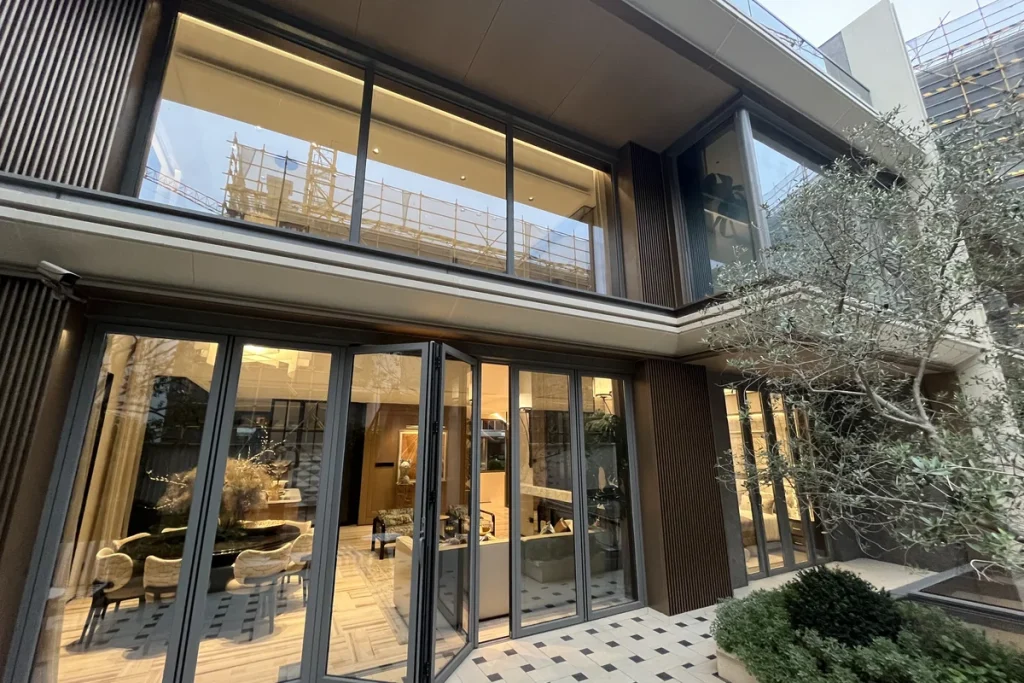
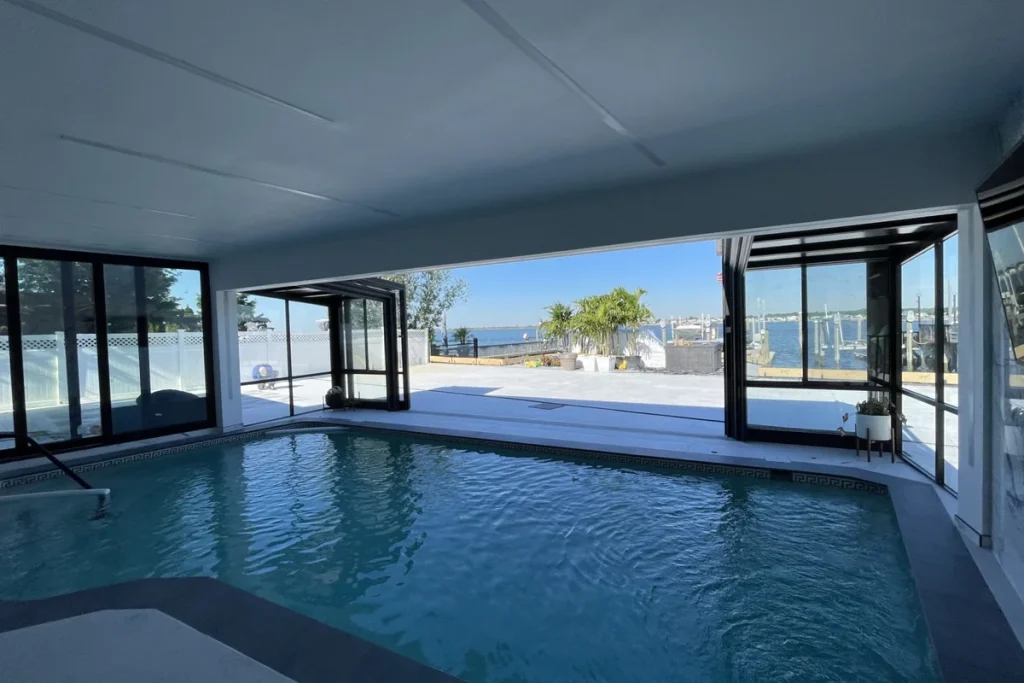
Most retractable pool enclosure projects begin with a picture of the open state, which is the easy state. The closed state pays the bills: it must hold heat over a pool, resist condensation on cold glass above warm water, and keep weather out at the head and threshold. Design both states explicitly, with the open state governing the view and the closed state governing the physics. On the Long Island Pool & Sunroom Enclosure, a delivered 85 m² retractable pool enclosure on a marina-front backyard, the owner’s test was simple and right. Swim in full marina-view mode from spring through autumn, then close the room for winter use without either state feeling like a compromise.
The track is the structure
Top-hung systems carry the panels from a head track, which means the track’s alignment is the enclosure’s geometry. In a retractable pool enclosure, a track out of line shows up as panels that never quite seal closed and rollers that wear unevenly.
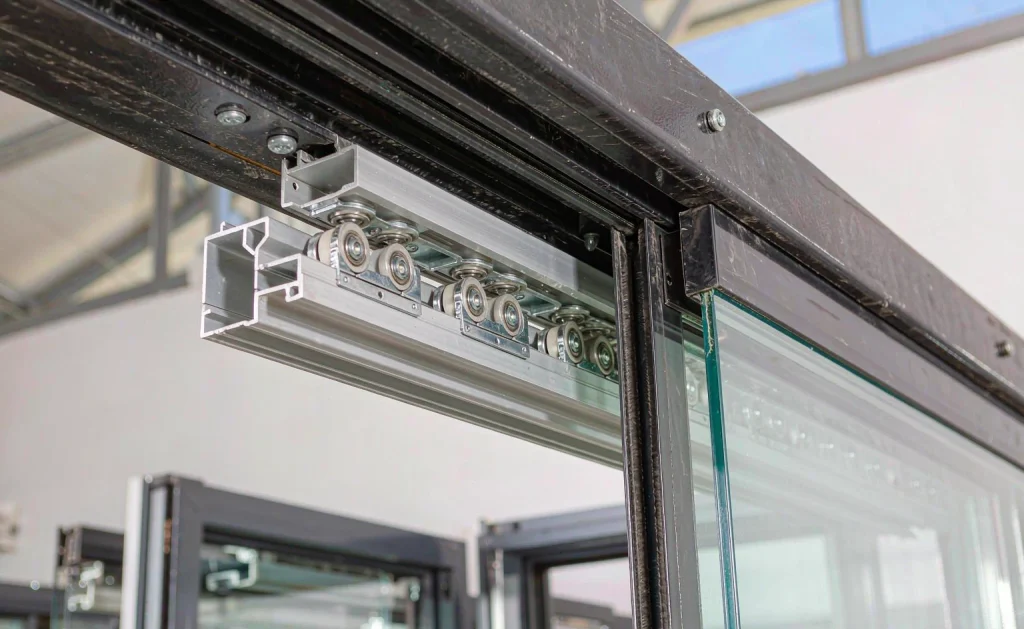
That is why the critical site operations on the Long Island build were the head track alignment and the first-panel water test. Both were supervised by the Starveil Facade engineer despatched for the enclosure. The track also decides the stacking footprint: where the open panels park is part of the plan, not an afterthought.
The threshold is where pools break buildings
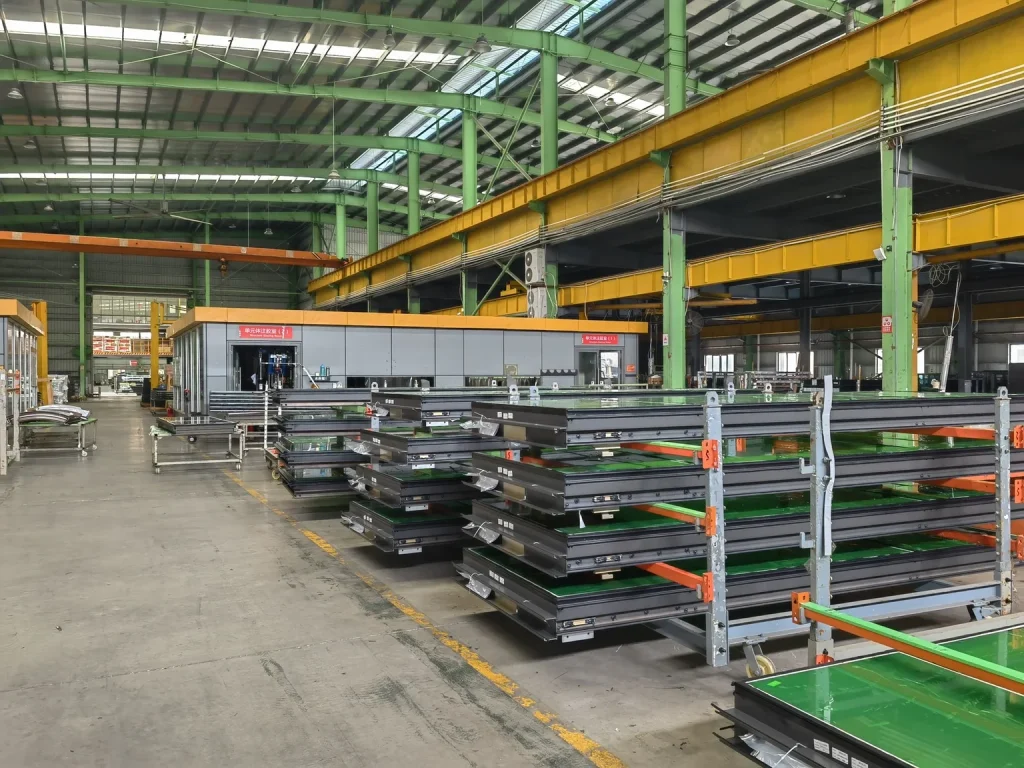
A retractable pool enclosure track has to survive water, chemistry and bare feet. The Long Island solution ran low-threshold tracks that the pool deck passes through flush. The deck reads continuous in both states, and neither wheel path becomes a trip edge or a puddle line. Drainage belongs in the threshold design too: a track that collects water slowly collects scale, and a threshold that cannot be hosed down will eventually not be. Materials and detailing here follow the same logic as the tolerance regimes in any operable facade. Before any of it ships, our plant measures 100% of key dimensions on every profile, applies AQL batch sampling under GB/T 2828.1, and sends six extrusions from each batch for laboratory testing against GB/T 5237 and GB/T 14846. The track geometry therefore leaves the factory proven rather than assumed.
Glazing keeps the view true and the heat in
The glazing brief on a view-led retractable pool enclosure is double-sided. Low-iron glass lets the water read its true colour, and an insulated unit with a soft Low-E coating holds winter heat and rejects summer gain. The mullions then fight for their life. The verticals were kept as slim as the structural calculations allowed on the Long Island build. The closed state still reads as a glass room rather than a wall with windows punched into it. In storm regions the same build-ups carry the wind grading treated in our typhoon-rated glass walls guide.
Plan the year, not the day
A retractable enclosure is used across seasons, so the handover should cover the year. It should say when to open, when to close, what to check at each changeover, and which seals and rollers deserve an annual look. Every glass unit on the Long Island enclosure is replaceable from inside without disturbing the structure, and the maintenance team works from the panel-by-panel manual supplied at handover. Sequenced delivery matters here as well: the enclosure shipped in two sequenced crates, and the staged programme logic is the same one our existing delivery timeline guide describes.
Send the site, ask for both states
Send the pool dimensions, the deck levels, the view that matters and the months the retractable pool enclosure must work closed. Ask back for the opening mode with its engineering basis, the track and threshold detail, the glazing build-up with its thermal numbers, and the changeover maintenance list. Starveil Facade scopes enclosures from the Foshan engineering desk with both states engineered before either is promised.
ما يجب تذكّره
- Both states of a retractable pool enclosure are engineered: the open one for the view, the closed one for the physics.
- Top-hung track alignment is the enclosure’s geometry.
- Thresholds must drain, survive pool chemistry and read flush with the deck.
- Low-iron plus Low-E keeps the view true and the heat in.
- Changeover checks and replaceable panels belong in the handover manual.
RELATED READING
For more guidance on facade systems and project delivery, explore Starveil Facade, our facade engineering and supply hub. Our sliding and folding glass walls page introduces operable glazing systems, while the facade delivery timeline guide explains production and shipment stages, and our facade durability guide covers material protection, maintenance and long-term performance.
الأسئلة الشائعة
How much does a retractable pool enclosure cost?
It is priced from the two states as an engineered envelope: area, opening mode, track length, glazing build-up and wind exposure. The 85 m² Long Island enclosure ran as a design-and-supply package shipped in two sequenced crates, with local erection under supervising guidance. Send the pool dimensions and months of closed use for a scoped estimate.
Can a retractable pool enclosure really be weather-tight in winter?
Yes, when the closed state is engineered as a glazed room: insulated low-E units, sealed head and threshold details, and a first-panel water test at commissioning. The Long Island enclosure closes to a weather-tight indoor room for winter use, with condensation managed through the build-up and ventilation balance.
What maintenance does a folding pool enclosure need?
Seasonal changeover checks on seals and rollers, track cleaning as part of deck hosing, and an annual look at gaskets and hardware torque. Panels replaceable from inside, documented in a panel-by-panel manual, keep any repair a maintenance task rather than a project.
Do sliding walls work beside salt water?
With marine-graded hardware and coatings, yes. Coastal and marina sites push the specification toward 316-grade stainless fittings and salt-rated finishes, the same material logic our coastal fixing guide covers. The track details get extra attention since salt accelerates wear in wheel paths.
How long does a retractable pool enclosure take to make and deliver?
The Long Island enclosure ran as a 10-week ex-works design-and-supply package, shipped in two sequenced crates. Programme follows area, opening mode and glazing lead times, so ask for the sequenced delivery plan with the quotation rather than a single ship date.
Can our local contractor erect the enclosure?
Yes. The Long Island enclosure was erected by the local general contractor’s crew under our supervising engineer, who covered the head track alignment and the first-panel water test. Agree the supervision scope at contract, since that is the practical line between guided local erection and a full installation crew.
عن الكاتب