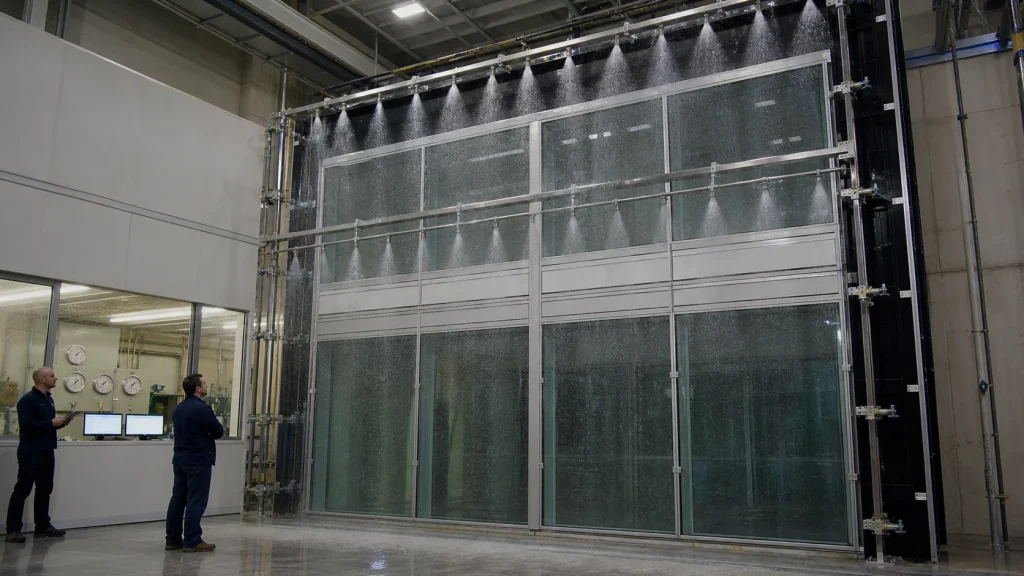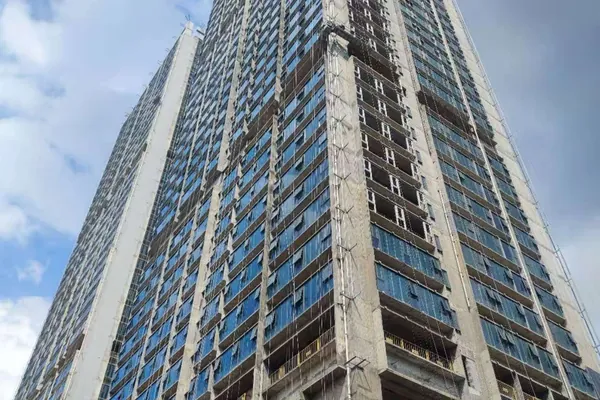
Four gates set unitized panel production rates
| Gate | What it controls | What stalls it | Discipline that protects it |
|---|---|---|---|
| Design freeze | Panel family count, glass build-ups, bracket types | Late architect changes to grid or finish | Typology cap agreed before fabrication release |
| Extrusion batching | Profile supply to the assembly line | Small mixed-alloy orders interrupting press runs | Batch release against the panel schedule |
| Assembly liney | Cassettes glazed, sealed and tested per week | Non-repeating specials on the same benches | Dominant-type lanes plus a specials lane |
| Dispatch sequence | Container order matched to erection floors | Shipping volume-first instead of sequence-first | Packing plan keyed to the floor-by-floor programme |
RELATED READING
For how unitization compares with stick construction as a system choice, our stick versus unitized guide covers the engineering trade-offs, and the high-rise facade decisions hub sets the wider tower context.
Repetition is the rate
Every unitized programme lives or dies on its panel family count, the strongest single lever on unitized panel production rates. At Tianyue, the unit grid was set out against a slab tolerance survey requested before fabrication, and the bracket design carried generous three-axis adjustment to absorb as-built variation. That survey did two jobs at once: it protected installation speed on site, and it let the factory commit to a small family of cassette types instead of hedging with bespoke units. The fewer the families, the faster every bench downstream runs.
The extrusion batch is the hidden clock
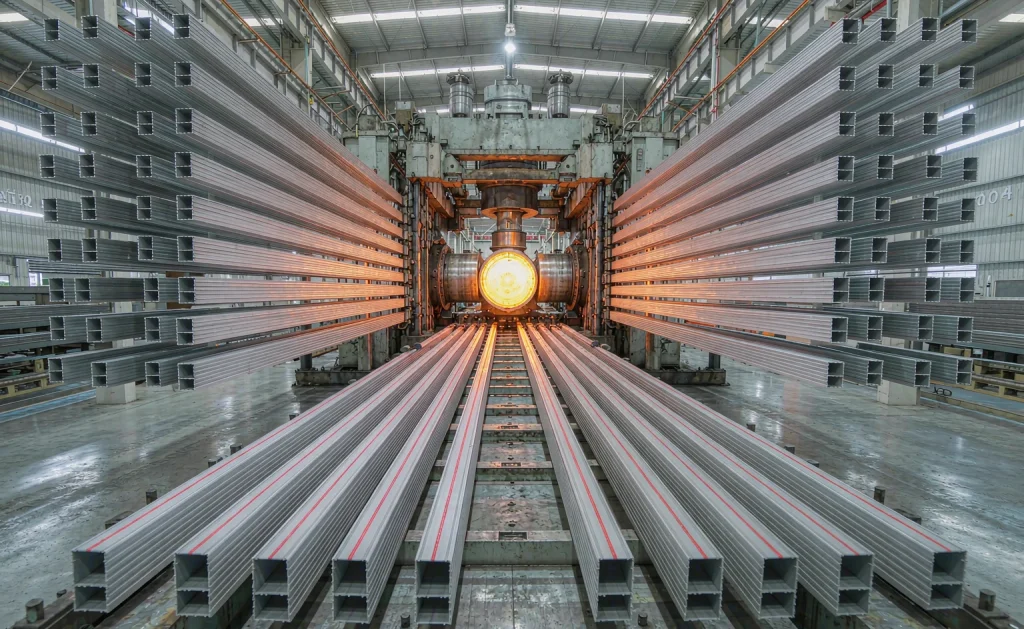
Aluminium profiles arrive at the assembly line in batches, and a press changeover between alloy or die groups costs real hours, which is the clock that quietly caps unitized panel production rates. Our plant runs one 1,800 t press and two 1,000 t presses, extruding 6063 and 6061 alloys, so a tower programme batches profile families across long press campaigns instead of mixing small orders. A programme that releases profiles against the panel schedule, rather than against a blanket order, keeps the benches fed without inventory piling up. On tower envelopes the profile families repeat, which is exactly why batching works: one dominant mullion-and-transom set, released in waves, feeds weeks of cassette assembly from a single press campaign.
The bench decides quality, not just speed
A unitized cassette is glazed, gasketed and sealed indoors, which is the whole argument for the system. The bench is where the three-seal EPDM perimeter, the glazing set-backs and the drainage details are built and checked.
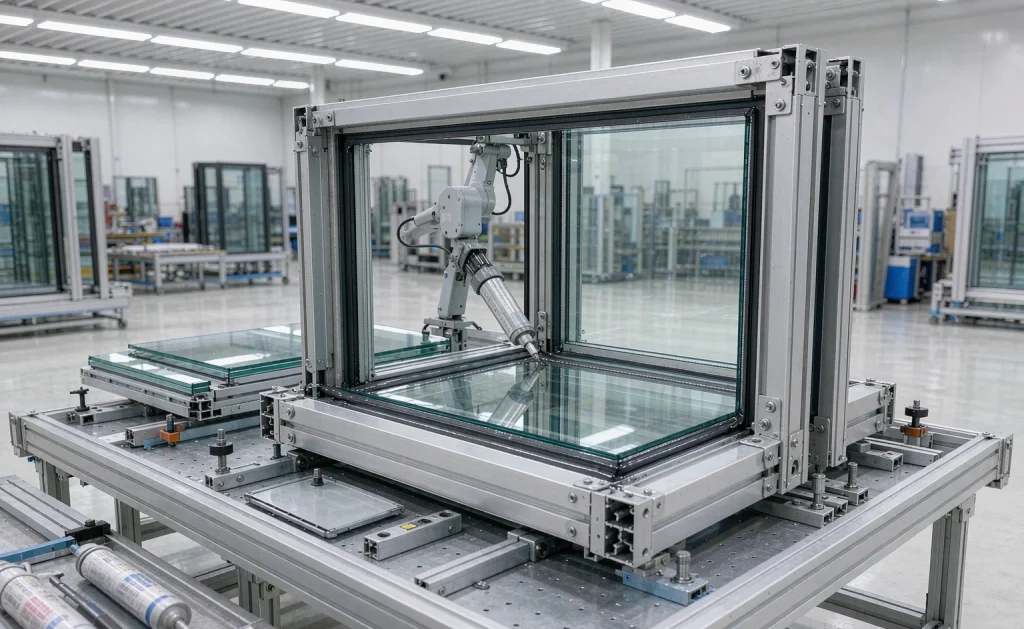
Before anything reaches the bench, we measure 100% of key dimensions on every profile, apply AQL batch sampling under GB/T 2828.1, and send six extrusions from each batch for laboratory testing against GB/T 5237 and GB/T 14846. Starveil Facade assembles every unit as a numbered, traceable object at this stage, tied to its material certificates, so unitized panel production rates and the evidence package grow together. A factory that cannot show you the bench regime can still show you a rate, and the second number means nothing without the first.
Sequence is a form of capacity
The fourth gate behind unitized panel production rates is the one buyers forget. Cassettes packed volume-first fill containers efficiently and stall sites badly, because floor two waits for panels buried in floor nine’s crate. Sequence-first packing, keyed to the erection programme, trades a little container volume for days of crane time. Our tolerances guide covers the dimensional regime that makes this possible, and the delivery milestones guide shows the artefacts that prove it week by week.
What 18,000 m² actually taught
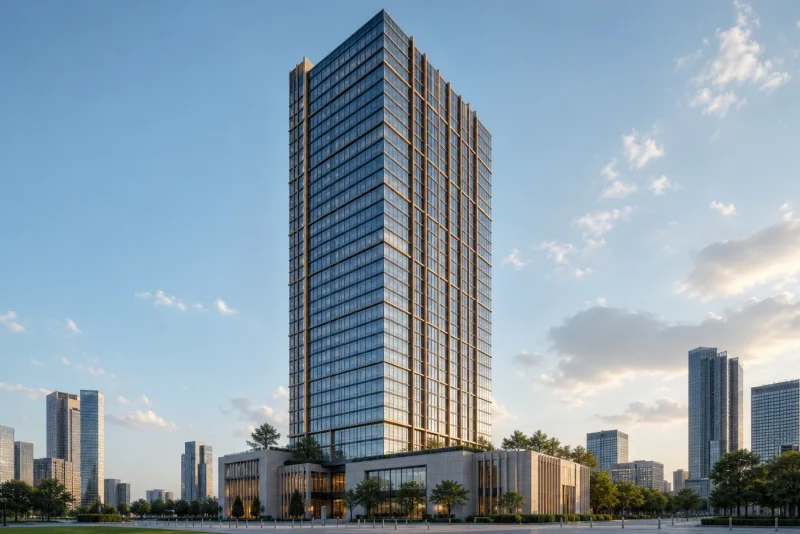
The Tianyue programme compressed to 32 weeks ex-works because the four gates were engineered as one system, not because any single machine ran fast. Design froze early. Profiles batched to the panel schedule. Benches ran dominant-type lanes. Containers left in floor order. The tower topped out on programme with a continuous envelope reading as a single blue-tinted face, and the acoustic and thermal targets, covered in our fabrication tolerances guide in terms of fit, were verified against calculation. The delivered case is the برج تيانيوي متعدد الاستخدامات في فوشان, a 40-storey mixed-use development in Foshan’s Qiandeng Lake CBD combining retail, serviced apartments and a hotel. Its CSG Low-E envelope, upgraded to double-silver and triple-silver coatings on the high-performance zones down to 1.4 W/(m²·K) centre-of-glass, is the delivered reference for unitized panel production rates planned gate by gate, with every unit numbered and traceable to its material certificates. Unitized panel production rates are a design outcome before they are a factory claim.
Send the programme, ask for the gate plan
Send the tower’s floor count, target enclosure date and erection sequence, plus the current facade grid if one exists. Ask back for unitized panel production rates expressed as gates: freeze date, profile batch plan, weekly cassette output and container dispatch order. Starveil Facade answers from the Foshan engineering desk with exactly that structure, because a rate without gates is a number nobody can hold anyone to.
ما يجب تذكّره
- The slowest of the four gates sets unitized panel production rates, not the fastest machine.
- Panel family count is the single biggest lever on weekly output.
- Profile batching feeds benches; blanket orders starve or bury them.
- Numbered, traceable units are the evidence that the rate was real.
- Sequence-first packing buys crane days at the cost of container volume.
RELATED READING
For a broader overview of facade system options, visit our Facade Systems Hub. For a closer look at the production and quality control process, read our trading company vs manufacturer guide. You can also review our facade delivery timeline guide و cross-border facade delivery guide to understand how fabrication, quality checks, packing and shipment sequencing affect the overall project programme.
الأسئلة الشائعة
What sets unitized panel production rates for a curtain wall factory?
Unitized panel production rates depend on the panel family count and the four gates: design freeze, extrusion batching, assembly capacity and dispatch sequence. A repeating grid on frozen drawings runs far faster than a varied elevation still changing. Ask for the gate plan, not a single headline rate. On the 18,000 m², 40-storey برج تيانيوي متعدد الاستخدامات في فوشان, delivered on a 32-week ex-works programme, all four gates were sized together from approved shop drawings onward, which is what a real rate looks like in practice.
Why does design freeze matter so much for unitized production?
Every late change to the grid, glass build-up or finish ripples through profile orders, bench set-up and container sequence. A frozen design lets the factory commit to a small family of cassette types and run dominant-type lanes, which is where the speed comes from.
Do higher unitized panel production rates reduce quality?
Not when the rate comes from repetition rather than rushing. Benches running the same cassette family build quality through familiarity, and each unit remains individually numbered and traceable to its material certificates. Rate built on skipping tests or traceability does reduce quality, and shows up on site.
How are unitized panels sequenced for shipping?
In erection order, keyed to the floor-by-floor programme, even when that trades some container volume. Volume-first packing buries the panels a site needs next, and the crane stands idle while crates are unpacked in the wrong order.
What happens if the facade design changes after fabrication starts?
Changes ripple through all four gates: new profiles interrupt the press campaign, new cassette types break the dominant-type lanes, and the container sequence has to be redrawn. That is why the freeze gate exists, and why late changes are priced as programme events rather than drawing swaps.
Can buyers verify a unitized factory before placing an order?
Yes, and a video factory walk is a practical first step. Station-specific factory photographs give the buyer fixed reference points to request during that video walk, from the press line to the assembly benches to the packing area, so the tour confirms the gates the supplier claims to run.
عن الكاتب