What each destination region asks of the plan
| Destination region | Service pattern from South China | What the plan must absorb |
|---|---|---|
| Southeast Asia | Direct services on short rotations | Fast transit; planning driven by installation date, not sailing date |
| Gulf (Jebel Ali and beyond) | Direct and transshipment options via hub | Summer heat in container stacks; final-mile port and customs windows |
| Africa | Transshipment common; inland legs long | Container sequence and inland coordination decide the site date |
| Oceania | Direct services to major ports | Quarantine and packing cleanliness rules on timber and crates |
| Europe and North America | Direct or single-hub transshipment | Longer chains; demurrage discipline and milestone buffers matter mostAsk for staged payment against milestones |
The pattern, not the distance, is what the facade planner reads. Every extra handling event is another crane cycle over flat-packed glass, so the cheapest rate among two-transshipment sea freight routes is often the most expensive way to ship a curtain wall.
The port pair matters more than the rate
Freight is bought by the container, but projects are delivered by the port pair. The origin port decides sailing frequency and the destination port decides the inland leg, and the wrong pair can add weeks that no rate discount recovers. For a Foshan-fabricated envelope, the natural origins are the South China terminals within trucking distance of the plant. The engineering question is which destination port serves the site with the least handling, and it is the question that sorts sea freight routes for a facade consignment. A landlocked site compounds the choice, because the final inland move becomes part of the facade programme rather than a logistics afterthought.
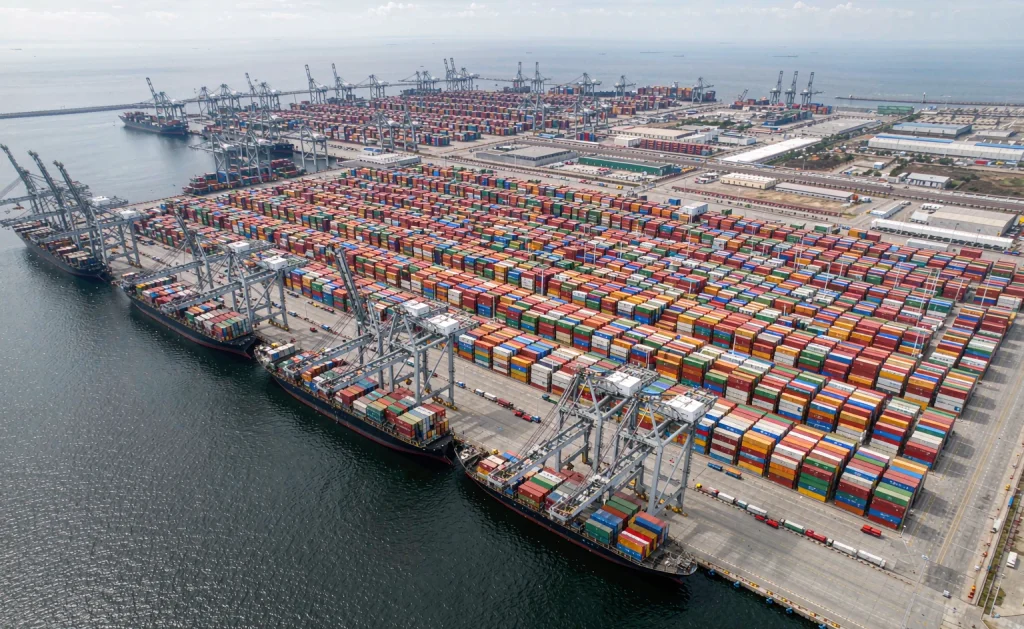
Container sequence is installation sequence
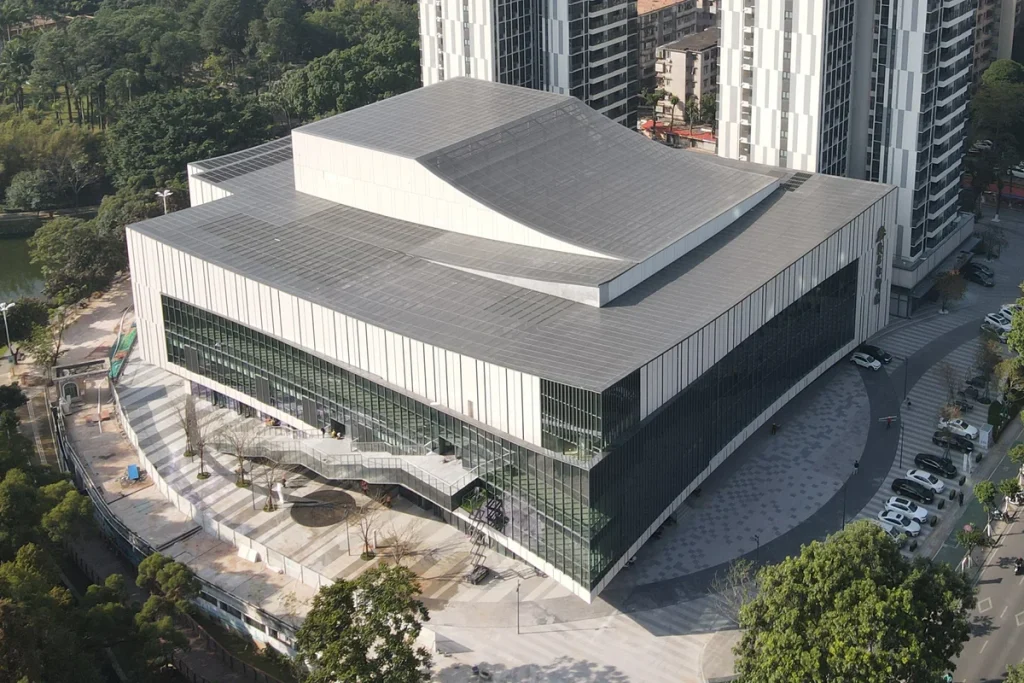
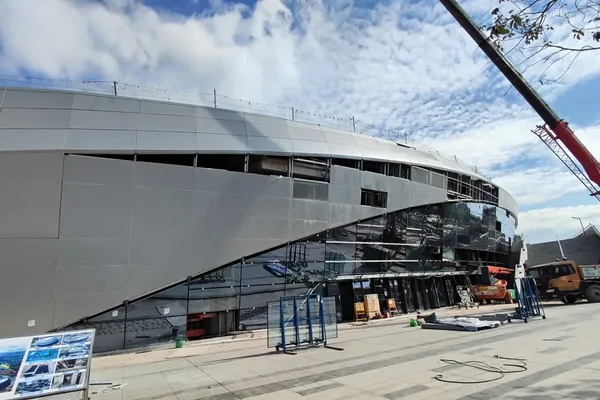
A facade consignment is an ordered system, not a pile of parts. When sea freight routes deliver containers in installation sequence, the crew on site opens the right crate on the right day and never digs for a panel. The delivered Botswana Sports Arena, a 5,200 m² curved glass-and-aluminium envelope in landlocked Gaborone, was flat-packed in container sequence matched to the construction programme, and the local crew erected the envelope from their own stock without material sorting on the slab. The arena opened on programme, and it is the reference for what sequence discipline does when sea freight routes end at a landlocked destination. A study on record for a hillside house in Marbella split delivery into three sequenced containers aligned with the build. It recorded zero demurrage, because each container was called forward only when the works were ready for it. Sequence planning is free at the engineering stage and unbuyable on site.
Transshipment is a handling decision
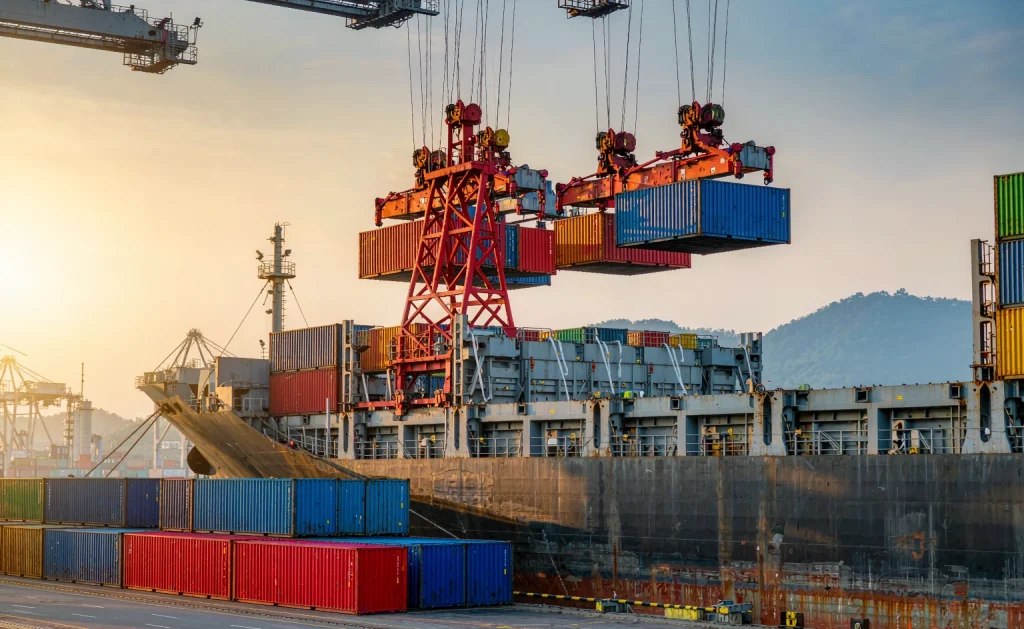
another lift of the same crate, another stacking period in another yard, and another weather exposure for flat-packed glass. Curtain wall export container shipping lives or dies on that count: every intermediate yard stay is weather time the packing must be designed to survive. That is acceptable on sea freight routes with no direct service to the destination, and most African and secondary ports have none. Starveil Facade plans each container load with packing that assumes the handling: steel crates, internal bracing, and desiccant sized to the longest plausible chain. The packing method itself is a project document, and our container loading guide sets out what it should contain.
Incoterms and the milestone programme
Whoever controls the freight under the contract controls the route, the carrier and the sequence, so the Incoterm choice is really a control choice over the sea freight routes. Under a seller-arranged term, the facade supplier owns the chain that carries its own product, which keeps responsibility in one place. Under a buyer-arranged term, the supplier still owes the packing plan and the loading sequence, and the buyer inherits the route risk. Either way, the sailing slots must be booked against a milestone programme rather than a calendar promise, as our delivery milestones guide describes. The full chain from drawing approval to site handover is mapped in our guide to facade delivery timelines. Freight terms that go unnamed in a quotation are among the red flags in our quotation red flags guide, because unpriced boundaries become your variation orders.
Send the site, ask for the chain
Send the destination address, the nearest port options and the site programme. Ask back for the route as an engineering answer: port pair, service pattern, container count and the sequence each container carries. Starveil Facade plans that chain from the Foshan plant as part of the delivery, because sea freight routes decided by freight rate alone are schedule risks wearing discounts.
What to remember
- Sea freight routes are chosen by port pair and service pattern, not by rate.
- Container sequence should match installation sequence.
- Every transshipment is a handling event over your glass.
- Packing must be engineered for the longest plausible chain.
- The Incoterm decides who owns the route, so choose it as control.
RELATED READING
For more information on international facade delivery, explore STARVEIL’s project delivery approach. You can also read our guides to cross-border facade delivery, facade delivery timelines and facade design and supply for practical guidance on shipping, scheduling and delivery responsibilities.
Frequently asked questions
How do sea freight routes carry facade consignments?
Flat-packed in containers, with panels, framing and hardware crated in installation sequence. The method keeps volumetric efficiency high and lets the site crew erect from container order rather than sorting stock on the slab.
Does transshipment increase damage risk for glass facades?
Each transshipment adds a lift, a stacking period and a weather exposure for the same crate. Direct services minimise handling where they exist; where they do not, packing must be engineered for the full chain with steel crates, bracing and desiccant.
Who chooses the sea freight routes on a facade project?
The party that controls freight under the contract, which follows the Incoterm. Under seller-arranged terms the supplier owns the chain carrying its own product; under buyer-arranged terms the supplier still owes the packing plan and loading sequence while the buyer inherits route risk.
Why does container arrival sequence matter?
Because a facade is erected in a defined order, and containers that arrive out of sequence force the site to store and search for panels. Sea freight routes sequenced to the erection order keep the programme moving and were the method behind the delivered Botswana arena consignment.
How many containers does a facade project need?
That follows from the envelope area, the packing method and the panel types, so the useful answer arrives as a container schedule rather than a single figure. Ask for the count together with the sequence each container carries, because a correct number in the wrong order still stalls the site.
What documents should accompany a facade consignment?
At minimum the packing plan, the container sequence list showing which crates ride in which container, and the shipping documents under the named Incoterm. Add the milestone programme so the site knows when each container is called forward, plus pack photographs that record the condition of the crates at loading.
About the author