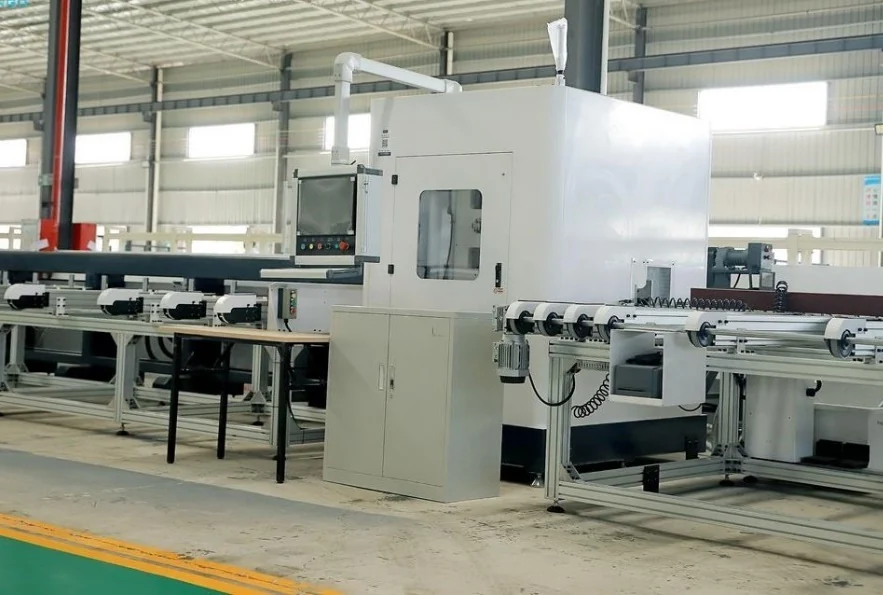
Four decisions made at the die, paid for on the building
| Decision | What it fixes | Cost behaviour | Discipline |
|---|---|---|---|
| Cross-section families | Mullions, transoms, covers, brackets | More families, more dies, more changeovers | Standard family plus project specials only |
| Alloy and temper | Strength and finish quality | 6063-T5 standard; T6 where spans demand | Match temper to span, not to habit |
| Coating system | Colour life under climate | PVDF multi-coat costs more than powder | Coat to the UV and salt environment |
| Curved formation | Radiused mullions and transoms | Roll-bent from straight stock beats bespoke dies | Curves formed, not re-drawn |
How the profile families from aluminium extrusion dies convert into factory output is covered in our unitized production rates guide, and the dimensional regime the dies must hold in the fabrication tolerances guide.
Family count is the hidden budget
Each new cross-section means new aluminium extrusion dies, a new press campaign and a new set-up on the machining line. A disciplined envelope works from a standard family of mullions, transoms and covers, then adds project specials only where the architecture genuinely demands them.
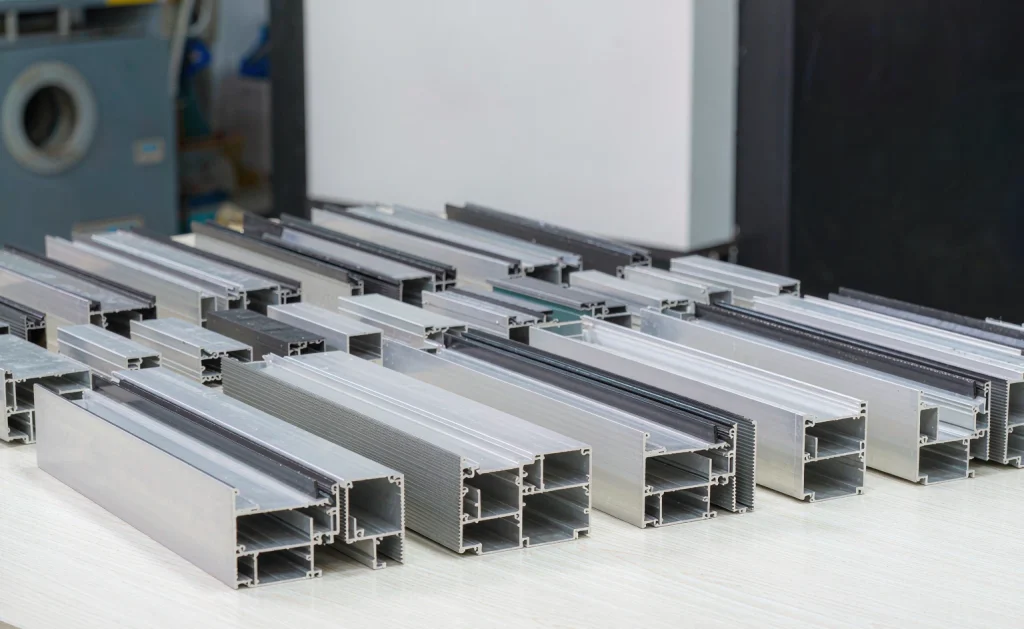
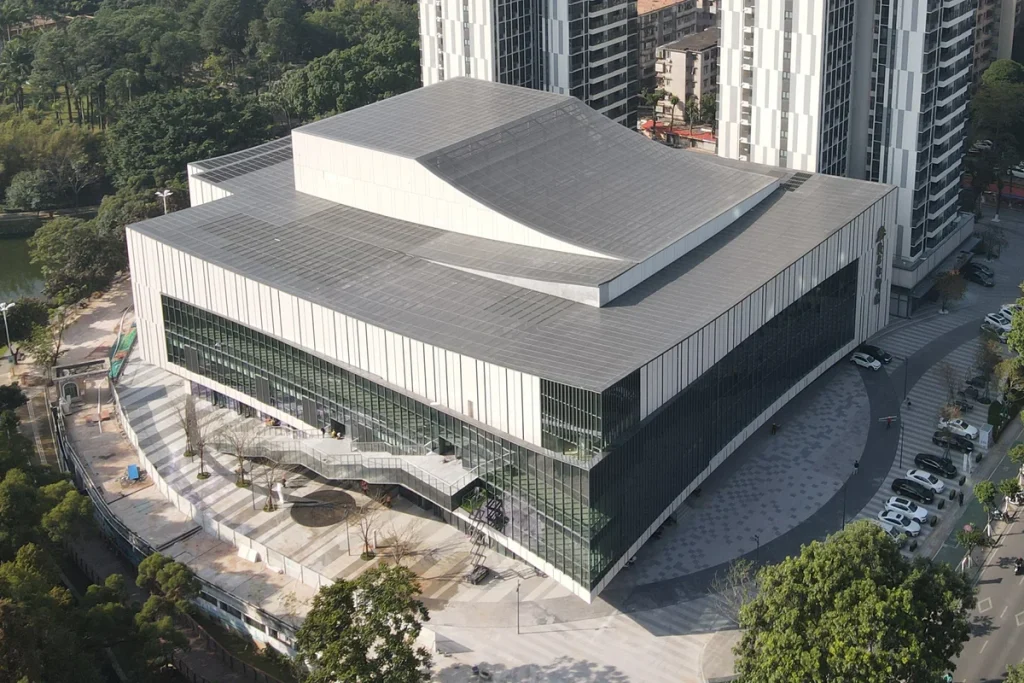
On the 18,000 m² Tianyue tower delivered by Starveil Facade, the unit grid ran on a repeating profile set released in batches against the panel schedule. That is the same discipline expressed at production scale, and it is where the curtain wall profile design cost is actually decided: few families, batched well, beats many families, optimised never.
Alloy and temper follow the span
6063 extrudes beautifully and takes coating well, which is why it carries most curtain wall work. The Foshan press shop runs one 1,800 t press and two 1,000 t presses, extruding 6063 and 6061 alloys, so the finish-grade workhorse and the higher-strength alternative come off the same lines. The T5 temper suits the majority of mullion and transom duties, and T6 steps in where spans or wind loads demand more section strength. The specification mistake to avoid is defaulting everything to the stronger temper as insurance: it costs money where the physics does not ask for it. Match the temper to the calculation when aluminium extrusion dies are specified, and let the calculations, not the brochure, decide.
Coating is a climate decision
The Zimbabwe Exhibition Hall, a 2,150 m² city-centre envelope in Harare and a design-and-supply study on record, shows the pattern under aggressive sun: its aluminium extrusion dies produced 6063-T5/T6 profiles under a three-coat, 40 μm PVDF fluorocarbon finish for long-term colour and gloss retention under intense UV, because commodity coatings chalk in that exposure. The same logic runs in reverse: a sheltered, low-UV interior courtyard does not need the full multi-coat system. Coat the profiles from the aluminium extrusion dies to the climate each elevation actually faces, and record the coating schedule elevation by elevation.
Curves should be formed, not re-drawn
Curved facade geometry tempts projects into bespoke curved dies, and the cost arrives before the first panel. The fabrication answer is roll-bending: straight extrusions from the standard family are rolled to radius in-factory, keeping one set of aluminium extrusion dies for the whole envelope. The Harare study used exactly this route for its double-curved entrance segments, with roll-bent profiles letting the glass transitions run as drawn and no site rework. When the die stays constant and the bend does the geometry, both the budget and the tolerances behave. Our tolerances guide covers what roll-bent profiles must still hold.
Where dies are made is where quality lives
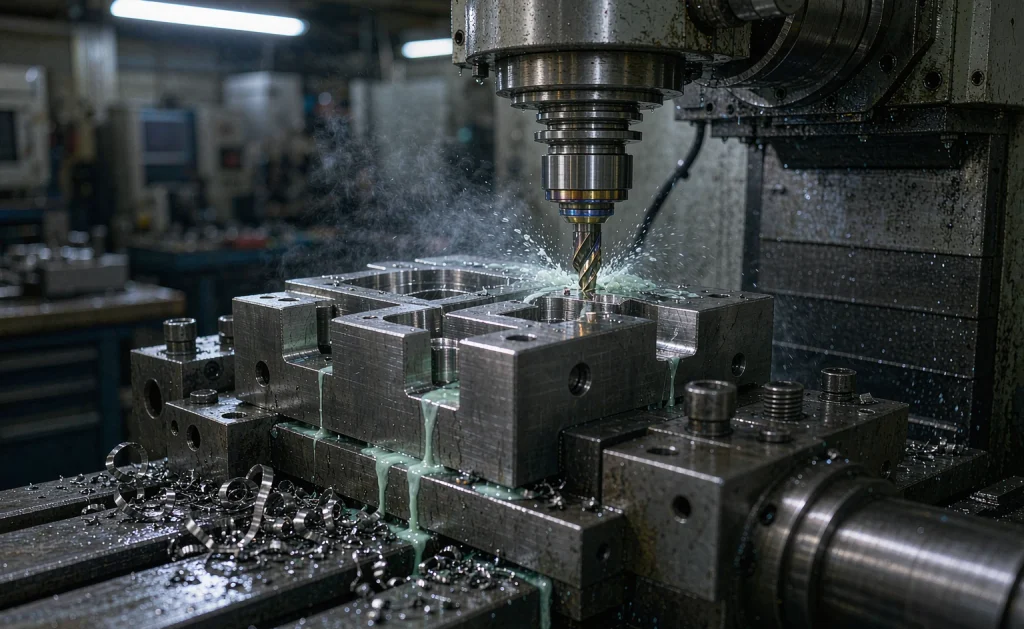
A die is a machined promise. Aluminium extrusion dies are cut by long-term partner die makers in Foshan, and the working relationship between the extruder and the die maker is what controls section tolerances, surface quality and the rework loop. Die ownership, drawings and revision control should be written into the contract, and the die library itself records the factory’s history. The die rack is one of the stops in our Foshan factory audit guide. The samples cut from a first extrusion run belong on the approval table alongside the finish samples in the mock-up guide. Behind them sits the factory regime: the plant measures 100% of key dimensions on every profile, applies AQL batch sampling under GB/T 2828.1, and sends six extrusions from each batch for laboratory testing against GB/T 5237 and GB/T 14846. A supplier who cannot show you the die programme is buying profiles from someone who can. Our guide on reading a facade quotation line by line shows where that difference surfaces first.
Send the geometry, ask for the family plan
Send the elevations, the span intent, the climate the building faces and any curved geometry in the concept. Ask back for the plan for aluminium extrusion dies: the standard sections proposed, the project specials list with its reason for each, and the alloy and temper schedule with the calculation basis. The coating schedule by exposure and the curved-formation route complete it. Starveil Facade answers from the Foshan die programme in exactly that form.
What to remember
- The count of aluminium extrusion dies is the hidden budget of every envelope.
- 6063-T5 carries most duties; T6 only where the calculation says so.
- Coating schedules follow the climate each elevation faces.
- Curves are roll-bent from straight stock, not re-drawn as new dies.
- The die library tells you who actually makes the facade.
Explore More Facade Manufacturing Guides
Understanding aluminium extrusion dies is only the first step in evaluating a curtain wall manufacturer’s capabilities. Explore our Insights hub for more practical guidance on facade engineering, manufacturing and project delivery. To understand how extrusion accuracy affects the finished envelope, read our guide to facade fabrication tolerances. If you want to verify the equipment, production processes and quality controls behind your profiles, our Foshan curtain wall factory audit guide explains what to check before choosing a supplier. You can also learn how to distinguish a genuine manufacturer from an intermediary in our guide to trading companies vs. facade manufacturers.
Frequently asked questions
Why do curtain wall profiles use 6063 aluminium?
6063 extrudes cleanly, holds tight sections and takes coating well, which suits visible facade framing. The T5 temper covers most mullion and transom duties, and T6 adds strength where spans or wind loads demand it through calculation rather than habit.
What is the difference between powder coating and PVDF on extrusions?
Powder coat is economical and suits sheltered or moderate exposures. PVDF multi-coat systems, such as the three-coat 40 μm finish in the Harare study, hold colour and gloss under intense UV and salt, which is why high-UV and marine projects specify them. The coating schedule should follow the exposure of each elevation.
How are curved curtain wall mullions made?
By roll-bending straight extrusions to radius in-factory, using the standard profile family. This avoids bespoke curved dies, holds one die set across the envelope, and delivered the double-curved entrance transitions in the Harare study with no site rework.
Does the number of aluminium extrusion dies really affect cost?
Yes, at every stage: each cross-section needs a dedicated die, press campaign and machining set-up, and mixed small batches interrupt the production rhythm that makes fabrication efficient. A standard family plus a short, justified specials list is the disciplined route.
Who owns the aluminium extrusion dies on a project?
The contract decides, which is the point of asking early. Dies for the profiles behind this guide are cut by long-term partner die makers in Foshan, and die ownership, drawings and revision control should be written into the contract. Agree who pays for the die, who holds the drawings and who controls revisions before the first section is cut.
When is 6061 the right choice over 6063?
When the structural calculation asks for more section strength than 6063 can carry at the specified temper, typically on long spans or high-pressure zones. 6063 keeps the finish advantage for visible framing, and both alloys are extruded on the Foshan press line. Let the calculation decide, not habit.
About the author