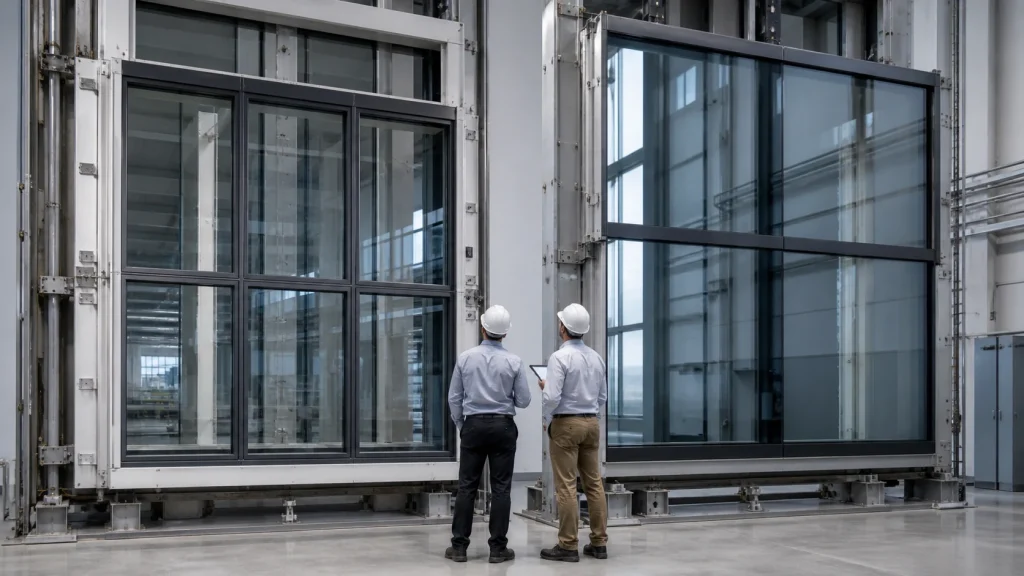
The one-line version
The right moment to bring a facade supplier into your project is earlier than most teams expect.The highest-value window to engage a facade supplier is concept or early design development, before system depth, structural edges, module size, glass ratio and installation route are fixed. Waiting for construction drawings often turns system advice into redesign.
Decision data
Facade supplier engagement by project stage
| Project stage | Useful supplier input | Decision still flexible | Risk of waiting |
|---|---|---|---|
| Concept | System family, module, glass ratio and indicative budget | Geometry, structure and architectural rhythm | Unbuildable or uneconomic facade language |
| Design development | Interfaces, movements, glass, shading and evidence plan | Slab edge, anchors, drainage and mock-up | Consultants design around wrong assumptions |
| Pre-tender | Scope matrix, quantities, programme and installation route | Commercial boundary and testing allowance | Incomparable bids and missing obligations |
| Post-award | Detailed coordination and production release | Limited optimisation within signed intent | Redesign, variation and approval delay |
Swipe horizontally to compare all four columns on mobile.

Too early is rarely the problem
The facade supplier does not need a finished drawing set to add value. Early photographs, elevations, massing, structural intent and a budget range are enough to expose the decisions that could later become expensive.
Waiting until construction drawings are complete often turns system advice into redesign.
Concept design
At concept stage, the useful questions are broad: stick or unitized, glass ratio, likely module, frame depth, shading, opening strategy and how the envelope meets the structure. A short review can keep the architectural language while removing geometry that works poorly as a facade system.
Design development
This is the strongest coordination window. Structural movements, slab edges, embeds, glass performance, drainage, interfaces, samples and mock-up strategy can be developed before every consultant has built around an assumption.
Budget also becomes sharper because quantities and details begin to resemble the package that will be fabricated.
Before tender
A pre-tender review should close ambiguous scope lines: who owns perimeter seals, fire stopping, builders work, access, local sign-off, testing and installation. If those boundaries remain vague, the cheapest bid is often simply the bid carrying the fewest obligations.Clarifying those lines early is exactly what a facade supplier is good at — before the bids freeze them.
What to bring to the first review
Project decision note
Define what a useful early review should return
Early involvement should produce decisions, not a premature sales quotation. Ask the facade supplier to identify viable system families, likely structural depths, module and glass-size constraints, opening and shading implications, critical interfaces, testing assumptions, installation routes and the information still missing. The review should distinguish recommendations supported by the current drawings from provisional advice that depends on loads, movements, survey or local consultant input.
Give the architect a short decision register rather than redesigning the facade without consent. Record each issue, why it matters, available options, cost or programme consequence, owner and decision date. Typical subjects include slab-edge zones, anchor access, corner geometry, glass ratio, spandrels, entrances, roof and podium interfaces, maintenance access and how screens connect without creating uncontrolled thermal or waterproofing bridges. This preserves design intent while exposing details that will influence fabrication.
The client should also receive a staged next-step plan. At concept, that may be a system and risk note; during design development, preliminary details, performance criteria and a budget basis; before tender, a coordinated scope matrix, evidence plan and measurable specification. The supplier is one participant, not the project’s approving consultant. A useful early review states its limitations and shows which questions require the structural engineer, building-envelope consultant, fire consultant, energy modeller, installer or local authority.
Agree what the early review does not authorise. Concept sketches and budget guidance should not be treated as fabrication information, statutory approval or acceptance of unverified site dimensions. Mark the status of every output and identify the next information gate. This protects the design team while allowing useful supplier input to arrive before details become costly to change.
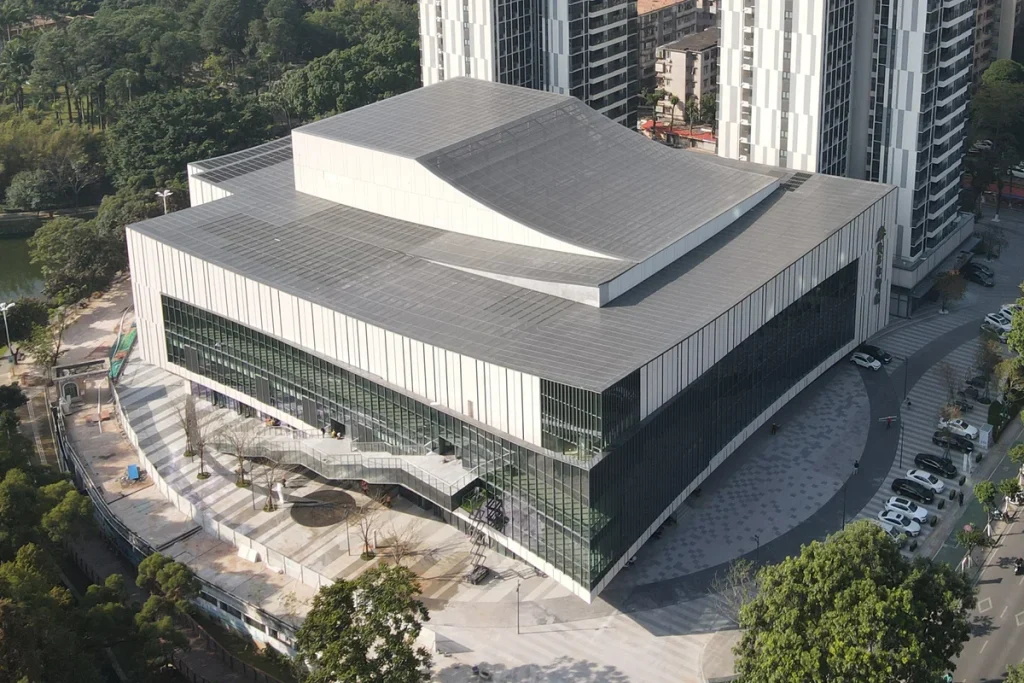
Maoming City Theatre
A civic theatre and cinema complex of approximately 10,000 m², combining a 1,200-seat main auditorium with five cinema halls providing 450 seats in total. Its massing and envelope translate Maoming's coastal identity into the language of sails and waves, giving the new cultural venue a contemporary public presence.
Open project recordPhotos are enough to begin
Start with the minimum useful brief.
For a project-specific answer, send the information available now. We will identify the missing inputs instead of asking you to complete the design before the first conversation. If drawings are unavailable, clear photos and rough dimensions are enough to begin.
- Project city and building use
- Current drawings or clear facade photographs
- Approximate dimensions or measured facade area
- Target budget range and the date that matters
- Preferred installation route or known local contractor
Decision summary
What to remember
- Contact a facade supplier before the tender set is complete.
- Bring structure and installation into concept decisions.
- Use early budgets to compare strategies, not suppliers.
- Record assumptions that still need local confirmation.
Early engagement is valuable because it preserves choices. The objective is not to complete engineering during concept; it is to prevent architectural, structural and programme decisions from closing around an untested facade assumption.
Standards and references
Standards and references
Confirm the governing edition and project applicability with the appointed consultant and authority.
Rank Math FAQ block
Frequently asked questions
Is concept design too early for a facade supplier?
Usually not. The review can remain proportionate: system family, module, span, glass ratio, likely performance, interfaces and budget. These decisions are inexpensive to adjust before other disciplines coordinate around them.
Will early supplier involvement restrict competition?
It should not if the design basis, performance criteria and interfaces remain transparent. Early technical input can produce a clearer tender package that competing bidders price on a more comparable scope.
What should an architect send first?
Current elevations or model views, plans at key interfaces, sections, floor-to-floor heights, structural concept, project location, building use, visual priorities and any known performance specification are sufficient for an initial review.
What if the budget is not fixed?
State the available range or commercial priority. A supplier can compare system and geometry options, flag high-cost decisions and identify which information will most improve the next estimate without pretending the early number is final.
When should we contact a facade supplier on a Design & Supply project?
At concept or early design development — as soon as massing, structural intent and a budget range exist. Early input locks the system family, module and interfaces while they are still flexible; the D&S engineering scope then starts from decisions rather than assumptions.
What does an early facade supplier review cost?
A proportionate concept-stage review — system family, module, span, glass ratio and indicative budget against photographs and massing — is typically absorbed as pre-contract support. Paid engineering starts only when the project is real: shop drawings, calculations and test evidence for the confirmed scope.
About the author