The basics
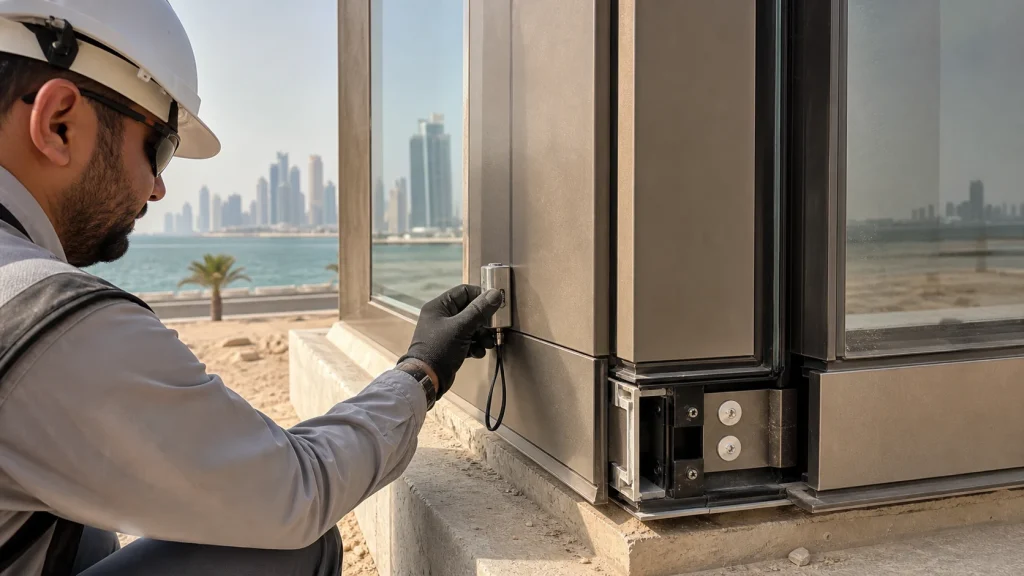
Gulf facade durability depends on exposure classification: coastal salt drives coating and fastener selection, inland dust tests drainage paths and gaskets, and intense UV ages sealants and finishes. It is an exposure-and-maintenance problem, not a single premium-material purchase.
Decision data
Gulf facade durability risk register
| Exposure | Vulnerable components | Design response | Handover evidence |
|---|---|---|---|
| Coastal salt and humidity | Coatings, fasteners and dissimilar metals | Compatible grades, separation and proven finish system | Material batches and cleaning plan |
| Fine sand and dust | Weeps, tracks, rollers and seals | Protected accessible drainage and replaceable hardware | Inspection points and spare parts |
| High UV and surface temperature | Gaskets, sealants and coloured finishes | Qualified products, joint geometry and sample review | Product data and batch control |
| Thermal cycling | Joints, anchors, screens and interfaces | Movement allowance and compatible connections | Approved details and inspection record |
Swipe horizontally to compare all four columns on mobile.
Coast and inland are not the same
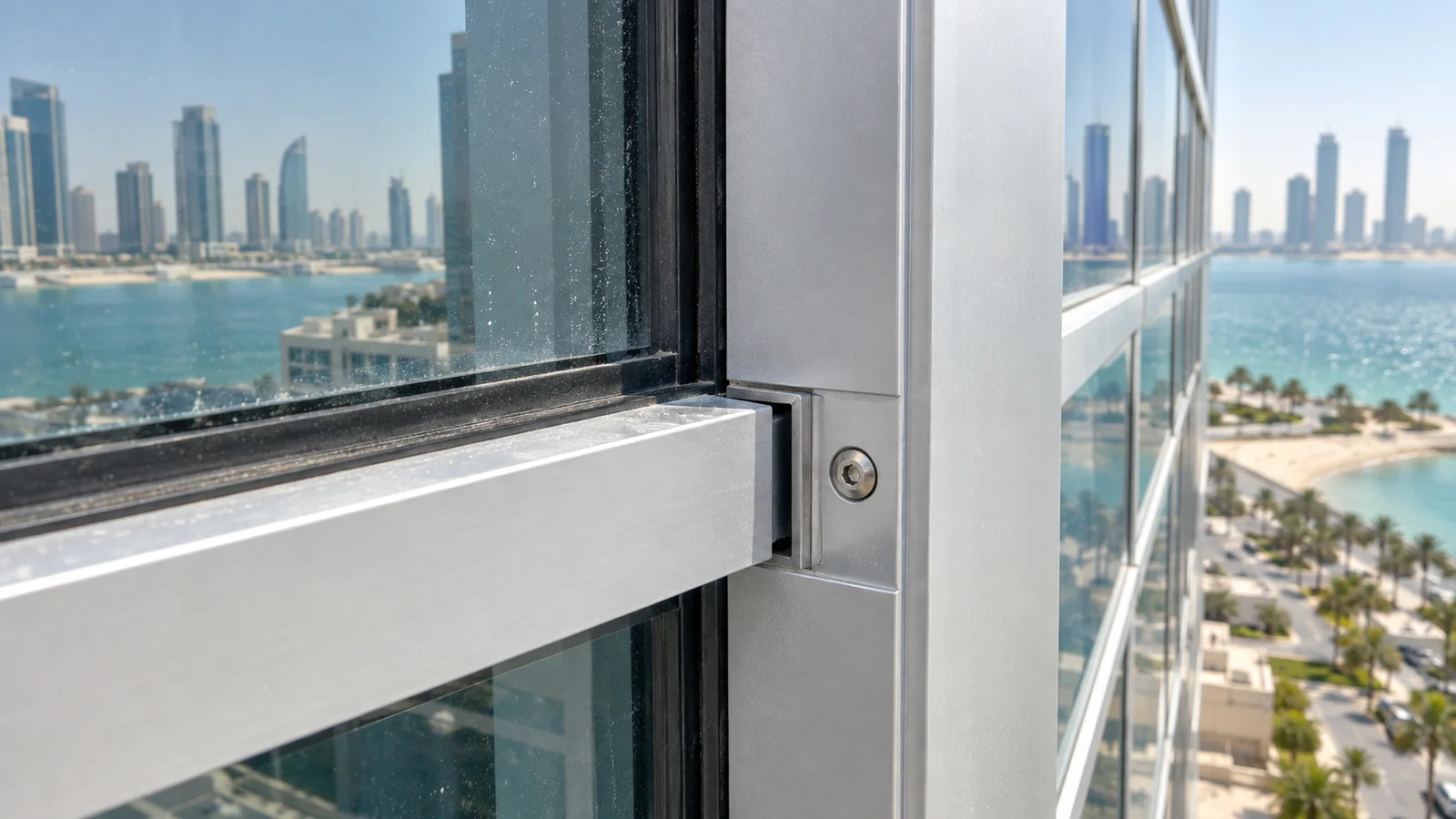
Salt-laden air, humidity, abrasive dust, strong UV and thermal cycling do not act with equal intensity on every Gulf site. A coastal project places greater stress on coatings, fasteners and dissimilar-metal interfaces; an inland site may place more stress on seals, hardware and drainage paths exposed to fine dust.
The project should be classified by exposure before the material schedule is frozen.
Coatings need evidence
A coating name by itself is not a durability strategy. The specification should state the performance class or test evidence required, the substrate preparation, colour range, repair approach and batch-control expectations.
Architectural colours also behave differently under intense daylight, so physical samples should be reviewed in conditions that resemble the project.
Small metal parts cause large failures
Fasteners, brackets, rollers and hinges are easy to overlook because they occupy little area. They often determine serviceability. Compatible grades, separation of dissimilar metals and protected bearings matter as much as the visible aluminium finish.
The hardware schedule should be reviewed with the same exposure logic as the facade panels.
Drainage must tolerate dust
Pressure-equalised curtain wall relies on drainage and ventilation paths. Fine dust can reduce their effective area or collect where water is meant to leave. Covered, accessible and generously detailed routes are more resilient than narrow openings that work only when perfectly clean.
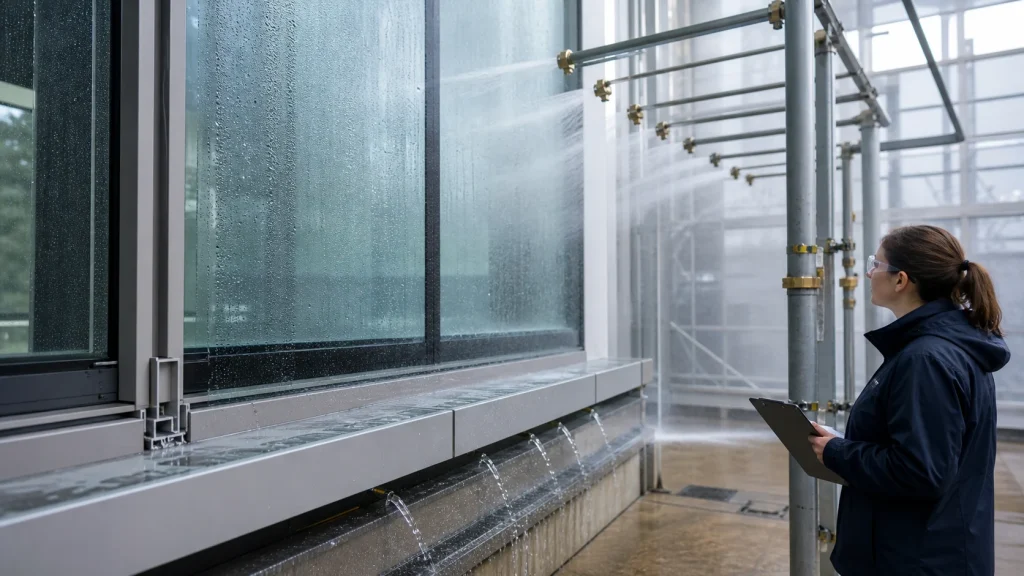
Mock-ups and site inspections should include the weeps, end dams and transitions that remain invisible after completion.
Design maintenance into the facade
Facade durability is partly a materials question and partly an access question. Glass, screens, rooflights, folding walls and drainage paths need a realistic cleaning and inspection route.
The handover package should show what must be checked, how often it should be reviewed and which replacement components should remain identifiable.
Project decision note
Translate exposure into inspection and maintenance
Facade durability begins with a component-by-component exposure review. Map aluminium faces and cut edges, steel brackets and fasteners, dissimilar-metal contacts, hardware, gaskets, sealants, drainage paths and concealed cavities. Note which parts receive direct salt deposition, abrasive dust, persistent moisture, cleaning chemicals or intense sun. A laboratory salt-spray result can compare coating systems under controlled conditions, but it does not by itself predict service life in a natural environment.
Specify preparation and quality control as carefully as the finish name. For coated aluminium, record alloy and temper, pretreatment, coating system, colour, gloss, approved applicator where required, batch control, film checks, repair limits and sample approval. For fasteners and brackets, state grades and isolation methods. For sealants and gaskets, confirm compatible substrates, joint movement, adhesion testing and storage conditions. Any proposed warranty should be read with its exposure, cleaning and access exclusions.
The handover plan should identify safe cleaning methods, water quality, frequency ranges to be confirmed for the site, inspection points and replacement parts. Make weeps and moving hardware accessible, keep product and colour references, and record baseline photographs. Coastal and dusty sites may require the maintenance plan to be adjusted after early inspections show actual deposition. Designing access and traceability into the facade is more reliable than selecting a premium material and assuming the environment has been solved.

Baghdad Commercial Facade
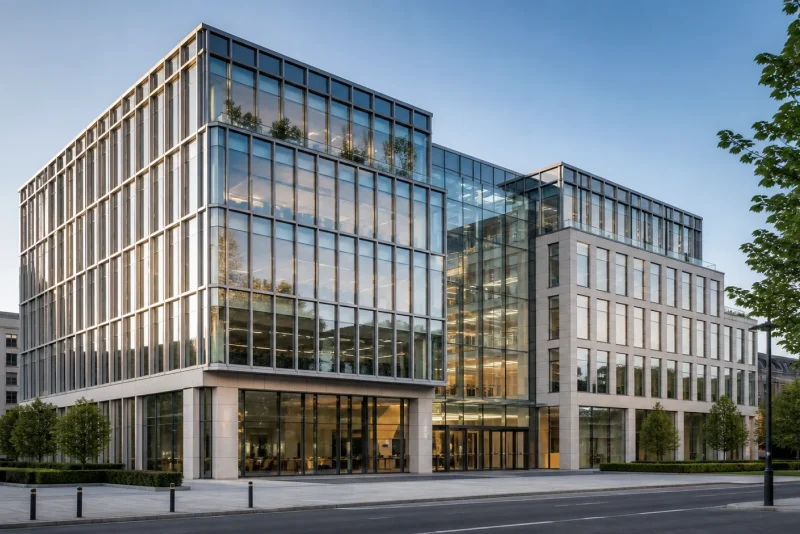
A three-storey commercial building in central Baghdad, delivered under a single design-supply-installation contract. The client wanted a contemporary, dust-tolerant glazed elevation that would read as one composed plane from the street while surviving Baghdad's 50 °C summers, sand-dust seasons and short winter storms.
Open project recordPhotos are enough to begin
Start with the minimum useful brief.
For a project-specific answer, send the information available now. We will identify the missing inputs instead of asking you to complete the design before the first conversation. If drawings are unavailable, clear photos and rough dimensions are enough to begin.
- Destination city, governing specification and appointed consultant
- Proposed glass, aluminium, coating and interface build-up
- Known wind, thermal, acoustic, fire or water criteria
- Available reports, calculations and approval comments
- Party responsible for local review, stamping and submission
Decision summary
What matters most
- Do not copy one exposure class across the project.
- Review concealed fasteners as carefully as visible finishes.
- Keep weeps, tracks and seals maintainable.
- Tie warranties to realistic cleaning obligations.
Facade durability is designed through compatibility, drainage, access and records. Premium visible materials will not save a facade from an unprotected fastener, a blocked weep or a maintenance route nobody can reach.
Standards and references
Standards and references
Confirm the governing edition and project applicability with the appointed consultant and authority.
Rank Math FAQ block
Frequently asked questions
Is a coastal warranty enough to prove suitability?
A warranty is only as useful as its stated finish system, substrate preparation, exclusions, maintenance duties and exposure assumptions. Review the technical evidence and project detail before relying on the warranty period.
How does sand affect curtain-wall drainage?
Fine particles can collect in narrow openings, tracks and cavities. Drainage routes should be protected, accessible and generously detailed, while maintenance instructions should identify where cleaning and inspection are required.
Which parts are most often overlooked?
Fasteners, brackets, isolation pads, rollers, hinges, gaskets, sealant primers, weep paths and field-cut finish repairs occupy little area but frequently control serviceability and visible ageing.
How often should a facade be inspected?
Frequency depends on exposure, height, access, material system and observed condition. The project team should establish an initial inspection and cleaning plan, then adjust it from recorded performance rather than relying on a universal interval.
About the author