Tempered glass is strong and safe to touch. Laminated glass is the one that stays in the frame
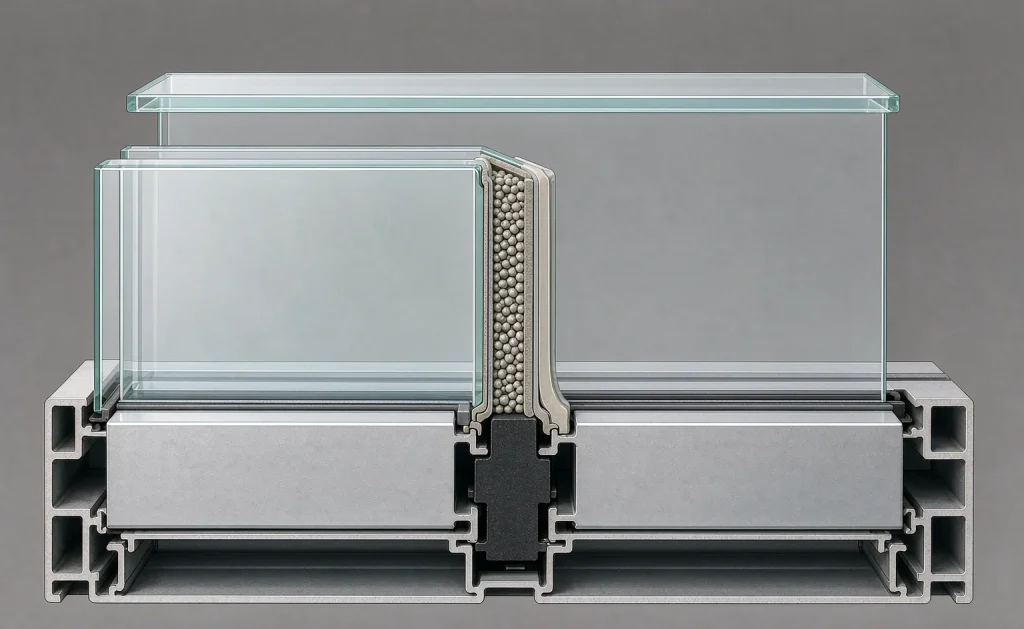
Laminated vs tempered glass is a comparison between two safety products that solve different problems. Tempered glass carries roughly four times the bending strength of annealed glass and breaks into small blunt dice, but the whole pane leaves the opening at once. Laminated glass bonds two plies through a PVB or ionoplast interlayer: it cracks but the film holds the fragments, so the pane stays in place and keeps a weather seal until replacement. Strength is cheap in tempered; containment is only bought with lamination. Overhead, over doors and in railings, containment wins. Starveil Facade assigns build-ups pane by pane from its Foshan engineering desk.
Laminated vs tempered glass compares two different safety strategies. Tempered glass is heat-treated under a specification such as ASTM C1048 at astm.org, cooled rapidly so it stores compressive stress in its skin and shatters into small dice on fracture. Laminated glass, specified under ASTM C1172, bonds two or more plies with a plastic interlayer so the pane holds together after breaking. Heat-strengthened glass sits between annealed and tempered at roughly twice the annealed strength. One product manages energy release; the other manages retention. Most high-performance facades use both in different positions of the same build-up.
What each pane does when the load, or the stone, arrives
| Property | Tempered | Laminated (2-ply, PVB) | What it decides |
|---|---|---|---|
| Breakage pattern | Small dice, whole pane at once | Radial cracks, fragments held by interlayer | Whether the opening stays closed |
| Bending strength | ~4x annealed | Plies carry their own class; unit strength by build-up | Span and wind-load sizing |
| Fall-through protection | None after fracture | Interlayer retains fragments | Overhead and railing suitability |
| Acoustic gain | None beyond mass | PVB interlayer adds damping, typically 2 to 5 dB | Busy roads and venues |
| Cost (typical) | Baseline | 30 to 60 percent above equivalent monolithic | Where the budget goes pane by pane |
| UV screening | None | Interlayer filters over 99 percent of UV | Interior fading protection |
Read the laminated vs tempered glass question off this table one row at a time, because the rows give different answers: strength is cheapest in tempered, retention only exists in laminated, and acoustics is a laminated bonus. The specification that follows is a map, pane by pane, not one choice for the whole envelope.
Breakage pattern: the difference you can see from across the street
A tempered pane fails completely or not at all. Its stored energy releases across the whole pane at once, producing the small dice that make it a safety glass for doors and low-level glazing: nobody gets cut, but the opening is instantly empty.
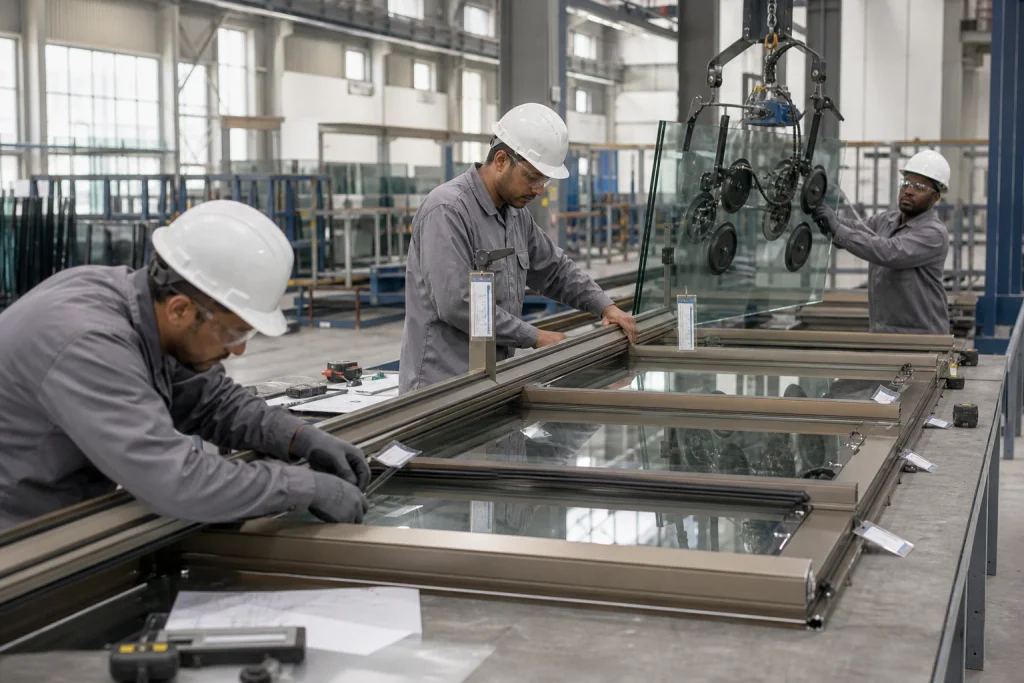
A laminated pane fails locally. A stone, a wind gust beyond design or a point load produces radial cracks around the impact, and the interlayer holds every fragment in the frame, so the pane keeps the weather out and the people underneath safe until it is replaced. That visible difference is the practical core of laminated vs tempered glass safety: tempering protects the person touching the glass, lamination protects the people and the interior behind it.
Strength, span and the wind-load table
Tempered vs laminated glass strength is where most buyers oversimplify. Tempered glass is stronger per ply, roughly four times annealed. But a laminated unit is not a weak pane: two heat-strengthened or tempered plies bonded through the interlayer carry the sum of their parts, and the interlayer adds post-breakage capacity that no monolithic pane has, which is why blown debris zones specify laminated even when tempering alone would pass the load table. Spans on exposed sites push glass thickness up before they push glass type around, and the build-up logic is the same one our spider fittings vs planar systems comparison applies to point-fixed panes, where the bolt holes concentrate stress that a laminated ply distributes better.
Overhead and inclined glazing: where the code and the physics agree
Laminated glass for overhead glazing is the settled answer in most codes, because a pane above head height must not shed fragments when it breaks, and only an interlayer provides that retention. Skylights, canopies, inclined atrium walls and glass floors are laminated territory by rule and by physics; tempering does not substitute, because its safety feature is blunt fragments, not retention.
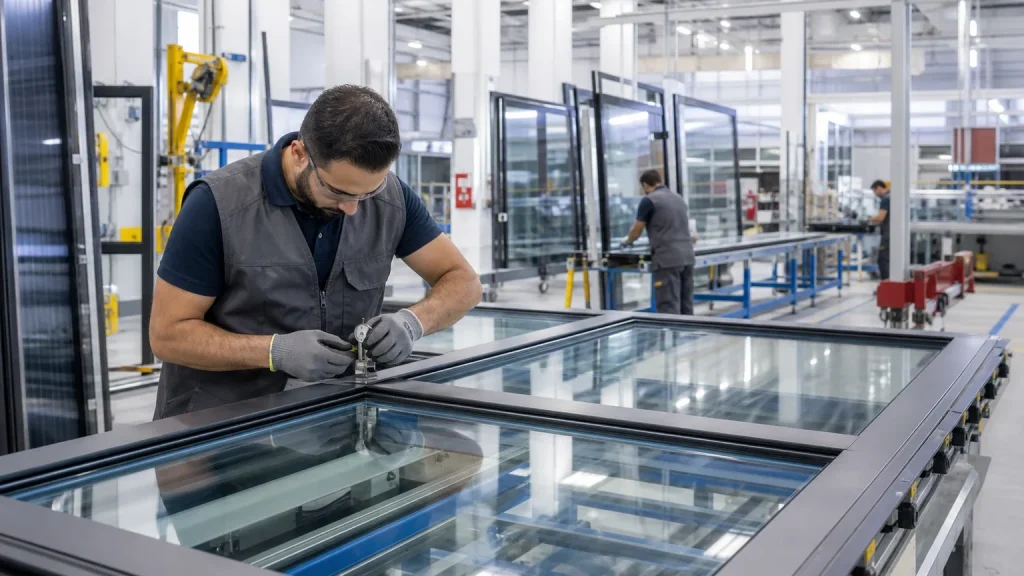
The same logic extends to public-building spans, where the safety factors in our large-format glass in public buildings guide are set by the consequence of a fall, not the probability of a break. This is the one row of the laminated vs tempered glass table with no counter-argument.
A ridge site that chose laminated outer plies: the Hillcrest record
Exposed sites make the build-up decision for you. A study on record for Hillcrest Residence, a 640 m² structural glazing envelope on an exposed ridge above an Auckland harbour, specified laminated outer panes with warm-edge spacers and a wind-load specification above the code minimum, because ridge-line sites punish envelopes that merely pass. The study’s QA trail, dimensional report, glazing-line record and a pre-shipment mock-up approval signed by the client’s representative by video call, is the evidence chain that makes such a build-up defensible years later. That is the laminated vs tempered glass decision in practice: not a preference, but a reading of what the site does to glass.
Acoustics, UV and the laminated bonuses
The PVB interlayer earns two quiet extras. Acoustically it decouples the plies and damps coincidence-frequency vibration, adding typically 2 to 5 dB of insulation over a monolithic pane of equal mass, which matters on busy roads and near venues. It also filters over 99 percent of ultraviolet radiation, slowing interior fading. Neither bonus alone justifies lamination, but on projects where acoustics or UV already sit in the brief, they turn the laminated vs tempered glass calculation from a premium into a bundle.
Cost, weight and how the two products share one envelope
Laminated glass typically runs 30 to 60 percent above the equivalent monolithic tempered pane, and it is heavier per square metre at equal build-up, which reaches the framing and the fixings. The efficient envelope therefore uses each product where it earns: tempered monolithic in sheltered vertical positions where codes demand safety glass near people; laminated in the outer ply of insulating units, in exposed zones, overhead and in acoustically loaded elevations, often with a heat-strengthened inner ply. Our structural glazing system is engineered around exactly this mix. What each pane owes you over the years, and who backs it, is set out in our curtain wall warranty guide, and the substitution traps to catch at quotation stage are listed in our importing a facade guide. The laminated vs tempered glass split across one envelope is where a good specification earns its fee.
Send the pane positions, ask for the build-up map
Send the elevation drawings with the pane positions marked: overhead, over doors, railings, near walkways, sheltered verticals. Ask back for a glass build-up map that names the type, temper and interlayer per position, the wind-load basis for the thicknesses, and the acoustic or UV requirements if the brief carries them. A laminated vs tempered glass decision written into that map travels through procurement without being value-engineered into the wrong pane. Starveil Facade issues the build-up map with every glazed envelope quotation from the Foshan engineering desk.
What to carry forward
- Laminated vs tempered glass is containment versus energy release: the pane that must stay in the frame is laminated.
- Tempering buys strength cheaply; lamination buys retention, post-breakage capacity, and acoustic and UV bonuses.
- Overhead and inclined glazing is laminated by code and by physics, no exceptions worth taking.
- Exposed and debris-prone sites put lamination in the outer ply of every insulating unit.
- Specify pane by pane, position by position, and the 30 to 60 percent premium lands only where it earns.
الأسئلة الشائعة
How do laminated vs tempered glass safety ratings differ?
They protect different people. Tempered glass protects whoever impacts the pane, breaking into blunt dice instead of shards, which is why codes require it in doors and low glazing. Laminated glass protects everyone behind and below the pane, holding its fragments in the frame after fracture. The laminated vs tempered glass safety rule in one line: near people, tempered; over people, laminated.
Which is stronger in a laminated vs tempered glass comparison?
Per ply, tempered, at roughly four times the bending strength of annealed glass. A laminated unit of two heat-treated plies reaches comparable capacity and adds post-breakage performance no monolithic pane has. Where the wind-load table is the only question, a monolithic tempered pane is the cheaper pass; where failure behaviour matters, the laminated build-up wins.
Can laminated glass be used for overhead glazing everywhere?
Yes, and in most codes it is the only accepted safety glass overhead, because interlayer retention is what keeps fragments off the people below. The build-up still needs engineering: ply thicknesses, interlayer type and heat treatment are set by span, load and snow or maintenance traffic, the factors our large-format glass in public buildings guide works through.
Does laminated glass stop spontaneous breakage?
It stops the consequence, not the event. A tempered ply inside a laminated unit can still break from a nickel sulfide inclusion, but the interlayer holds the fragments, and the pane keeps the opening closed. The mechanism and the heat soak screening that reduces its probability are covered in our spontaneous glass breakage guide.
Why does laminated glass cost more than tempered?
Two plies instead of one, an interlayer, a bonding and autoclave process, and more QA per unit. The typical premium is 30 to 60 percent over equivalent monolithic tempered, and it buys retention, acoustics and UV filtering in the same invoice. Specified pane by pane, the laminated vs tempered glass premium only lands on the positions that need it.
How do I check the glass build-up on delivery?
Against the build-up map: pane numbering, ply thicknesses, coating position and interlayer type read from the glazing schedule and the etched markings on each pane. On the Hillcrest Residence study on record, a 640 m² structural glazing envelope on an exposed Auckland ridge, every panel was mapped and checked before cutting, and the pre-shipment mock-up was signed by the client’s representative, so the fabricated build-up matched the specified one pane by pane.
Explore More Glass and Curtain Wall Engineering Guides
Choosing between laminated and tempered glass is an important part of developing a safe and reliable glazed facade. To understand how different glazing configurations fit into complete building envelopes, explore our curtain wall and facade systems hub, which covers structural glazing, stick curtain wall and other facade solutions. For more detailed technical guidance, read our article on large-format glass in public buildings to understand how pane dimensions, impact risks and post-breakage protection affect glass selection, review spontaneous glass breakage and heat soak testing to learn how nickel sulfide inclusions and thermal stress can cause tempered glass failure, and explore our curtain glazing systems guide for a closer look at glass build-ups, framing methods, structural support and weatherproofing details.
عن الكاتب