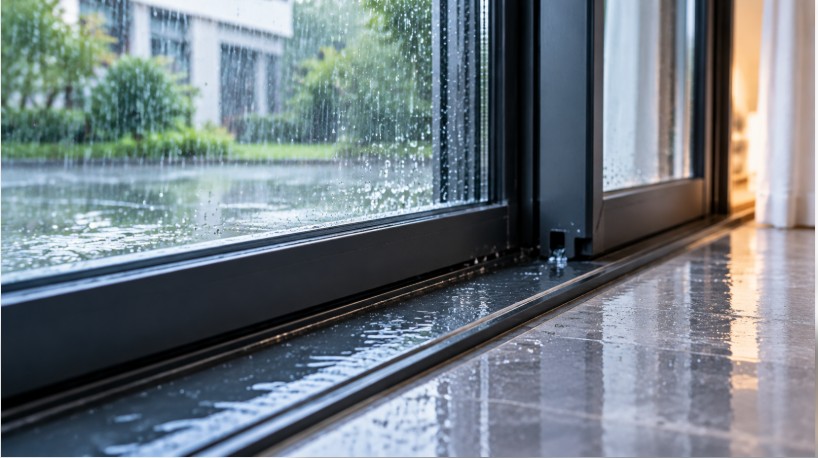
What does the water inside your window track indicate?
| What you notice | Possible explanation | What to check |
|---|---|---|
| Water drains slowly | Restricted outlet | Weep holes |
| Water rises during storms | High water inflow | Wind and rain exposure |
| Water crosses the inner track | Seal or drainage failure | Interior barrier |
| Water remains after rainfall | Trapped water | Track and sill level |
| Leakage appears at corners | Joint problem | Frame connections |
Use this table as an initial guide rather than a final diagnosis of aluminum sliding window track flooding. Record when the water appears, how high it rises and whether it disappears after rainfall. If one window repeatedly floods while others remain dry, the issue may be specific to that frame, its installation or its drainage components.
Blocked or restricted weep holes
sand can gradually reduce their available opening. Sometimes the exterior hole looks clear while debris remains inside the drainage chamber. Water then enters faster than it can leave, causing the level inside the track to rise and contributing to aluminum sliding window track flooding. This is particularly common in windows exposed to dusty environments, gardens or frequent storms.
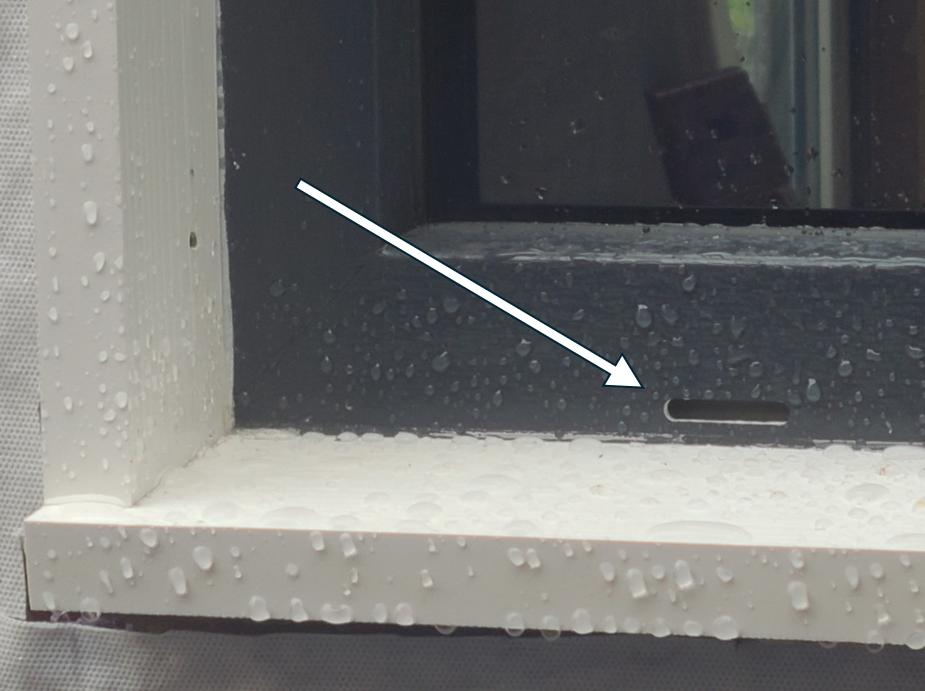
Start by checking accessible drainage openings and removing loose debris with a soft brush or vacuum. Avoid pushing metal wires or sharp tools deep into the holes because internal components and seals may be damaged. If drainage remains slow after basic cleaning, the blockage may be further inside the frame and require professional inspection. The curtain wall waterproofing guide explains the importance of maintaining an effective drainage route.
Heavy wind pushes rainwater into the system
Wind-driven rain can make aluminum sliding window track flooding more likely than ordinary rainfall. Strong wind can force water against the exterior frame and increase the amount entering the outer track. Pressure differences between the outside and inside of the window may also affect water movement. This explains why a window may perform normally during light rain but develop standing water during a storm. Wind direction, building height and opening exposure all influence performance.
Some sliding window systems use protective baffles near drainage outlets. These components help reduce direct wind-driven water entry while allowing collected water to escape. They should not be confused with plugs that permanently close the holes. If aluminum sliding window track flooding occurs mainly during storms, ask a qualified specialist to inspect the baffles, drainage chamber and weather seals. The sliding and folding glass wall system guide provides further information about track design and weather protection.
Incorrect track or sill drainage slope
Water needs a continuous path toward the exterior outlets. If an aluminum sliding window frame is installed unevenly, the sill has an incorrect slope or the drainage chamber contains a low point, aluminum sliding window track flooding may occur even when the holes are open. Small differences in level can affect drainage, particularly in shallow sliding window tracks. A system that works correctly in a factory sample may not perform the same way after incorrect site installation.
If water repeatedly collects in one corner, record the location and show it to the installer. Do not attempt to lift the frame or change the sill slope yourself. A professional can inspect frame alignment, chamber geometry and surrounding installation conditions. Where aluminum sliding window track flooding forms part of a larger glazed facade issue, the surrounding system should also be considered. The curtain wall versus storefront comparison explains why different glazed systems require different detailing.
TDamaged seals or frame joints
A window can have clear drainage holes and still experience aluminum sliding window track flooding indoors if water passes through damaged gaskets, loose corner joints or gaps between the frame and surrounding wall. These problems are different from blocked drainage outlets. Water may travel behind the visible frame before appearing on the interior sill, making the source difficult to identify. Ageing sealant, material movement and poor installation can all contribute.
Pay attention to where indoor moisture appears. Water near a frame corner may indicate a joint problem, while moisture around the wall or floor may involve perimeter waterproofing. Applying another layer of sealant without identifying the source may hide the symptom rather than solve it. When considering replacement, the thermally broken aluminum window guide provides further information about window construction and whole-window performance, including factors that may contribute to aluminum sliding window track flooding.
Poor maintenance and accumulated debris
Sliding window tracks collect dust, hair, insects and small particles through everyday use. In coastal or desert environments, fine sand can accumulate around rollers, drainage channels and seals, potentially contributing to aluminum sliding window track flooding. If these areas are not inspected regularly, minor restrictions can gradually affect water discharge. Maintenance should therefore include accessible drainage outlets, track surfaces, weather strips and frame corners.
Use a soft brush or vacuum to remove loose dirt and clean accessible surfaces with a suitable non-abrasive product. Avoid pressure washing, drilling additional holes, removing internal baffles or applying sealant over drainage openings. If water continues to accumulate, arrange an inspection before the next major storm. The curtain wall maintenance guide offers additional guidance on routine inspection and facade care.
Diagnose the problem before choosing a repair
corners and any affected wall or floor areas. Record whether aluminum sliding window track flooding occurs during ordinary rain or only during strong wind. If possible, photograph the water level immediately after rainfall and again later to show whether the track drains naturally. These details help identify whether the problem involves temporary water collection, restricted discharge or leakage across the interior barrier.
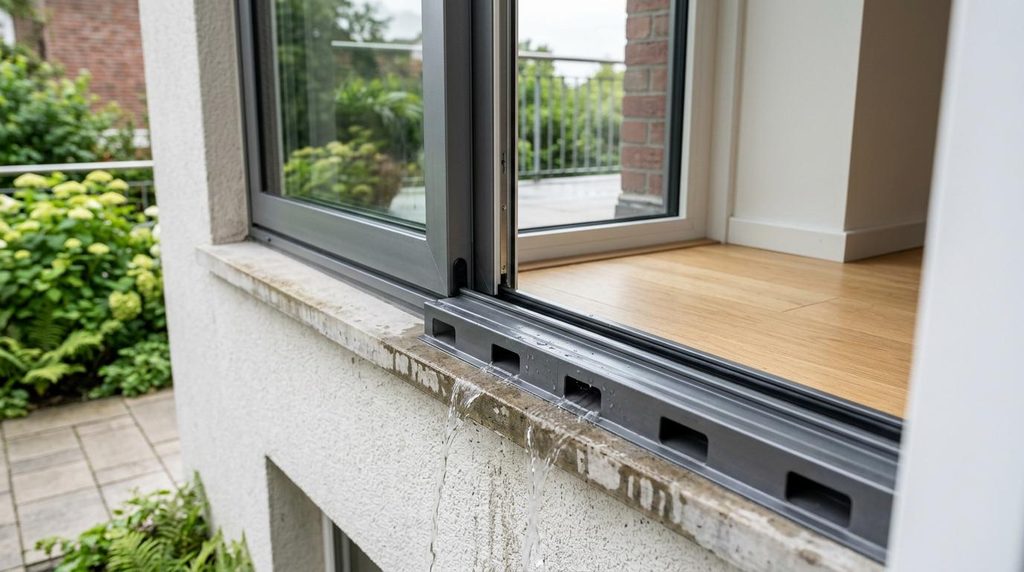
You do not need to remove the window or conduct a pressure test yourself. Prepare the window type, approximate installation age, location of the leak and a description of the weather conditions. If multiple windows are installed in the property, compare their behaviour during similar rainfall. One affected opening may indicate a local installation issue, while several affected openings may suggest a wider system problem contributing to aluminum sliding window track flooding.
Planning a window inspection or replacement?
Send the installer photographs of the interior track, exterior weep holes, frame corners and surrounding sill. Include the approximate installation date, window dimensions if available and a description of when aluminum sliding window track flooding occurs. Explain whether flooding happens only during strong wind, whether water remains after rainfall and whether indoor finishes have been affected. This information gives the professional a practical starting point before arranging a site inspection.
If you are considering replacement, provide the opening dimensions, property location and preferred window configuration. A new system should be selected according to actual site conditions rather than simply matching the appearance of the old frame. Discuss drainage access, threshold height, weather seals and future maintenance together. If the existing sill or surrounding waterproofing is defective, those conditions should also be corrected during replacement.
What to remember
- Water inside the exterior track is not automatically a defect; some sliding window systems are designed to collect and discharge incidental rainwater.
- Repeated flooding, water crossing the inner barrier and persistent standing water are warning signs that the drainage system may not be working properly.
- Clear-looking weep holes do not guarantee effective drainage; restrictions may exist inside the drainage chamber or elsewhere along the water path.
- Keep accessible drainage openings clean, observe water behavior after rainfall and document recurring problems.
- Never seal weep holes or drill additional openings without professional guidance; identify the actual cause before choosing a repair.
Further reading for homeowners
For more guidance on facade performance, environmental durability and system selection, explore our facade guides and insights, including facade durability in Gulf conditions, facade certifications and local approvals, and our guide to curtain wall versus storefront system selection.
Frequently asked questions
Is it normal to have water inside an aluminum sliding window track?
A limited amount of water inside the exterior collection track can be normal because many systems are designed to drain incidental rainwater. The water should remain within the intended drainage area and leave through the exterior outlets. Repeated overflow into the interior track or onto the floor indicates that the system should be inspected.
Why does my window leak even when the weep holes look clear?
The visible openings may be clear while a restriction remains inside the drainage chamber. Wind pressure, insufficient outlet capacity, damaged seals or poorly sealed frame corners can also cause leakage. A professional should trace the complete water path before recommending repairs.
Can I seal the drainage holes to stop rain from entering?
No. Weep holes release collected water from the outer track. Sealing them can trap moisture inside the frame and increase the likelihood of overflow. If rain enters through the openings during strong wind, have the baffles and drainage arrangement inspected instead.
Can standing water damage my floor or wall?
Repeated overflow can damage flooring, skirting, paint and nearby wall finishes. Persistent moisture may also affect concealed joints and surrounding construction materials. Recurring leaks should be investigated before visible deterioration becomes more serious.
Should I replace the entire sliding window if it floods?
Not necessarily. A blocked outlet, damaged seal, defective baffle or local installation issue may be repairable without replacing the complete frame. Replacement is more appropriate when the frame is distorted, deteriorated or unsuitable for the building’s exposure. Ask the installer to identify the actual failure before deciding.
How often should sliding window drainage holes be cleaned?
There is no universal interval because maintenance depends on dust, insects, nearby vegetation and local weather conditions. Inspect the track and visible outlets during regular window cleaning, particularly after dusty weather or severe storms. Properties exposed to fine sand or frequent rainfall may need more frequent checks.
About the author