Sustainability is a paperwork discipline before it is a material choice.
Claims are cheap; declarations are not. Eco friendly facade materials are envelope materials selected for measurable environmental performance: recycled content, embodied carbon, contribution to operational energy, and recyclability at end of life, each documented rather than asserted. For aluminium the headline is recycled content, which can cut the metal’s embodied carbon by more than 90 percent against primary smelting. For glass it is coating performance over decades of cooling load. Rating systems then pay out in credits only when the evidence chain is complete, which is where most procurement teams lose the points they paid for.
Eco friendly facade materials are materials whose environmental claims are quantified and verifiable: an aluminium panel with a declared recycled share, a glass build-up with calculated energy performance, a coating with a warranted life measured in decades. The verification instrument is the environmental product declaration, a Type III label governed by ISO 14025, published by the International Organization for Standardization. The word that matters is verifiable: a material described as green is a marketing position, and a material with a declaration is a procurement line item.
Four moves, four payoffs
| Material move | Embodied carbon effect | Operational effect | Evidence required |
| Recycled-content aluminium | Remelt carries roughly 5 percent of primary smelting emissions | None directly | Recycled share per batch, EPD |
| High-performance low-E glazing | Higher than plain glass per unit | Cuts cooling and heating load for decades | Calculated U and solar values |
| Durable fluoropolymer finish | Marginal addition | Defers replacement decades out | Coating class and warranty terms |
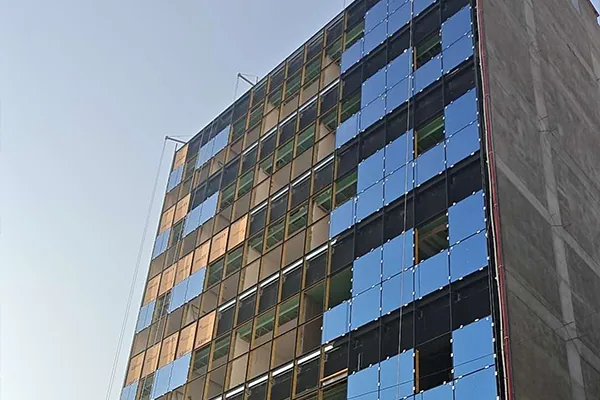
| On-site generation (BIPV) | Added upfront | Offsets operational electricity on site | Electrical certification, yield estimate |
The table is a reminder that eco friendly facade materials earn their name in two currencies at once: less carbon to build and less energy to run. Buyers who price only the first currency buy heavy envelopes that underperform, and buyers who price only the second buy fragile ones.
Embodied carbon and operational carbon: two clocks
Sustainable facade materials are judged on two clocks. EN 15978, the European framework for the environmental performance of buildings, splits the assessment into stages: product, construction, use and end of life, and facades sit across all of them. Their embodied carbon is spent on day one, in smelting, rolling, coating and shipping; their operational carbon accrues over 30 years and more of heating and cooling through the very skin that was bought. Low carbon facade design is the discipline of minimising both: recycled metal and efficient build-ups on the first clock, insulating glass and solar control on the second. An envelope is a good deal when both clocks are priced.
Recycled aluminium: the biggest single lever
Primary aluminium carries roughly 16 to 20 kg of CO2 equivalent per kilogram at the smelter; remelted recycled aluminium carries roughly 0.5 to 1.5. Sheet and extrusion billets can carry 60 to 80 percent recycled content with disciplined scrap sorting, and the alloy’s engineering properties do not change with the feedstock. A recycled aluminum facade therefore reaches an embodied carbon that primary metal cannot approach, and the material closes its own loop at end of life, since aluminium recycles without downgrading. The buyer’s question is simple: what recycled share does the mill declare, per batch, in writing.
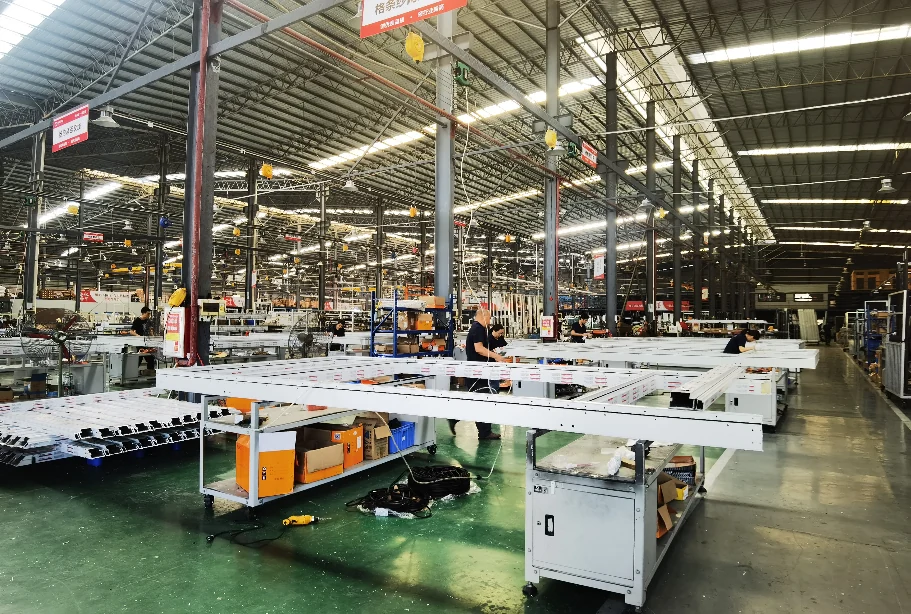
The panel families themselves start at our aluminium facade hub, and the system engineering around them is our aluminium cladding systems guide.
Glass and finish: the operational side of the ledger
On eco friendly facade materials, the operational clock is dominated by the glazing. Double and triple silver low-E coatings cut solar gain while keeping daylight, and insulated units with warm-edge spacers pull condensation risk down with them; the gain-control logic is our solar control glazing guide and the thermal build-up is our insulated curtain wall guide. Finish belongs on the same ledger from the other side: a fluoropolymer coating warranted for decades, the eco-friendly case set out in our PVDF coating guide, defers the embodied cost of replacement, and replacement is the least sustainable activity a facade performs. In Gulf climates the thermal-performance picture dominates the running-carbon arithmetic, as our thermal performance in the GCC guide shows.
What actually scores: LEED, BREEAM and the evidence chain
LEED addresses materials through credits for environmental product declarations, recycled content and sourcing; BREEAM runs its materials category on the same instruments. Neither system pays for intention. A recycled share without a batch declaration, or a low-E coating without calculated performance, scores nothing at review. Eco friendly facade materials therefore arrive at the rating as documentation: declarations, certificates and calculations assembled before tender, so the points are banked when the contract is signed rather than chased after the panels ship.
ESG clauses and the supply chain
Eco friendly facade materials became a supply-chain discipline the moment owners wrote them into contracts. European and North American owners increasingly set embodied-carbon ceilings, recycled-content minimums and declaration requirements directly in tenders, and those clauses flow downhill: the developer binds the contractor, the contractor binds the facade supplier, and the supplier binds the mill. A fabricator who cannot produce declarations per batch becomes a compliance risk somewhere around the second contract. Generating electricity on site, covered in our BIPV curtain wall guide, is the same story from the operational side, and eco friendly facade materials keep their value only while the paperwork travels with them.
A delivered package and a study on record
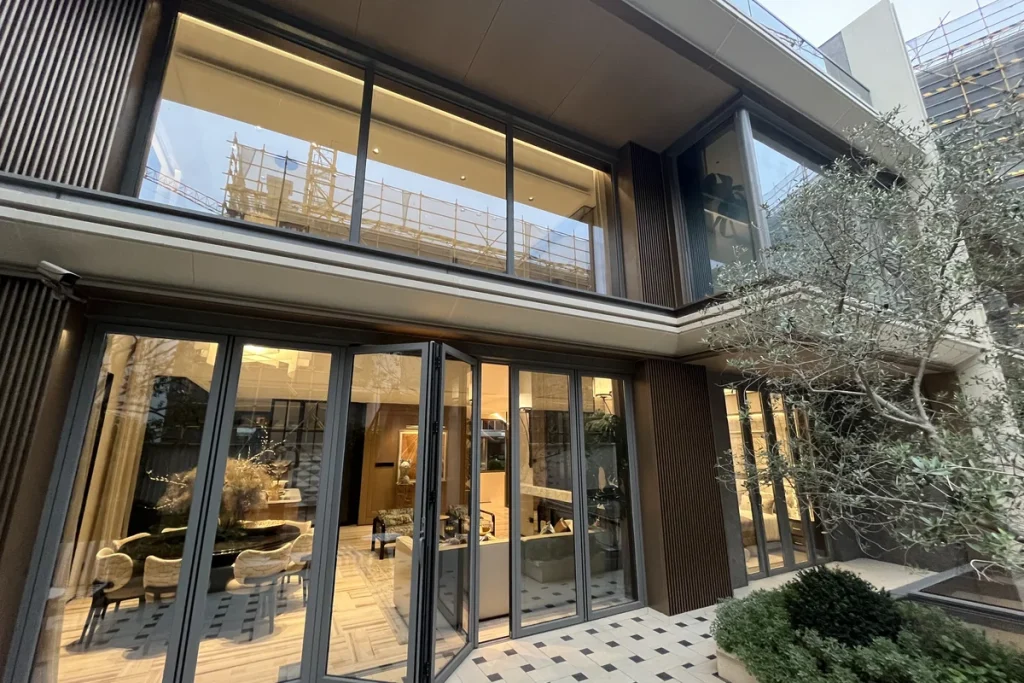
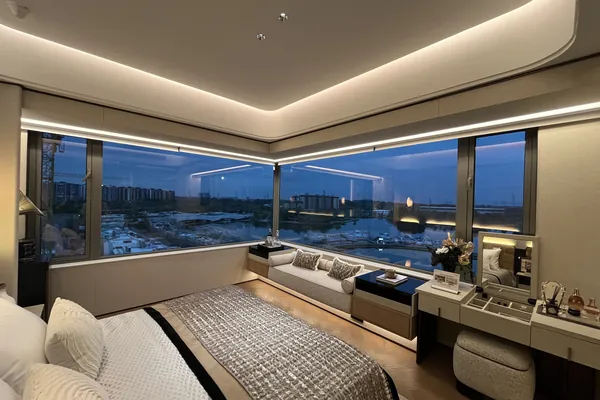
The delivered Foshan premium villa for China Overseas Land, a 380 m² thermal-break aluminium window and door package supplied in 12 weeks ex-works, shows the operational logic in delivered form: double-glazed low-E units tuned per orientation, heavier solar control to south and west, higher daylight to north, on a slim thermal-break aluminium frame.
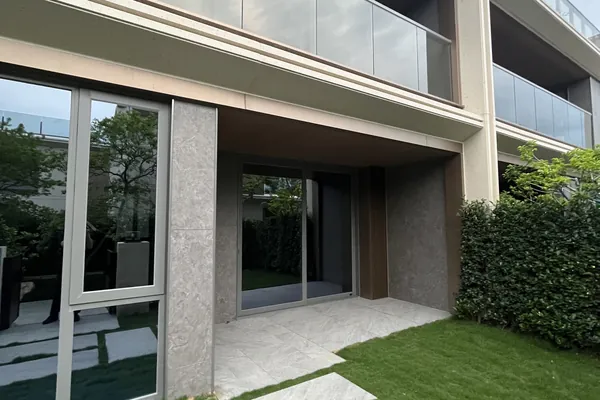
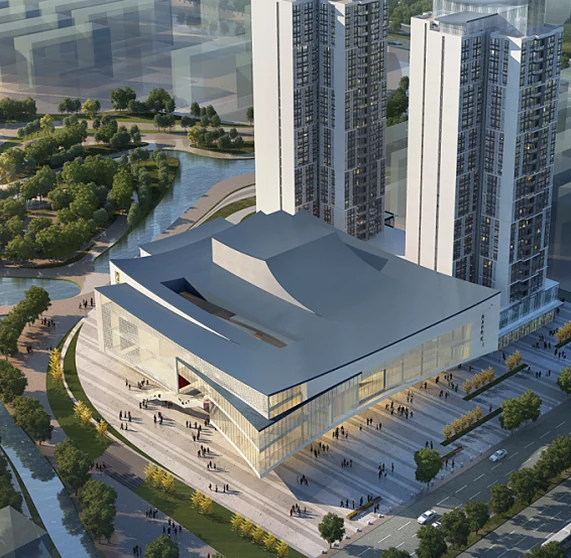
The study side of the ledger is a 48-storey Dubai mixed-use tower study on record, whose unitized grid varies glass build-ups by orientation and internal use behind a controlled exterior appearance. Both records make the same point: eco friendly facade materials are chosen by orientation and evidence, not by brochure.
Send the targets, ask for the declarations
Send the project’s rating targets, any ESG clauses already in the tender, and the orientation and climate data. Ask back for the recycled share per aluminium batch, the declarations covering the major materials, the calculated glazing performance per orientation, and the finish warranty terms. Starveil Facade scopes eco friendly facade materials packages with that evidence chain assembled from the Foshan desk, for buyers whose owners will audit it.
What to carry forward
- Two clocks: embodied carbon spent on day one, operational carbon accrued for decades; price both.
- Recycled aluminium is the biggest lever: remelt carries roughly 5 percent of primary smelting’s carbon.
- Declarations are the currency: undeclared green claims score nothing at LEED or BREEAM review.
- Finish durability is embodied-carbon strategy: the greenest panel is the one not replaced.
- Eco friendly facade materials are a supply-chain discipline: ESG clauses flow downhill to the mill.
الأسئلة الشائعة
What counts as eco friendly facade materials in a tender?
Materials with quantified, documented performance: recycled share per batch on aluminium, calculated energy performance on glazing, warranted life on finishes, each traceable to a declaration. Rating systems and ESG clauses both pay on documentation, not description.
How much lower is recycled aluminium’s embodied carbon?
Roughly 95 percent at the remelt stage against primary smelting: 16 to 20 kg CO2 equivalent per kilogram down to 0.5 to 1.5. Batch-level recycled shares of 60 to 80 percent are workable with disciplined scrap sorting, and the alloy performs identically.
Is aluminium facade cladding recyclable at end of life?
Yes, without downgrading: aluminium remelts into the same alloys, which is why recycled-content claims and end-of-life value both attach to the metal. Composite panel recycling is more involved because core and skins separate; mono-material solid sheet closes its loop most cleanly.
Do eco friendly facade materials cost more?
Recycled-content aluminium typically carries a modest premium or none; declarations and calculations cost paperwork, not metal. The expensive version of green is the retrofit one, replacing a short-lived envelope early because the first specification priced only day one.
How do LEED and BREEAM treat facade materials?
Through documentation: product declaration, recycled content and sourcing credits in LEED, the materials categories in BREEAM. Both review evidence, so the declarations belong with the tender documents, not in a post-award scramble.
Can a delivered project show the operational benefit?
The delivered Foshan premium villa package, 380 m² of thermal-break aluminium windows and doors in 12 weeks ex-works, tuned its low-E glazing per orientation: heavier solar control south and west, higher daylight north. That is the operational half of sustainable specification, running as built.
RELATED READING
For more information on eco friendly facade materials, explore Starveil Facade and our aluminium facade hub. You can also read our PVDF coating guide, solar control glazing guide, and curtain wall system guide for practical guidance on material durability, energy efficiency and facade performance.
عن الكاتب