Four terms, one matrix
| Term | Main carriage and cost | Risk passes to buyer | Export clearance | Import clearance and duty | Insurance duty | Suits whom |
|---|---|---|---|---|---|---|
| EXW | Buyer books and pays from the factory gate | At the seller’s premises, before loading | Buyer; without a Chinese entity it needs an export agent | Buyer | None placed on the seller | Buyers with their own forwarder in China and customs experience |
| FOB | Seller delivers to the port and loads it; buyer books the ocean leg | On board the vessel at the origin port | Seller | Buyer | Buyer insures; nothing required of the seller | Buyers who want control of freight, insurer and container sequence |
| CIF | Seller pays ocean freight and minimum insurance to the destination port | On board the vessel at the origin port, not at destination | Seller | Buyer | Seller places cover at 110 percent of invoice value, ICC (C) minimum | First-time importers who want one party running the chain |
| DAP | Seller carries the cargo to the named destination place | At the named place, ready for unloading | Seller | Buyer, including duty | Not required; sellers usually arrange it in practice | Buyers who want a delivered price but keep their own customs agent |
Read the risk column of the facade incoterms matrix first, then the two clearance columns, then the price.
The boundary lines, drawn straight
Under EXW, the first of the facade incoterms, the seller’s duty ends at its own premises. It need not load the container or clear Chinese export customs, and export formalities need a Chinese entity or a licensed agent. That is why the ICC and most suppliers prefer FCA.
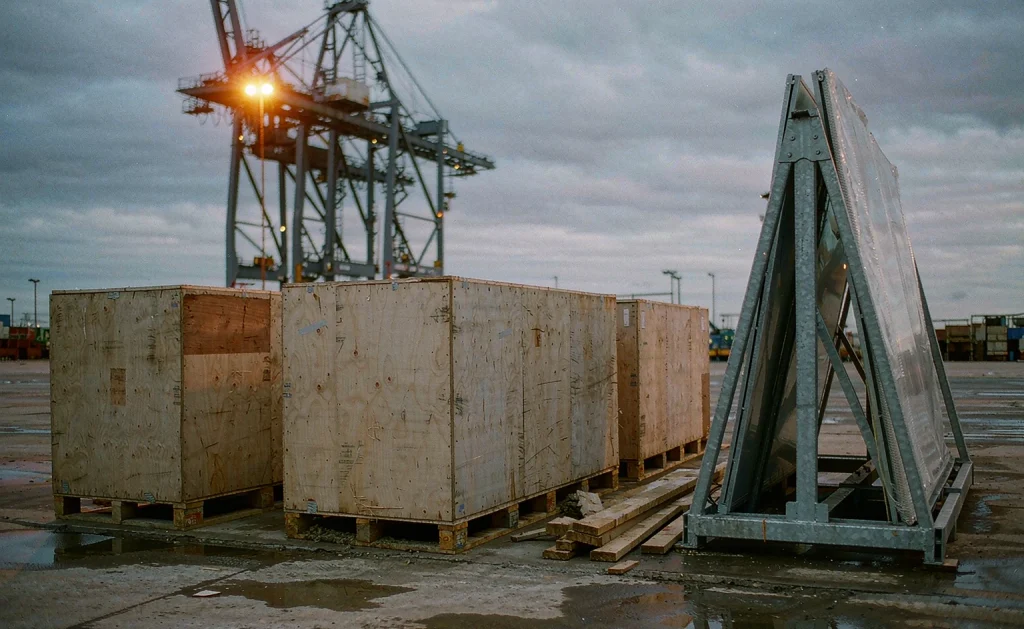
Of the facade incoterms, FOB applies to sea transport only. Risk passes when the crate is on board at the origin port. On facade cargo that moment deserves attention: an A-frame stillage of laminated glass swings over the ship’s rail.
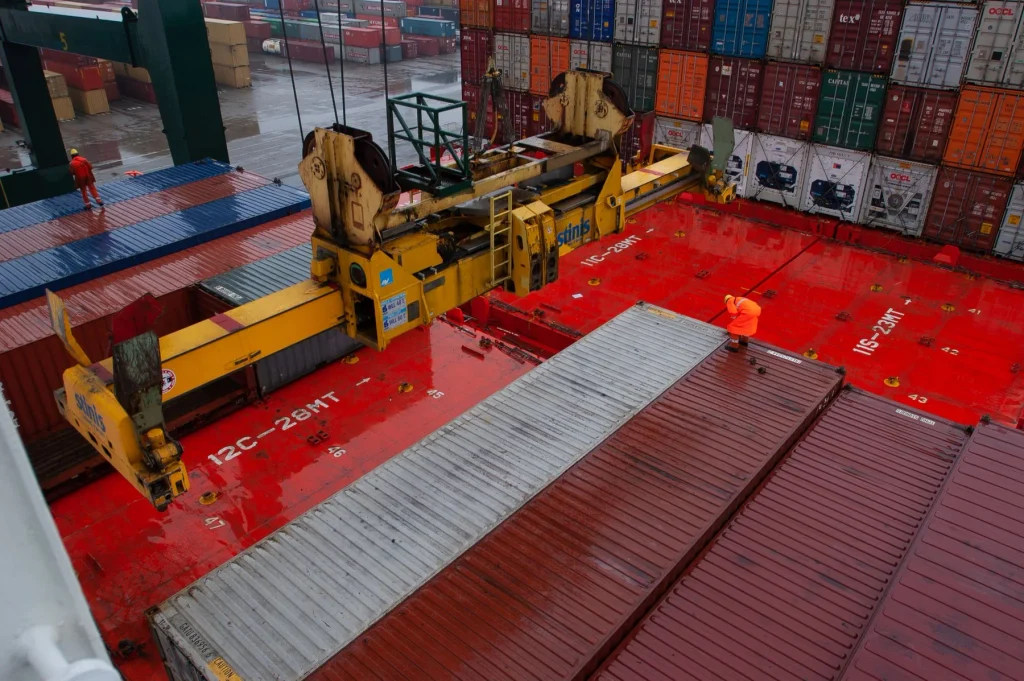
CIF is the most misread of the facade incoterms. The fob vs cif facade import question turns on one fact: the seller pays the freight and buys insurance, yet risk still passes when the goods are on board at the origin port. A cargo lost mid-voyage is the buyer’s loss, claimed on the policy the seller arranged at minimum cover. That minimum is Institute Cargo Clauses (C) at 110 percent of invoice value, which excludes breakage.
DAP, the longest reach of the four facade incoterms, places the cargo at a named point in the buyer’s country, with import clearance and duty on the buyer. Under ddp facade delivery terms that same clearance shifts to the seller, and the duty bill, the import licence and the tax registration follow. Most suppliers refuse DDP where they have no tax presence, since it makes them importer of record.
Facade cargo does not fit the textbook
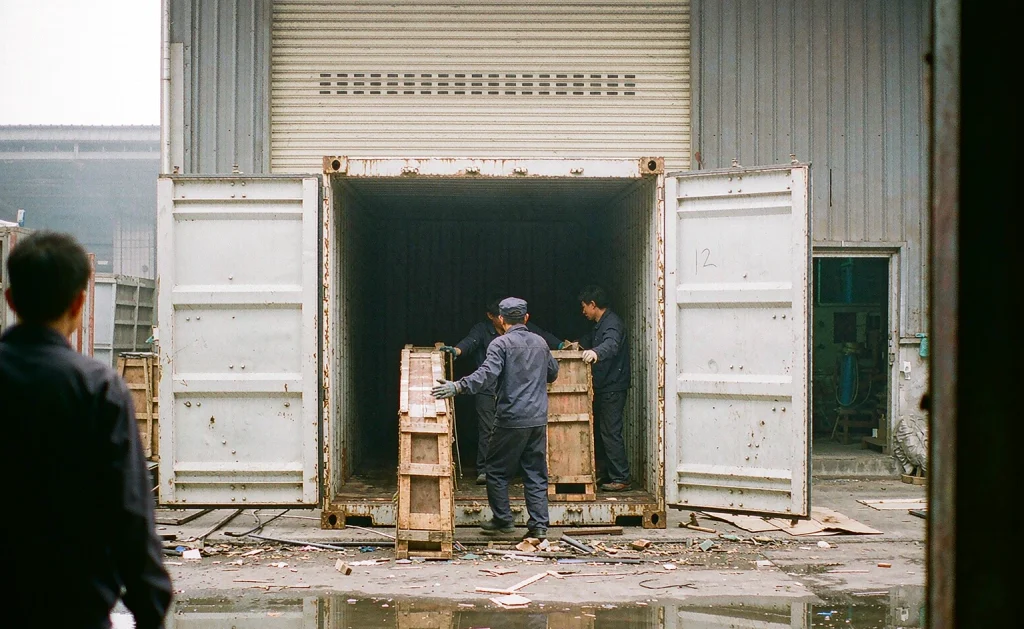
General cargo fills a standard box. A facade consignment often does not, and that is where facade incoterms stop being paperwork. Glass travels upright in A-frame stillages, and mullion crates run long and heavy. Oversize units need open-top or flat-rack equipment, booked weeks ahead and priced apart from the container rate. The container loading plan and the Incoterm are one decision: whoever books the box decides what fits in it. Route choice follows the same logic. One direct sailing with a single lift at each end suits glass better than a cheap service through two hubs, as our sea freight routes guide sets out.
Insurance, the 110 percent rule, and the container clock
Marine insurance under facade incoterms is normally written at 110 percent of the invoice value, which is also the floor Incoterms 2020 sets for CIF. ICC (C) covers major casualties and little else, while ICC (A) is all risks. Glass facades belong on an ICC (A) basis with breakage cover.
The container clock runs separately from the cargo and from the facade incoterms. Free time at the destination port is typically a few days, after which demurrage or detention is billed to the party named on the booking. Under CIF the seller books the carriage while the buyer holds the release, so charges land where neither side feels they own them. TT Club, the mutual insurer of the port and terminal trade, treats them as a contract question first.
Choosing the term as a control decision
The choice among facade incoterms decides who controls the route, the carrier and the container sequence. On a facade project those are engineering variables, not freight paperwork. A quotation that names a price without a term, a port or an insurance basis is a red flag, and our quotation red flags guide lists the rest. Whether the party quoting those terms actually controls production is a separate test, set out in our trading company vs manufacturer guide. A Starveil Facade quotation carries the term, the named port and the insurance basis beside the price. The Baghdad Commercial Facade project, a 1,400 m² envelope on a 22 week ex-works programme, ran as one design-supply-installation contract, and the crew mobilised in installation sequence. Had that consignment moved on CIF terms, risk would have passed at the origin port, with cover at the 110 percent minimum.
Send the destination. Ask for the boundaries in writing
Send Starveil Facade the destination country, the delivery point and the party who will clear import at your end. Tell us which of the facade incoterms you want to trade on, or ask for the same envelope priced EXW, FOB, CIF and DAP side by side. Each figure comes back with the named port, the container count and the insurance basis beside it. The wider document flow is mapped in our cross-border facade workflow guide and the delivery milestones guide.
What to remember
- Name the term, the port and the insurance clause. A price without those three is not an offer.
- EXW puts export clearance on you. Without a Chinese export agent, buy FCA instead.
- CIF does not move risk to the destination port. It passes at origin, on board the vessel.
- DAP and DDP differ by import clearance and duty. Check what your supplier can perform.
- Decide who releases the bill of lading and who pays demurrage, in writing, before sailing.
RELATED READING
For more guidance on facade sourcing and delivery, explore Starveil Facade, our facade engineering and supply hub. Our cross-border facade delivery guide explains shipment responsibilities, while the trading company vs manufacturer guide helps you assess supplier control, and our facade fabrication tolerances guide covers production accuracy and quality risks.
Frequently asked questions
Is CIF safer than FOB under facade incoterms for curtain wall cargo?
No. Risk passes at the same point under both, on board at the origin port. CIF only adds seller-arranged freight and minimum insurance.
Can a foreign buyer clear Chinese export under EXW?
Rarely without help. Export formalities need a Chinese entity or a licensed agent, so buyers appoint a forwarder. FCA is the cleaner rule when the seller loads and clears.
Who pays demurrage at the destination port?
The charge follows the booking, not the Incoterm. It is billed to whoever is named on the carriage contract, which under CIF is the seller until the buyer takes the release.
Why insure facade cargo at 110 percent of invoice value?
The extra 10 percent covers the buyer’s import costs and expected margin. It is also the minimum cover Incoterms 2020 sets for CIF. Glass needs ICC (A) terms with breakage cover.
Which of the facade incoterms suits a first-time curtain wall import?
CIF when you want one party running the chain, with insurance upgraded to ICC (A) and breakage cover for the glass. FOB when you want control of the carrier, the insurer and the container sequence. The delivered Baghdad Commercial Facade, a 1,400 m² envelope on a 22 week ex-works programme, ran under one design-supply-installation contract; had that consignment moved on CIF terms, risk would still have passed at the origin port on the 110 percent minimum cover. Asking for the same envelope priced side by side on several terms makes the choice visible before it becomes expensive.
Does DAP include unloading at the delivery address?
No. DAP places the cargo at the named point ready for unloading; the buyer unloads, clears import and pays duty. If no crane or crew is ready on the day, waiting time and demurrage follow the booking, so arrange site reception before the vessel sails.
About the author