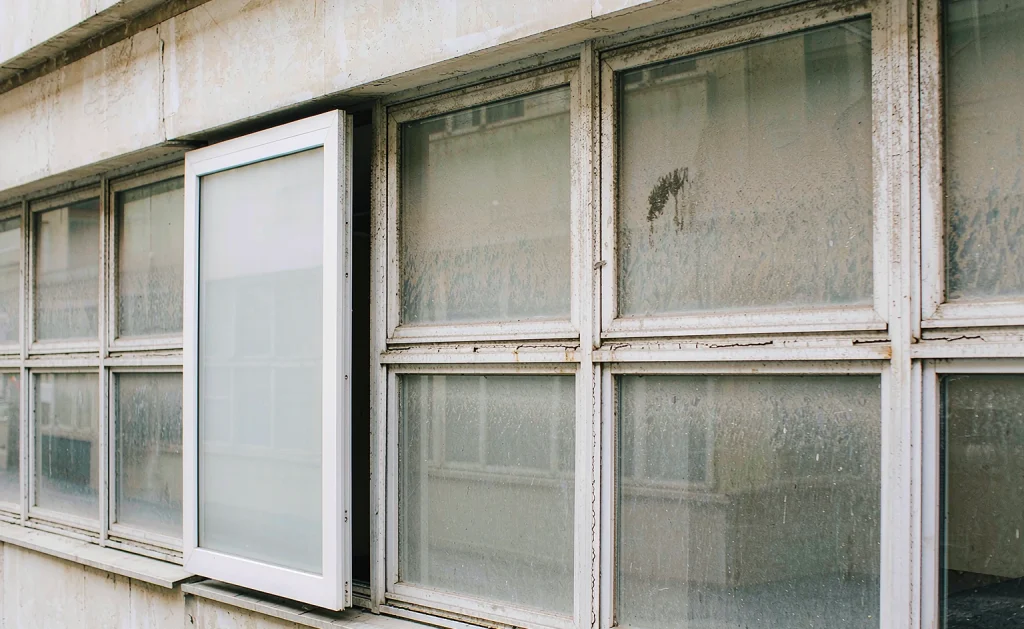
Three routes for facade replacement panels, three prices in time and appearance
| Route | When it fits | Lead time | Colour risk | Cost |
|---|---|---|---|---|
| Re-run to the original specification | Dies retained, finish sample and panel map on file | Two to six weeks production, plus freight | Low; ΔE verified against the weathered panel | Packaging and freight dominate the bill |
| Nearest equivalent, difference declared | Original die or coating discontinued | Four to ten weeks | Declared ΔE; reads at joint lines up close | Below reconstruction, above a straight re-run |
| Local re-detail of the opening | Hardware generation obsolete, or the opening has changed | Longest; engineering survey first | Lowest on new sections; one planned transition line | Highest; site work joins fabrication |
RELATED READING
Whichever route the archive supports, facade replacement panels must land inside the original joint tolerances, the discipline set out in our fabrication tolerances guide.
The die archive decides everything downstream
A curtain wall profile exists because a steel die exists. Years later, the first question in any enquiry for facade replacement panels is whether that die is still in store.
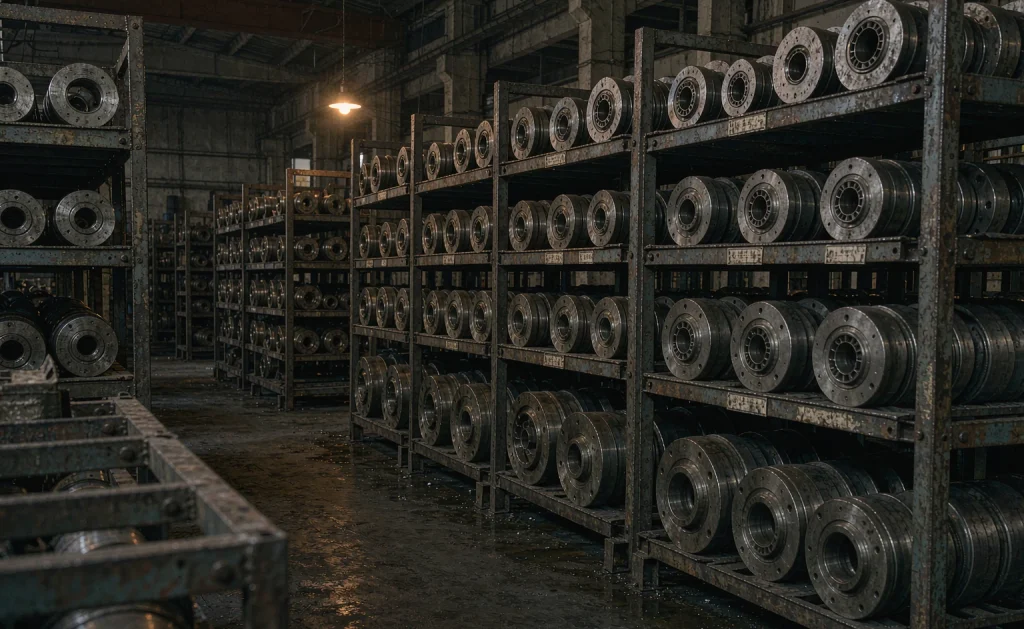
The answer varies across the industry: some extruders keep dies for a fixed number of years, some retire them by tonnage, and some lose track entirely. A die number recorded in the handover file changes the conversation. The panel can be re-run on the original section, within the tolerances the joints were designed around, as covered in our extrusion dies guide. Our extrusion dies are cut by long-term partner die makers in Foshan, so the handover file should also record the ownership and custody terms agreed with the partner shop before a re-run is assumed. Starveil Facade keeps the die records with its project archive and retires a die only against a documented successor. Those records travel with the project file: the die number, the press that ran it, and any corrections made during production. A corrected die behaves differently from a fresh one, so the log is part of the dimensional record. Re-run profiles then leave the plant under the same outgoing inspection as the original order: we measure 100% of key dimensions on every profile, apply AQL batch sampling under GB/T 2828.1, and send six extrusions from each batch for laboratory testing against GB/T 5237 and GB/T 14846. That is why re-run panels land inside the original joint tolerances instead of merely close to them. Where a die is gone, the section is measured from the facade and redrawn, and every deviation from the original is declared before fabrication, not discovered after.
Colour is matched against the facade, not the card
Coatings age. PVDF and powder finishes chalk, yellow and shift under UV, and a ten-year-old elevation no longer reads as the colour on the handover sample. This is where many orders for facade replacement panels go wrong: a new panel painted to the original colour code arrives looking visibly new beside its weathered neighbours. The professional method is to read the aged facade itself. A loose panel, or the retained batch sample kept from the original production, becomes the reference. The shade difference between old and new is then measured as a ΔE value under ASTM D2244, published at astm.org. Coating systems certified under schemes such as Qualicoat at qualicoat.net give the new panel a documented baseline, but no process returns a weathered finish to its day-one colour. Gloss and texture matter as much as shade. A matte powder weathers differently from a metallic PVDF, and two panels can share a colour code yet read differently under raking light. The comparison is therefore made flat against flat, gloss against gloss, at the distance a passer-by actually stands. ΔE can be managed to a level the eye accepts at joint distance; it cannot be managed to zero. A supplier who promises a perfect match is selling the sample, not the facade.
Glass generations move even when profiles do not
Aluminium sections wait patiently in a die store; glass technology does not. Low-e coating families are succeeded by new generations, laminated interlayers are reformulated, and the original make-up may no longer be producible at any price. For glazed facade replacement panels, the unit carries the nearest current equivalent, and the difference is visible to a trained eye in transmission and reflection, especially across a large run of glazing. The workable answer is to declare it. The handover papers should state what changed, what the expected difference in light and appearance is, and where it will read most. Thermal numbers shift too. A newer coating may improve the U-value while changing the reflected colour, and spacers, seals and gaskets have their own successors. The replacement unit is therefore detailed as a small system, not a pane ordered by thickness alone. Where a whole elevation must eventually be renewed, phased replacement by zone keeps the visible transition to one joint line at a time instead of a patchwork across the facade. The zone-by-zone phasing discipline is the same one our guide to renovating while trading through phased facade works applies to buildings that stay in use.
Hardware generations, panel maps and the freight of one panel
Multipoint locks and hinges have their own generational turnover, and a lock case specified years ago may have no direct successor today. The panel map decides how fast any order of facade replacement panels moves. A facade delivered with an as-built panel schedule lets the crew order by unit number, position and hardware set, the same artefact discipline described in our delivery milestones guide. The Foshan Premium Villa project, a 380 m² envelope designed and supplied on a 12 week ex-works programme, was drawn that way: every opening was numbered at the engineering stage. The maintenance manual handed to the house manager carries the gasket, hardware and seal schedules that a later panel order reads. Without the map, every panel becomes a survey job before it becomes an order. Hardware generations make the point concrete. A lock case from years ago and its current successor can share a footprint and still differ in spindle size, keep positions and cylinder type. The crew discovers the difference on a ladder, not at a workbench. Photos of the hardware label and the locking points settle it in advance. The site sequence is its own programme. The old panel comes out and is taken off the elevation. The new panel lands and is sealed, and the sealant cures before the opening reads finished. Freight is the last surprise. One panel does not fill a container. The real choice is between a crated LCL consignment on the sea routes and an airfreight crate for a genuinely urgent opening. Either way, facade replacement panels ship with packaging engineered for a single unit, not a stack. Our sea freight routes guide covers how the route moves the calendar.
Send the facade’s evidence, ask for the archive check first
Send photographs of the elevation with panel joints visible, the panel schedule or handover manual if it survives, one close photo of any hardware label, and the city the facade replacement panels ship to. If a loose sample of the old finish exists, send it; if not, name a panel the crew can read colour from on site. If the facade is accessible, offer a visit window; a colour reading taken on the elevation is worth more than any description of it. Ask back for the archive check result, the route options with declared ΔE figures, and the packaging plan for a single crated unit. Starveil Facade answers replacement enquiries in that order, records before routes before price. A quote issued before the archive check is a guess with a number on it, and the warning signs of that habit are catalogued in our quotation red flags guide.
What to remember
- Die numbers, the panel map and a sealed finish sample are the kit behind facade replacement panels; file them at handover.
- Colour is read from the weathered facade and the retained batch sample, never from a catalogue card.
- Discontinued glass is replaced by the nearest declared equivalent, with the difference in writing.
- Single-panel freight and sealant cure time belong in the programme, not in a footnote.
Related Facade Resources
For more insights into facade replacement and long-term maintenance, explore our facade renovation hub. Learn how extrusion tooling and die ownership affect future profile reproduction, follow our facade delivery timeline guide for production and shipment planning, and read our cross-border facade delivery guide for panel identification, packing records and customs coordination.
Frequently asked questions
Can facade replacement panels match the original facade colour exactly?
No. Facade replacement panels face coatings that age outdoors, and a weathered elevation no longer matches its own day-one colour code. The match is managed by measuring the ΔE difference between the new panel and the aged facade, with the retained batch sample as the reference. The aim is a level of difference the eye accepts at joint distance, and nothing stronger. Where a visible step remains, the workable plan is a transition line at a natural joint, not a claim of invisibility.
How long do facade replacement panels take?
With dies retained and the archive complete, facade replacement panels run two to six weeks in production plus freight, and a genuinely urgent single panel can move faster by air. When the dies are gone and the job becomes reverse engineering, four months is a realistic planning figure, not a scare number. Freight mode and the packaging of a single crated unit move the date as much as the factory does, which is why a proper plan quotes production and freight separately.
What happens if the original extrusion die no longer exists?
For facade replacement panels, the section is measured from the facade and redrawn, or replaced by the nearest equivalent section. Every deviation from the original geometry is declared before fabrication, and the joint consequences are checked against the fixing and gasket details before the order is placed.
Can facade replacement panels be shipped internationally one panel at a time?
Yes. Facade replacement panels can ship as a crated LCL consignment by sea, or as an airfreight crate for urgent openings, with packaging engineered for one panel rather than a stack. Sealant cure time on site still belongs in the programme after the panel lands.
Who owns the extrusion dies behind our profiles?
With us, extrusion dies are cut and held by long-term partner die makers in Foshan, and the project archive records the die numbers next to the ownership and custody terms. Confirm those clauses when the contract is signed, so a re-run years later is a records check rather than a negotiation.
What if the handover file has been lost?
The enquiry then starts from the facade itself. A survey crew measures the section, a colour reading is taken on the elevation, and every deviation from the original is declared before fabrication. For facade replacement panels ordered on survey evidence alone, plan on the four-month figure rather than the two-to-six week re-run.
About the author